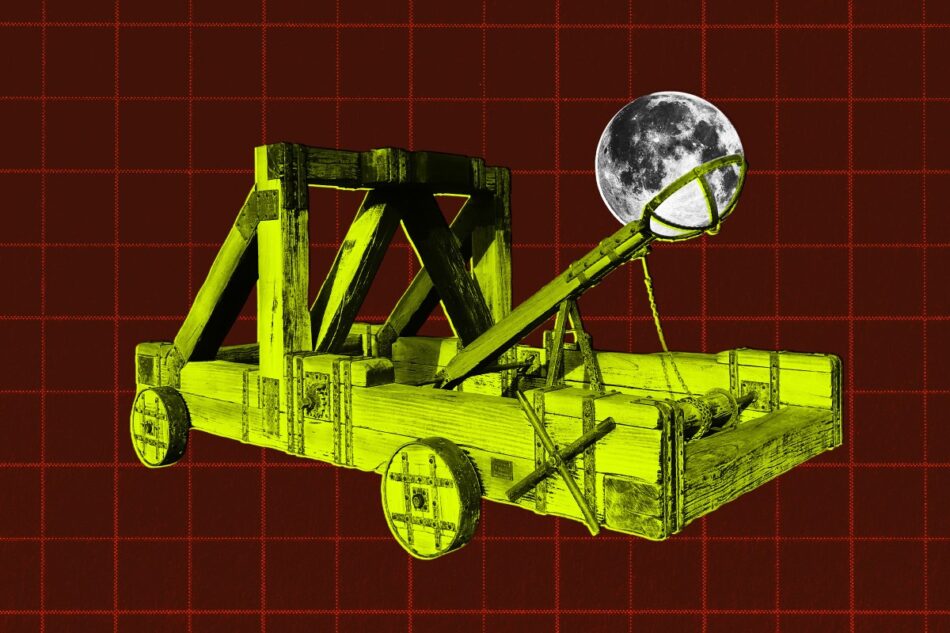
Erratic Elon Musk Tells Employees to Build Massive Catapult on Moon
In a surprising turn of events, Elon Musk has directed his employees at xAI, a company recently acquired by SpaceX, to embark on an ambitious project that involves building a massive catapult on the Moon. This initiative marks a significant shift in Musk’s focus from Mars to lunar endeavors, showcasing his relentless pursuit of advancing technology and space exploration.
The Vision Behind the Lunar Catapult
According to reports from the New York Times, Musk envisions constructing a factory on the Moon that will produce AI satellites. To facilitate the launch of these satellites into space, he proposes the development of an enormous electromagnetic catapult, which is essentially a mass driver designed to propel payloads into orbit.
This concept of a mass driver is not entirely new; it has been a topic of interest in the realm of science fiction and theoretical physics. By utilizing this technology, Musk aims to establish a robust infrastructure for AI operations that are not constrained by the limitations of Earth.
Strategic Importance of the Moon
The Moon represents a strategic location for Musk’s ambitious plans. Historically, Musk has been vocal about his skepticism regarding lunar missions, often labeling them as distractions from his ultimate goal of colonizing Mars. However, he now views the Moon as a crucial stepping stone in the journey toward making humanity a multiplanetary species.
During an all-hands meeting, Musk stated, “You have to go to the Moon. It’s difficult to imagine what an intelligence of that scale would think about, but it’s going to be incredibly exciting to see it happen.” This statement encapsulates his belief that the Moon can serve as a launchpad for future explorations and technological advancements.
AI and Space: A New Frontier
Musk’s pivot towards lunar exploration is also intertwined with his vision for artificial intelligence. He argues that space-based AI is the only viable path for scaling technology. By positioning data centers in Earth’s orbit, Musk believes they can harness virtually unlimited solar energy, thus enhancing the efficiency and capability of AI systems.
His plans include populating Earth’s orbit with a vast constellation of AI satellites, which he likens to creating a “sentient sun.” This ambitious project underscores Musk’s commitment to integrating AI with space exploration, aiming to leverage the advantages of both fields to foster unprecedented growth and innovation.
Building a Self-Sustaining City on the Moon
Musk’s vision extends beyond just launching satellites; he aims to establish a self-sustaining city on the Moon. In a recent tweet, he elaborated on his timeline for these dual ambitions, stating, “SpaceX has already shifted focus to building a self-growing city on the Moon, as we can potentially achieve that in less than 10 years, whereas Mars would take 20+ years.”
This strategic focus on the Moon is not merely a diversion from Mars; Musk insists that it is a necessary precursor to achieving his long-term goals. He believes that establishing a base on the Moon will provide invaluable experience and resources that can be applied to future Mars missions.
The Road to Mars
Despite the renewed focus on the Moon, Musk has made it clear that Mars remains a priority. He envisions that after successfully establishing a lunar city, SpaceX will turn its attention back to Mars, with plans to initiate colonization efforts within the next five to seven years. This dual approach aims to secure the future of civilization by ensuring that humanity can thrive on multiple planets.
In his discussions, Musk has often emphasized the importance of making life multiplanetary and extending consciousness to the stars. His ambitious timelines for Mars missions have included promises of launching the first crewed mission in 2022, a goal that has since been adjusted as the complexities of space travel have become more apparent.
Challenges and Considerations
While Musk’s vision is undoubtedly ambitious, it is not without its challenges. The feasibility of constructing a massive catapult on the Moon raises numerous technical and logistical questions. Additionally, the establishment of a self-sustaining city will require significant advancements in technology and infrastructure.
Furthermore, the financial implications of such projects cannot be overlooked. With SpaceX anticipating a historic IPO, the success of these ventures will be closely scrutinized by investors and stakeholders alike. Musk’s ability to secure funding and resources will play a critical role in determining the viability of his lunar ambitions.
Public and Industry Reactions
The announcement of Musk’s lunar plans has generated a mix of excitement and skepticism within the public and the space industry. Supporters of Musk’s vision argue that it represents a bold step toward advancing human exploration and technology. They believe that the establishment of a lunar base could lead to groundbreaking discoveries and innovations.
On the other hand, critics question the practicality of Musk’s ambitions, citing the numerous challenges that lie ahead. Concerns about the environmental impact of lunar construction, the sustainability of such projects, and the potential for geopolitical tensions in space have all been raised. As Musk pushes forward with his plans, these discussions will likely continue to evolve.
The Future of Space Exploration
Musk’s focus on the Moon and the development of a massive catapult is indicative of a broader trend in the space industry. As private companies increasingly take on roles traditionally held by government agencies, the landscape of space exploration is rapidly changing. The collaboration between private entities and governmental organizations will be crucial in addressing the challenges of lunar and Martian colonization.
As we look to the future, the potential for human life beyond Earth becomes more tangible. Musk’s ambitious plans may serve as a catalyst for further advancements in technology and exploration, inspiring a new generation of scientists, engineers, and explorers.
Frequently Asked Questions
Elon Musk plans to build a massive catapult on the Moon to launch AI satellites produced by a factory he envisions establishing there. This initiative aims to enhance the capabilities of space-based AI technology.
Musk views the Moon as a stepping stone to Mars. He believes that establishing a self-sustaining city on the Moon will provide essential experience and resources for future Mars missions, which he still prioritizes.
Musk faces numerous challenges, including the technical feasibility of constructing a massive catapult, the financial implications of such projects, and the environmental impact of lunar construction. Additionally, securing funding and resources will be critical for the success of these initiatives.
Call To Action
If you’re interested in the future of space exploration and want to stay updated on the latest developments from SpaceX and Elon Musk, consider following our updates and engaging with us for more insights.
[np_contact_btn]
Note: As Elon Musk continues to push the boundaries of technology and space exploration, the implications of his lunar ambitions will shape the future of humanity’s presence beyond Earth.