AI is Making Waves Everywhere, Except Where You’d Expect It Most: Two Giant Tech Companies are Working to Change That
Artificial Intelligence (AI) is rapidly transforming various aspects of our lives, from the way we work to how we interact with technology. However, one area that has seen relatively little change is the smartphone industry. Despite the increasing capabilities of AI, the devices we use daily have remained largely unchanged in their functionality. Two tech giants, Samsung and Google, are now stepping up to change that narrative with their latest innovations.
The Current State of AI in Smartphones
AI is already making significant impacts across numerous sectors, including healthcare, finance, and transportation. Yet, when it comes to smartphones, the integration of AI has been more gradual. Most smartphones today come equipped with basic AI features, such as voice assistants and image recognition. However, these features often serve as enhancements rather than transformative elements that redefine user experience.
For instance, while users can ask their smartphones to set reminders or answer questions, the interaction remains largely reactive. Users must initiate the conversation, and the AI responds accordingly. This model is about to shift, as Samsung and Google aim to create a more proactive AI experience for smartphone users.
Samsung’s Galaxy S26: A New Era of AI Integration
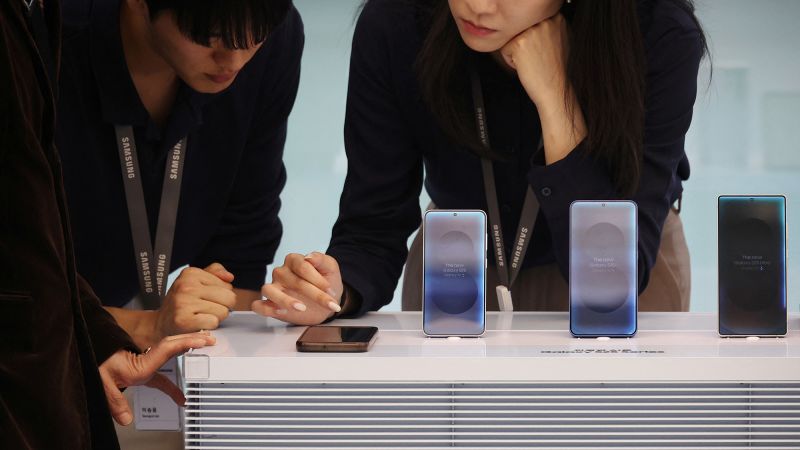
Samsung has recently announced its Galaxy S26 series, which includes the S26, S26 Plus, and S26 Ultra models. These smartphones are designed to leverage AI in ways that predict user needs and automate tasks. This marks a significant evolution in smartphone technology, as the devices will not only respond to commands but also anticipate actions based on user behavior.
Features of the Galaxy S26
- Predictive AI: The Galaxy S26 series aims to predict what users want to do next. For example, if a user has a flight scheduled, the phone might automatically suggest calling a ride-sharing service without needing to open the app.
- Enhanced Voice Commands: Users can perform tasks such as editing photos or adjusting settings through voice commands. For instance, if a user mentions eye strain, the phone can automatically adjust the screen brightness.
- Integrated AI Assistants: The S26 series will feature Samsung’s Bixby and Perplexity’s AI assistant, providing users with multiple options for handling requests.
- Improved Camera Technology: Alongside AI advancements, the new phones will include a more powerful camera capable of taking better photos in low light conditions.
- Privacy Features: New screen technology will prevent bystanders from viewing sensitive information, enhancing user security.
Google’s Role in the AI Smartphone Revolution
Google is also playing a crucial role in the evolution of AI in smartphones. Although the company produces its own Pixel phones, it recognizes the importance of collaboration with Samsung, given the latter’s significant market share. Google is focusing on enhancing its Gemini assistant to work seamlessly with Samsung’s devices.
Gemini Assistant: A Step Towards Proactive AI
Google’s Gemini assistant is being designed to offer a more proactive user experience. Instead of merely responding to queries, Gemini will work in the background to assist users with daily tasks. For example, if a user is planning a barbecue, Gemini can automatically compile a shopping list based on the guest list provided.
Sameer Samat, president of the Android ecosystem at Google, emphasizes that the future of AI in smartphones lies in creating interfaces that are more proactive. This shift could fundamentally change how users interact with their devices, moving from a reactive model to one that anticipates needs and simplifies tasks.
Challenges in AI Adoption for Smartphones
Despite the exciting developments in AI integration, several challenges remain. Analysts indicate that while AI features are becoming more prevalent, they are not yet the primary drivers for smartphone purchases. Factors such as price, camera quality, and display features continue to dominate consumer decision-making.
Consumer Preferences
Research from Omdia reveals that when consumers think of AI, they primarily associate it with well-known applications like ChatGPT, rather than with smartphone capabilities. This disconnect suggests that while consumers are aware of AI’s potential, they may not yet see it as a compelling reason to upgrade their devices.
Runar Bjorhovde, a smartphone industry analyst, points out that aesthetic features, such as color options, often have a more significant impact on sales than technological advancements. For instance, the introduction of a vibrant color option for a popular phone model can drive sales more effectively than AI enhancements.
The Future of AI in Smartphones
The collaboration between Samsung and Google represents a pivotal moment in the smartphone industry. As both companies push the boundaries of AI integration, we can expect to see a new generation of smartphones that offer a more intuitive and seamless user experience. This evolution could redefine how we interact with our devices and the role they play in our daily lives.
Potential Developments
- Increased Personalization: Future AI advancements may lead to smartphones that can learn individual user preferences and habits, tailoring features and suggestions accordingly.
- Enhanced Security: AI could play a critical role in improving device security through advanced biometric recognition and anomaly detection.
- Integration with Smart Home Devices: As AI becomes more sophisticated, smartphones may serve as central hubs for managing smart home ecosystems, allowing for seamless control of various devices.
Conclusion
As AI continues to evolve and integrate into various aspects of technology, the smartphone industry stands at a crossroads. With companies like Samsung and Google leading the charge, we may soon witness a transformation in how we interact with our devices, making our daily tasks more efficient and intuitive.
Frequently Asked Questions
AI integration aims to create a more proactive user experience, allowing smartphones to anticipate user needs and automate tasks, thus reducing the need for manual input.
The Galaxy S26 series includes predictive AI capabilities, enhanced voice command functionality, integrated AI assistants, improved camera technology, and advanced privacy features.
Consumers tend to prioritize factors such as price, camera quality, and display features over AI capabilities, as these elements have a more immediate impact on their smartphone experience.
Call To Action
Stay ahead of the curve in the rapidly evolving smartphone market. Explore how AI can enhance your business operations and customer interactions today.
[np_contact_btn]