YSU graduate student develops web accessibility tool for capstone project
- Innovative tool enhances digital inclusivity by automatically detecting accessibility issues.
- Project integrates web accessibility standards with practical development workflows.
- Scalable solution designed for both small businesses and large enterprises.
- Focus on improving user experience for people with disabilities through automated testing.
In today’s digital landscape, ensuring websites are accessible to all users is not just a legal requirement but a moral imperative. A YSU graduate student recently made significant strides in this area by developing a cutting-edge web accessibility tool as part of their capstone project. This innovative solution aims to simplify the process of identifying and fixing accessibility issues, supporting developers and organizations in creating more inclusive digital experiences.
The tool leverages the latest accessibility testing automation techniques and aligns with the WCAG guidelines to provide actionable insights. Its design prioritizes scalability and ease of integration, making it suitable for a wide range of applications from startups to established enterprises. This article explores the development process, features, and potential impact of this promising technology on the future of inclusive web design.
Continue Reading
What motivated the development of this web accessibility tool?
The primary motivation behind the creation of this web accessibility tool was to address the growing need for efficient and reliable methods to evaluate website accessibility. Many developers struggle with the complexity of accessibility compliance, and manual testing can be time-consuming and error-prone. The graduate student recognized an opportunity to create a solution that automates this process, thereby reducing barriers and promoting digital equity.
How does the tool work to identify accessibility issues?
This tool employs a combination of automated accessibility testing techniques, including DOM analysis, ARIA attribute checks, and color contrast evaluation. It scans webpages for common violations such as missing alt text, improper heading structures, and keyboard navigation issues. By integrating with existing development environments, it provides real-time feedback, enabling developers to address problems during the coding phase rather than post-launch.
Key Features of the Accessibility Tool
- Automated accessibility scanning that covers WCAG 2.1 standards.
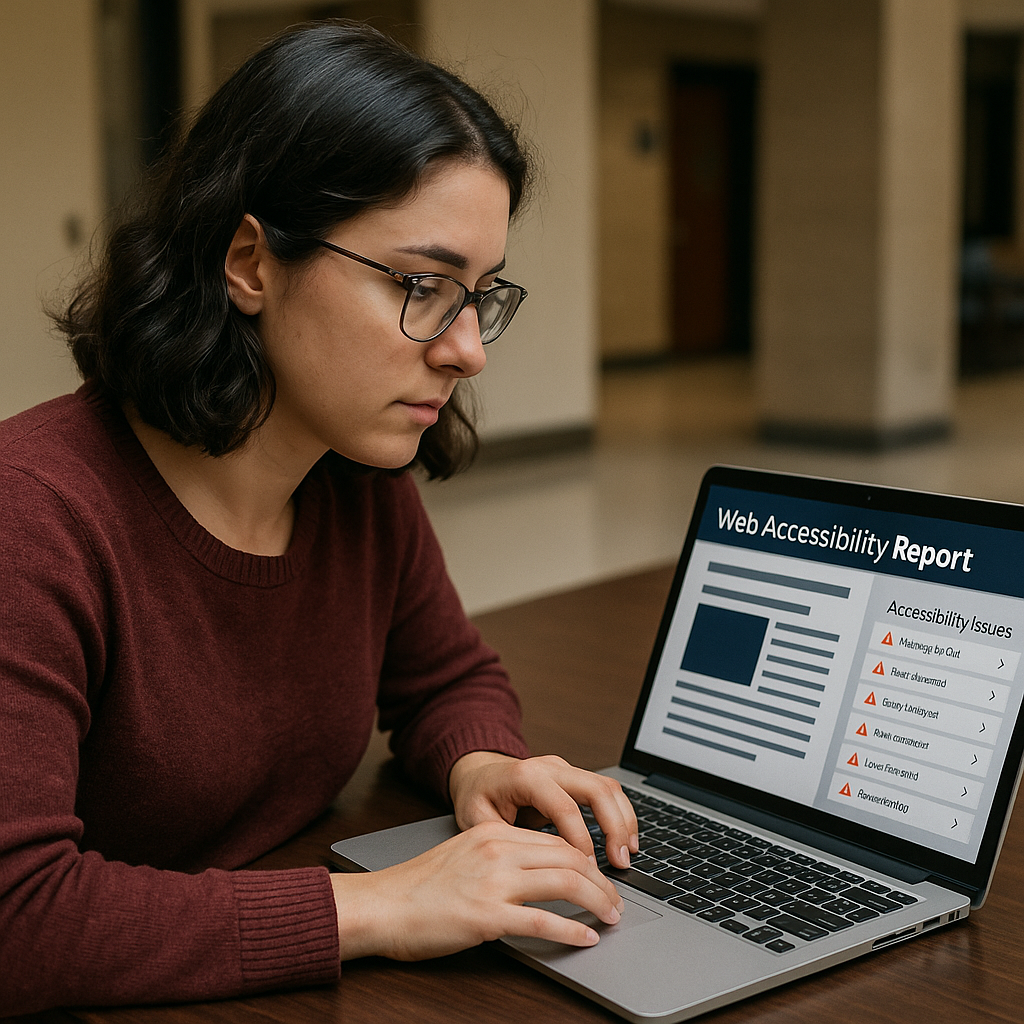
- Detailed reporting with prioritized issue lists for efficient remediation.
- Integration capabilities with popular web development frameworks and CI/CD pipelines.
- User-friendly interface designed for both technical and non-technical stakeholders.
- Support for multiple browsers and responsive design testing.
What technologies and methodologies were used in the project?
The project utilized modern front-end development tools like React and Node.js to build a responsive and interactive interface. For the accessibility engine, it incorporated open-source libraries such as Axe-core to leverage proven testing algorithms. The student applied agile development principles, including iterative testing and user feedback incorporation, to ensure the tool met real-world usability and accuracy requirements.
Implementation Insights
- Use of JavaScript frameworks for dynamic content analysis.
- Integration of automated testing tools within continuous integration workflows.
- Emphasis on modular design to facilitate future feature expansion and maintenance.
- Collaboration with accessibility experts to validate testing criteria and results.
What is the potential ROI and business impact of adopting this tool?
Implementing this web accessibility solution can significantly reduce the risk of legal penalties related to non-compliance with accessibility laws such as the ADA and Section 508. Moreover, businesses benefit from an expanded customer base by making their websites usable for people with disabilities. The automation aspect reduces manual testing costs and accelerates development cycles, improving overall web development efficiency.
Scalability and Growth Potential
The tool’s architecture supports scalability, allowing it to handle websites ranging from small blogs to enterprise-level platforms. Its modular design enables easy updates to keep pace with evolving accessibility standards and emerging technologies. As awareness of digital inclusion grows, demand for such tools is expected to increase, presenting opportunities for commercialization and integration with other web development services.
What challenges were encountered during development, and how were they addressed?
One significant challenge was ensuring the accuracy of automated tests without generating false positives, which can overwhelm developers and reduce trust in the tool. To mitigate this, the student implemented a layered testing approach combining automated checks with heuristic analysis and user feedback loops. Another hurdle involved making the tool accessible itself, which required adherence to strict inclusive design principles in the user interface.
How does this project contribute to the future of inclusive web design?
This capstone project exemplifies how innovative web accessibility technology can empower developers and organizations to prioritize inclusivity seamlessly. By embedding accessibility testing into everyday development processes, it fosters a culture of proactive compliance rather than reactive fixes. The tool serves as a model for future solutions that blend automation with human-centered design to create a more equitable digital world.
Frequently Asked Questions
Call To Action
Discover how integrating advanced web accessibility tools can transform your development process and expand your audience reach. Contact us today to learn how to implement scalable, automated accessibility testing tailored to your business needs.
[np_contact_btn]
Note: Provide a strategic conclusion reinforcing long-term business impact and keyword relevance.