
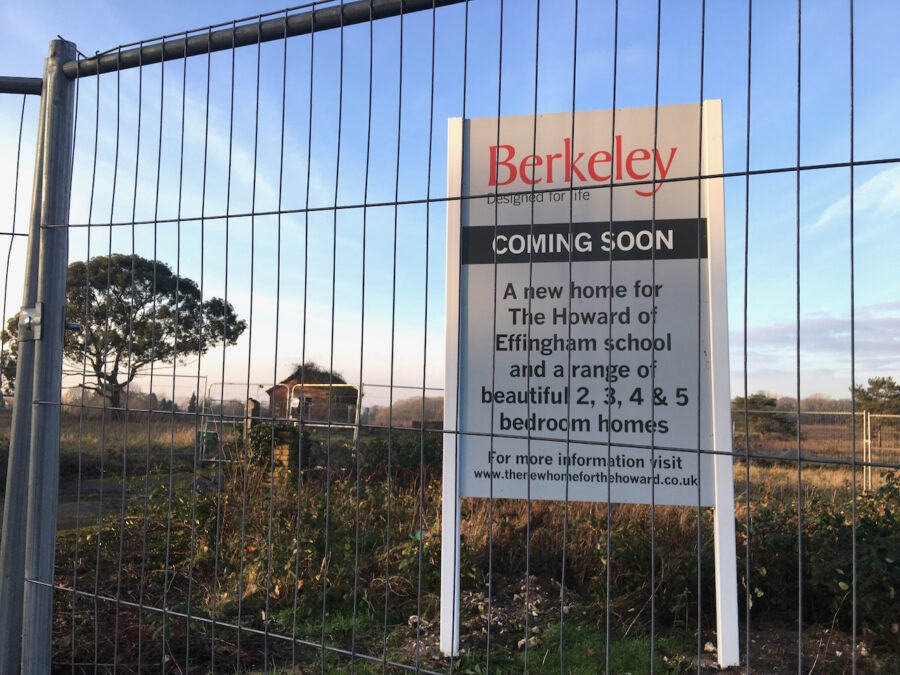
Effingham: Housing and School Latest Developments
- Effingham Parish Council strongly objects to Berkeley Homes’ revised planning applications.
- Berkeley Homes proposes removing affordable housing and altering school delivery conditions.
- The ‘grey belt’ policy impacts potential housing development and school construction in Effingham.
- Community concerns focus on balancing new homes with infrastructure and green belt preservation.
The latest developments in Effingham’s housing and educational infrastructure reveal significant tensions between local authorities, developers, and residents. Berkeley Homes’ ambitious plan to rebuild the Howard of Effingham School, funded by constructing over 400 new homes, faces renewed challenges as financial viability concerns lead to proposed amendments that could eliminate affordable housing and delay school completion.
Effingham Parish Council has formally objected to these changes, fearing that the community could end up with a substantial increase in market homes within the green belt but no new school to support the growing population. This situation is further complicated by the evolving ‘grey belt’ planning policy, which redefines development potential on land previously protected under green belt regulations. Understanding these dynamics is crucial for stakeholders aiming to balance growth, community needs, and environmental preservation.
Continue Reading
What Are the Latest Planning Applications in Effingham?
The planning applications 26/P/00146 and 26/P/00147 submitted by Berkeley Homes represent significant revisions to the original scheme approved in 2018 and an additional permission granted in 2022. These applications seek to amend the conditions tied to the rebuilding of the Howard of Effingham School, which was originally planned to be funded by the construction of over 400 new homes.
Berkeley Homes now claims the project is financially unviable under current terms, even after reducing the school size from 2,000 pupils to 1,600, matching the existing school’s capacity. The key proposed changes include removing the requirement to provide affordable housing—dropping from 20% to zero—and allowing the sale of 258 homes before the school is completed, a significant increase from the originally permitted 100 homes.
Why Is Effingham Parish Council Opposing These Changes?
Effingham Parish Council has voiced strong concerns about the implications of these amendments. Their primary worry is that if Guildford Borough Council approves the changes, Berkeley Homes could sell nearly all the homes on Effingham Lodge Farm without fulfilling their obligation to build the new school. This would leave the community with increased housing density in the green belt but without the necessary educational infrastructure.
The council has submitted formal objections to both planning applications, emphasizing the risk to community cohesion and infrastructure strain. They argue that the proposed Section 106 legal agreements variations undermine the original community benefits and threaten the balance between development and public service provision.
What Is the ‘Grey Belt’ Policy and How Does It Affect Effingham?
The term grey belt policy refers to land within the green belt that does not strongly contribute to the green belt’s core purposes, such as preventing urban sprawl or protecting historic towns. This includes areas like disused industrial sites or land near settlements with limited environmental or heritage value. Since 2025, new planning frameworks have considered these areas for potential development to increase housing supply while preserving more sensitive green belt land.
In Effingham’s context, Berkeley Homes has indicated that if their amended applications are not approved, they may seek to develop housing on Lodge Farm as a grey belt site without including a new school. This approach would not benefit from the special circumstances that enabled the original scheme and would be subject to standard planning constraints, including a likely 40% affordable housing requirement and stricter design and density controls.
What Are the Possible Outcomes If the Revised Applications Are Rejected?
Should Guildford Borough Council reject the amendments, Berkeley Homes might submit new applications for housing on Lodge Farm under grey belt policies. This could result in less dense, more rural-style housing development that aligns better with Effingham’s village character and Conservation Area status. However, the exact scale and nature of such development remain uncertain.
Importantly, any alternative scheme would still need to provide community benefits, potentially including contributions toward local facilities like the King George V (KGV) Hall, as secured under Section 106 agreements. This ensures that even if the school is not rebuilt, some community infrastructure improvements could be funded through new development.
How Does Financial Viability Impact the Housing and School Project?
Financial viability is central to Berkeley Homes’ revised proposals. Their Financial Viability Report indicates that the original scheme’s economics no longer support both the school construction and affordable housing commitments. By removing affordable homes and allowing more homes to be sold before school completion, Berkeley Homes aims to improve project profitability.
This strategy, however, raises concerns about the long-term sustainability of community infrastructure and the equitable distribution of housing types. The risk is that market homes will dominate, pricing out lower-income families and placing additional pressure on existing schools and services.
What Role Do Section 106 Agreements Play in This Development?
Section 106 agreements are legal contracts between developers and local authorities that secure community benefits from new developments. In Effingham, these agreements initially mandated affordable housing provision and the timely construction of the new Howard of Effingham School.
Berkeley Homes’ proposed ‘Deeds of Variation’ seek to alter these agreements, effectively removing affordable housing requirements and changing the timing of school delivery. This has prompted strong opposition from the Parish Council and residents, who view these changes as undermining the community’s interests and the original planning conditions.
How Are Residents and Local Groups Responding?
Local groups such as the Effingham Residents Association have actively engaged with the planning process, voicing concerns about the impact of the proposed changes on village character, green belt preservation, and community infrastructure. They emphasize the importance of maintaining affordable housing and ensuring that the school rebuild proceeds as planned.
Residents have also highlighted the need for transparency in financial viability assessments and caution against allowing developers to prioritize short-term profits over long-term community wellbeing. Public meetings and formal objections reflect a community determined to influence the planning outcomes.
What Is the Broader Context of Housing Development in Surrey?
Effingham’s situation is part of a wider challenge facing Surrey and other counties balancing housing demand with environmental protection and infrastructure capacity. The introduction of grey belt policies aims to increase housing supply without compromising key green belt functions, but it also introduces uncertainty for communities and developers alike.
Local councils must navigate complex trade-offs between meeting housing targets, preserving rural character, and funding essential services like schools. The Effingham case highlights the difficulties in aligning developer proposals, community expectations, and planning regulations.
What Are the Next Steps for Stakeholders?
-
Guildford Borough Council will review the objections and planning applications, weighing financial viability against community impact.
-
Berkeley Homes may revise their proposals further or pursue alternative development routes under grey belt policies.
-
Effingham Parish Council and residents will continue advocacy efforts to ensure infrastructure commitments are honored.
-
Community members should stay informed and participate in consultations to influence decision-making.
How Can Businesses and Investors Interpret These Developments?
For businesses and investors, Effingham’s evolving housing and school project illustrates the importance of understanding local planning dynamics and community sentiment. Projects with complex Section 106 obligations and green belt considerations require careful risk assessment and stakeholder engagement.
Investors should monitor policy changes like the grey belt framework and anticipate how these might affect project viability, timelines, and community relations. Strategic planning that balances profitability with social responsibility will be essential for sustainable growth in similar contexts.
Summary
Effingham’s housing and school developments are at a critical juncture, with Berkeley Homes proposing significant changes to previously agreed plans. The removal of affordable housing and delayed school construction raise community and council concerns about sustainability and green belt integrity. The grey belt policy introduces new possibilities and uncertainties for development in the area. Stakeholders must navigate these challenges collaboratively to achieve balanced outcomes that support growth while preserving Effingham’s character and infrastructure.
Frequently Asked Questions
Call To Action
Stay informed and engaged with local planning developments by subscribing to updates and participating in community consultations to help shape Effingham’s future housing and educational landscape.
[np_contact_btn]
Note: Provide a strategic conclusion reinforcing long-term business impact and keyword relevance.