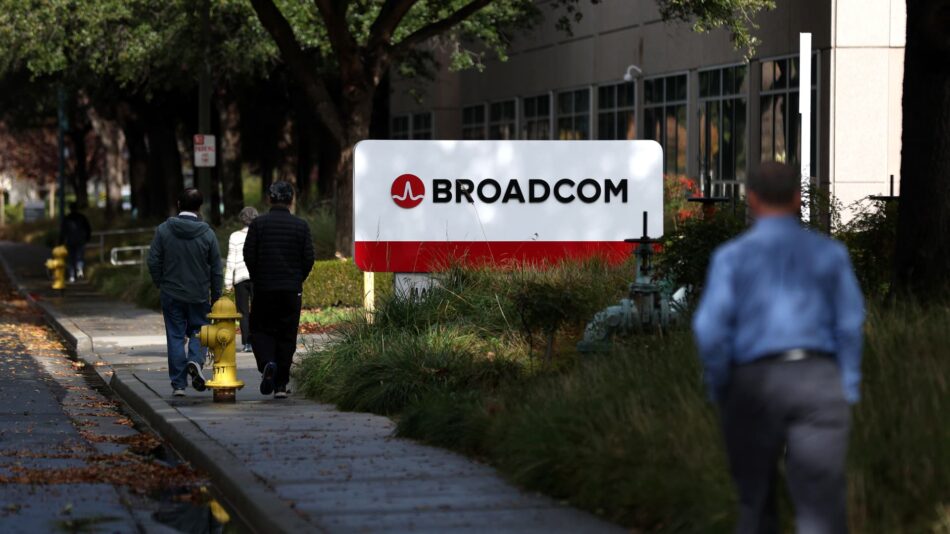
Broadcom’s Custom AI Chip Business Stays Hot and Gives the Bulls a Much-Needed Win
- Broadcom’s quarterly revenue exceeded expectations, driven by strong demand for custom AI chips.
- The company projects AI chip revenue could surpass $100 billion by 2027.
- Management’s confidence is bolstered by a new $10 billion share repurchase authorization.
- Broadcom’s operational efficiency improvements are expected to enhance margins and earnings.
Broadcom has recently reported impressive quarterly results, showcasing the strength of its custom AI chip business. The company’s performance is not only a reflection of its robust operational capabilities but also a testament to the growing demand for specialized chips in the artificial intelligence sector.
As technology continues to evolve, Broadcom’s strategic positioning in the AI market is becoming increasingly vital. The company’s ability to innovate and deliver high-performance chips is essential for meeting the needs of major tech players, further solidifying its role as a leader in the semiconductor industry.
Continue Reading
Overview of Broadcom’s Financial Performance
In the fiscal first quarter of 2026, which concluded on February 1, Broadcom reported record revenues of $19.31 billion, surpassing the consensus forecast of $19.18 billion. This marked a significant year-over-year increase of 29%. Additionally, the company’s adjusted earnings per share (EPS) rose by 28% to $2.05, exceeding expectations of $2.03. These results underscore the company’s strong operational performance and its ability to capitalize on the booming demand for AI technologies.
Key Drivers of Growth
AI Chip Demand
The surge in demand for AI chips is a primary driver of Broadcom’s growth. As businesses increasingly integrate AI into their operations, the need for specialized chips that can handle complex computations has soared. Broadcom’s custom solutions are designed to meet these requirements, positioning the company as a preferred partner for leading AI firms.
Strong Customer Relationships
Broadcom’s relationships with major tech companies, including Google and OpenAI, play a crucial role in its success. CEO Hock Tan emphasized the ongoing collaboration with Google, particularly regarding the development of the next-generation Tensor Processing Units (TPUs). This partnership not only enhances Broadcom’s credibility but also ensures a steady stream of revenue from long-term contracts.
Market Position and Competitive Landscape
While some analysts express concerns about potential competition from customer-owned tooling (COT), Tan reassured investors that Broadcom’s expertise in chip design and manufacturing gives it a competitive edge. The company is currently in the “land-grab” phase of the AI computing race, where speed and volume are critical. Broadcom’s established relationships with third-party manufacturers like TSMC further enhance its ability to deliver high-quality products efficiently.
Future Projections
Looking ahead, Broadcom’s management is optimistic about the company’s growth trajectory. Tan stated that visibility for AI revenue from chips is expected to exceed $100 billion by 2027. This ambitious projection is supported by the anticipated demand from OpenAI and other key clients, indicating a strong market presence for Broadcom’s custom silicon solutions.
Supply Chain Management
Broadcom’s ability to secure its supply chain is another factor contributing to its positive outlook. The company has made significant strides in ensuring that it can meet the growing demand for AI chips without facing supply shortages. This proactive approach is essential for maintaining operational efficiency and meeting customer expectations.
Financial Health and Shareholder Value
Broadcom’s financial health is further demonstrated by its recent announcement of a $10 billion share repurchase authorization. This move reflects management’s confidence in the company’s future prospects and commitment to enhancing shareholder value. By repurchasing shares, Broadcom aims to boost its stock price and return capital to investors, which is a positive signal for the market.
Operational Efficiency
In addition to revenue growth, Broadcom has focused on improving its operational efficiency. The company reported an adjusted EBITDA of $13.13 billion for the quarter, exceeding the FactSet consensus of $12.76 billion. This improvement in operational metrics is crucial for maintaining healthy profit margins and ensuring long-term sustainability.
Challenges and Risks
Despite the positive outlook, Broadcom faces several challenges that could impact its growth. One concern is the potential slowdown in AI spending as technology companies reassess their budgets. However, management remains optimistic, citing strong demand and commitments from major clients as indicators of continued growth.
Margin Pressures
Another risk involves potential short-term hits to gross profit margins due to increased shipments of custom chip orders containing non-Broadcom components. CFO Kirsten Spears addressed these concerns, indicating that the impact on overall margins would be minimal. This reassurance is vital for maintaining investor confidence and market stability.
Conclusion
Broadcom’s custom AI chip business is positioned for continued success, driven by strong demand, strategic partnerships, and a commitment to operational excellence. As the company navigates the challenges of the semiconductor landscape, its focus on innovation and customer relationships will be key to sustaining its growth trajectory.
Frequently Asked Questions
Broadcom projects that its AI chip revenue could exceed $100 billion by 2027, driven by strong demand from major clients.
Broadcom maintains its competitive edge through strong customer relationships, expertise in chip design, and collaboration with third-party manufacturers.
Potential risks include a slowdown in AI spending and margin pressures from increased shipments of custom chip orders containing non-Broadcom components.
Call To Action
Stay informed about the latest developments in the semiconductor industry and explore investment opportunities in companies like Broadcom that are leading the AI revolution.
[np_contact_btn]
Note: Provide a strategic conclusion reinforcing long-term business impact and keyword relevance.