
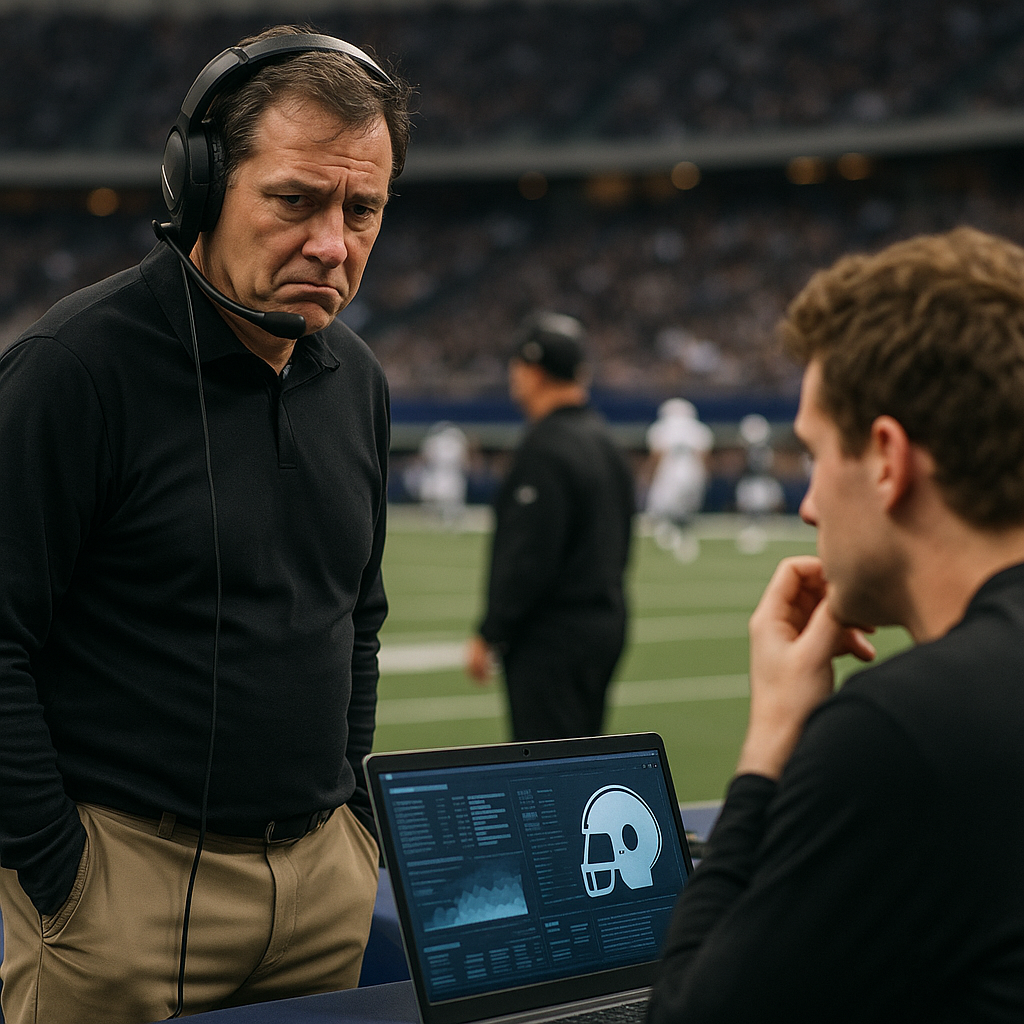
Fear of AI Eliminating Jobs Makes Its Way to Football
- AI is set to transform scouting and quality control roles in football, raising concerns about job security.
- Coaches may increasingly rely on AI for real-time decision-making during games.
- AI tools could enhance pre-game planning, potentially changing the landscape of team strategies.
The advent of Artificial Intelligence has begun to permeate various sectors, and professional football is no exception. As teams explore the potential of AI technologies, anxieties are emerging regarding the future of jobs traditionally held by humans.
During the recent Scouting Combine, discussions among NFL personnel highlighted fears about AI’s role in scouting and quality control, two critical areas where human expertise has been indispensable. As teams consider the implications of AI, the landscape of football employment may be on the verge of significant change.
Continue Reading
The Rise of AI in Professional Football
The integration of AI technologies into professional football is not just a passing trend; it represents a fundamental shift in how teams operate. The potential for AI to analyze vast amounts of data quickly and accurately poses a challenge to traditional roles within NFL franchises.
Scouting: A Transformative Shift
Scouting has long been a cornerstone of team strategy, relying on human scouts to evaluate player talent. However, AI can process player statistics, game footage, and performance metrics at an unprecedented scale. As one general manager noted, AI-generated reports can be eerily thorough and accurate, raising questions about the necessity of human scouts.
- AI can analyze player performance data, identifying patterns and potential prospects more efficiently than human scouts.
- Teams may begin to prioritize AI-generated insights over traditional scouting methods, potentially displacing jobs.
- The accuracy of AI in predicting player success could redefine how teams approach the draft and player acquisitions.
Quality Control: The Impact on Entry-Level Positions
Quality control positions, often filled by lower-level employees, are another area where AI could make significant inroads. These roles typically involve compiling information and clips for coaches, a labor-intensive process that AI can streamline.
- AI tools can automate data collection, reducing the need for quality control assistants.
- Eliminating these positions could hinder the career progression of young coaches who rely on quality control roles as stepping stones.
- As AI takes over these tasks, teams might lose valuable mentorship opportunities that come from hands-on coaching experience.
AI in Coaching: A New Paradigm
The potential for AI to influence coaching practices raises further concerns. Could AI eventually replace some aspects of coaching, particularly in teaching and strategy development?
Real-Time Feedback and Decision Making
AI could provide players with real-time feedback on their performance, potentially enhancing training and game preparation. Imagine a scenario where players receive immediate insights on their technique through advanced AI systems.
- Real-time analytics could allow coaches to make informed decisions based on player performance during games.
- AI could analyze pre-snap and post-snap movements, identifying patterns that inform coaching strategies.
- This shift could lead to a reliance on AI for critical in-game decisions, altering the traditional coach-player dynamic.
The Future of AI in Football Strategy
As teams strive for a competitive edge, the development of AI tools for pre-game planning and in-game decision-making is becoming increasingly important. The team with the most advanced AI capabilities may gain a significant advantage over its rivals.
Competitive Advantages through AI
With all teams competing fiercely, the potential for AI to enhance gameplay strategies is compelling. The ability to analyze data quickly and accurately could allow teams to make better decisions, potentially leading to improved performance on the field.
- AI could help teams identify weaknesses in their opponents, allowing for tailored game plans.
- The use of AI in strategy development could lead to more dynamic and adaptable gameplay.
- Teams that invest in AI technology may find themselves better equipped to overcome talent gaps.
Challenges and Concerns
Despite the potential benefits, the rise of AI in football is not without its challenges. The displacement of jobs and the ethical implications of relying on technology for critical decision-making are significant concerns.
Job Displacement and Workforce Impact
The fear of job loss is palpable among those working in football. As AI systems become more capable, many positions may become redundant, leading to a significant shift in the workforce.
- Entry-level positions may be the first to be affected, as teams turn to AI for efficiency.
- Long-term career paths in coaching and scouting could be jeopardized if AI systems dominate these areas.
- Maintaining a balance between technology and human expertise will be crucial for the future of the sport.
Ethical Considerations
As AI takes on more responsibilities, ethical considerations surrounding its use in football must be addressed. The reliance on AI for decision-making raises questions about accountability and the potential for bias in data interpretation.
- Ensuring transparency in AI algorithms is essential to maintain trust among players and coaches.
- Addressing potential biases in AI data sets will be critical to avoid skewed outcomes.
- Teams must navigate the ethical landscape carefully to ensure fair competition and integrity in the sport.
Conclusion
The integration of AI into professional football presents both opportunities and challenges. While the potential for enhanced performance and efficiency is significant, the implications for job security and ethical considerations cannot be overlooked. As teams navigate this new landscape, finding a balance between technology and human expertise will be essential for the long-term success of the sport.
Frequently Asked Questions
AI is transforming scouting by analyzing player data and performance metrics more efficiently than human scouts, potentially leading to job displacement in this area.
AI may provide real-time feedback and analytics, allowing coaches to make informed decisions during games, which could alter traditional coaching dynamics.
Yes, ethical concerns include job displacement, accountability for AI decisions, and potential biases in data interpretation that could affect fairness in competition.
Call To Action
Stay ahead of the curve by understanding the implications of AI in football. Engage with industry experts to explore how to leverage technology while preserving the human touch in coaching and scouting.
[np_contact_btn]
Note: The long-term impact of AI on football will shape the future of the sport, emphasizing the need for strategic adaptation and ethical considerations.