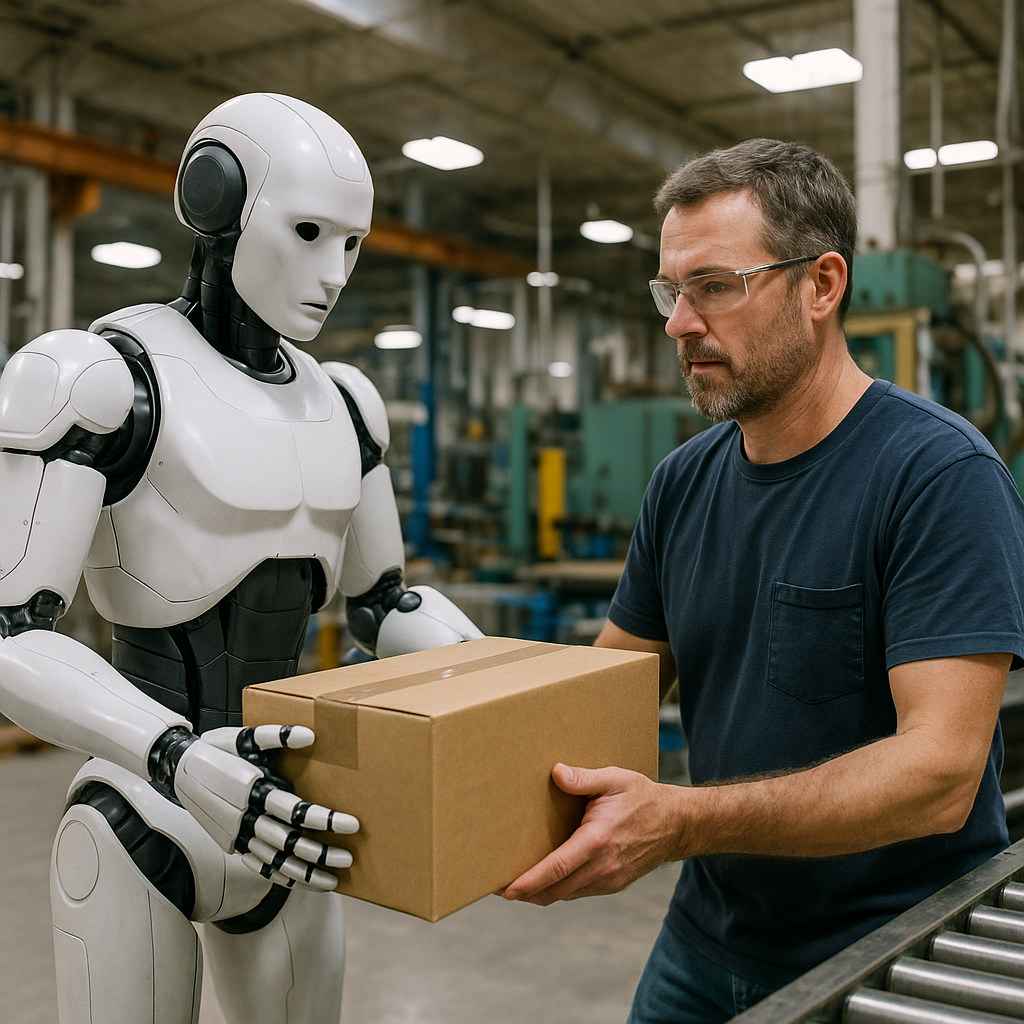
When Humanoid Robots Come to a Small Town Factory in South Carolina
- Discover how humanoid robots are transforming manufacturing processes in small-town factories.
- Understand the economic and operational impact of integrating advanced robotics in traditional industries.
- Learn about the challenges and opportunities of adopting automation technology in rural manufacturing settings.
- Explore the future scalability and workforce implications of humanoid robot deployment in industrial environments.
The arrival of humanoid robots in a small town factory in South Carolina marks a significant milestone in the adoption of robotic automation within traditional manufacturing sectors. This integration not only enhances production efficiency but also redefines workforce dynamics and operational strategies for local businesses.
As these artificial intelligence-powered machines begin to perform complex tasks alongside human workers, the factory becomes a living example of how smart manufacturing can thrive outside major urban centers, providing valuable insights into the future of industrial robotics and economic revitalization in small communities.
Continue Reading
What Are Humanoid Robots and Why Are They Important in Manufacturing?
Humanoid robots are advanced machines designed to resemble and mimic human movements and tasks. Their importance in manufacturing lies in their ability to perform complex automation tasks that require dexterity, adaptability, and interaction with human operators. Unlike traditional robots fixed to a single task, humanoid robots can navigate dynamic environments, making them ideal for factories that require flexibility and precision.
In the context of a small town factory in South Carolina, these robots introduce a new paradigm of intelligent automation, enabling the factory to increase productivity while addressing labor shortages and improving workplace safety.
How Are Humanoid Robots Transforming the Small Town Factory?
The integration of humanoid robots in this South Carolina factory has led to several transformative changes:
- Operational efficiency has improved as robots handle repetitive and hazardous tasks with consistent precision.
- Workforce augmentation allows human employees to focus on higher-value activities such as quality control and innovation.
- Cost reduction over time due to decreased downtime and fewer workplace injuries.
- Data-driven insights from robot sensors help optimize production workflows and maintenance schedules.
This shift not only boosts the factory’s competitiveness but also fosters a culture of technological adoption in a region traditionally reliant on manual labor.
What Are the Economic Impacts on the Local Community?
The introduction of humanoid robots has sparked a ripple effect across the local economy:
- Job evolution: While some manual roles are automated, new positions in robot maintenance, programming, and supervision have emerged.
- Skill development: Local workers receive training in robotics technology, increasing their employability and earning potential.
- Attracting investment: The factory’s modernization attracts suppliers and partners interested in advanced manufacturing capabilities.
- Community revitalization: Increased economic activity supports local businesses and infrastructure improvements.
These factors contribute to a sustainable economic model where technology and community growth go hand in hand.
Challenges of Implementing Humanoid Robots in a Small Town Factory
Despite the benefits, several challenges must be addressed:
- Initial investment costs for acquiring and integrating humanoid robots can be substantial for small factories.
- Technical expertise is required to maintain and program robots, which may necessitate hiring or training specialized staff.
- Workforce resistance may arise due to fears of job displacement or unfamiliarity with new technologies.
- Infrastructure upgrades such as enhanced connectivity and safety systems are often necessary.
Addressing these challenges requires strategic planning, community engagement, and partnerships with technology providers and educational institutions.
How Can Small Factories Scale Humanoid Robot Integration?
Scaling the use of humanoid robots involves:
- Starting with pilot projects to demonstrate ROI and build internal support.
- Investing in robotics training programs for employees to ensure smooth adoption.
- Leveraging modular and adaptable robot designs that fit evolving production needs.
- Collaborating with regional technology hubs and universities for innovation and support.
By following these steps, small factories can gradually increase their automation capabilities without disrupting existing operations.
What Does This Mean for the Future of Manufacturing in Small Towns?
The successful deployment of humanoid robots in this South Carolina factory signals a broader trend where artificial intelligence and robotics democratize advanced manufacturing. Small towns, once sidelined by globalization and technological divides, now have the opportunity to compete on a global scale by embracing smart factory solutions.
This evolution supports sustainable economic development, workforce empowerment, and innovation ecosystems beyond metropolitan centers.
Frequently Asked Questions
Call To Action
Embrace the future of manufacturing by integrating humanoid robots into your operations. Contact us to learn how tailored robotic automation solutions can elevate your factory’s productivity and competitiveness.
[np_contact_btn]
Note: Provide a strategic conclusion reinforcing long-term business impact and keyword relevance.