
Nvidia’s GTC Will Mark an AI Chip Pivot: Here’s Why the CPU Is Taking Center Stage
- CPUs are emerging as critical bottlenecks in scaling agentic AI workflows, prompting a strategic shift in chip design.
- Nvidia’s unveiling of its next-generation Grace and Vera CPUs signals a new era of AI-optimized central processors tailored for data center demands.
- The growing demand for standalone CPUs, especially in hyperscale data centers like Meta’s, highlights a pivot from GPU-centric architectures.
- Supply constraints and rising prices in the data center CPU market underscore the urgency for innovation and expanded production capacity.
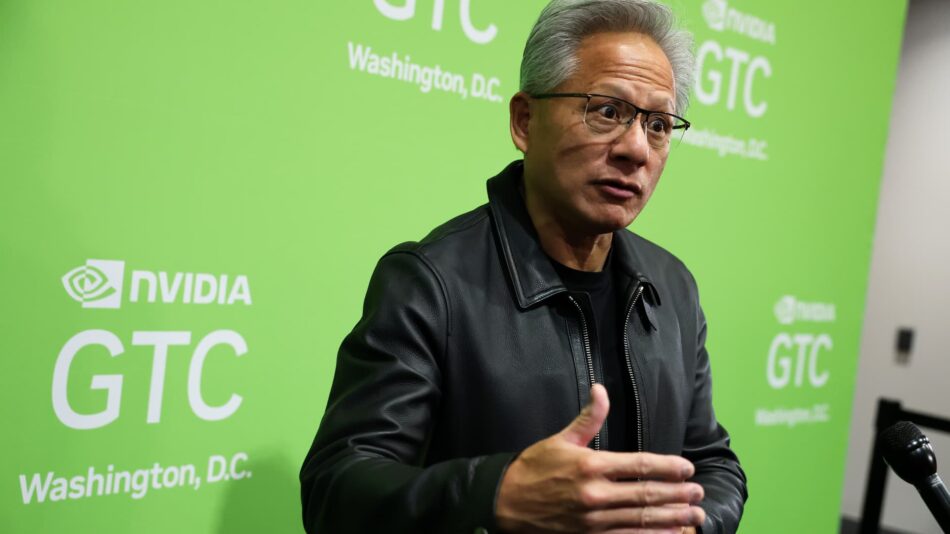
The upcoming Nvidia GTC conference is set to spotlight a significant shift in artificial intelligence hardware strategy, with central processing units (CPUs) taking a more prominent role than ever before. While Nvidia has long been synonymous with powerful graphics processing units (GPUs) that accelerate AI model training and inference, the rise of complex, task-oriented agentic AI applications is driving renewed focus on CPUs as essential components in AI infrastructure.
This pivot is not just about adding more cores or increasing clock speeds; it reflects a fundamental change in how AI workloads are orchestrated. Nvidia’s latest CPU designs, including the Vera processor, are optimized to complement their GPUs by managing the general-purpose compute tasks that AI agents require. This evolution addresses bottlenecks in data flow and coordination, enabling AI systems to perform more efficiently and at scale.
Continue Reading
Why Are CPUs Becoming Central to AI Workflows?
CPUs are becoming the bottleneck in expanding agentic AI systems because they handle the sequential and general-purpose computations necessary to orchestrate multiple AI agents working in tandem. Unlike GPUs, which excel at parallel processing of AI models, CPUs manage the complex logic, data movement, and coordination tasks that enable AI applications to perform real-world functions effectively.
Dion Harris, Nvidia’s head of AI infrastructure, emphasized that the surge in AI workloads has created an “exciting opportunity” for CPUs to evolve beyond their traditional roles. The shift towards agentic AI—where multiple AI entities collaborate to complete tasks—requires CPUs to process vast amounts of data and manage interactions efficiently. This has led to a renaissance for CPUs, which are now integral to AI system performance and scalability.
What Is Nvidia’s New CPU Strategy?
Nvidia introduced its first data center CPU, Grace, in 2021, marking its entry into the CPU market traditionally dominated by Intel and AMD. The next-generation Vera CPU is now in production, designed specifically to work alongside Nvidia’s GPUs such as Hopper, Blackwell, and Rubin in rack-scale AI systems.
A pivotal moment came in February 2026 when Nvidia announced a multiyear deal with Meta to deploy Grace CPUs at scale as standalone processors in Meta’s data centers. This deployment demonstrates Nvidia’s confidence in CPUs as independent engines for AI workloads, not just as GPU companions. The Vera CPU is slated for deployment in 2027, further cementing Nvidia’s commitment to CPU innovation tailored for AI.
Key Features of Nvidia’s AI-Optimized CPUs
-
Agentic AI optimization: Designed for the orchestration and general compute tasks that agentic AI systems demand.
-
Performance-per-watt efficiency: Critical for large-scale data centers aiming to reduce energy consumption while maximizing throughput.
-
Integration with GPUs: Seamless operation alongside Nvidia’s GPUs to accelerate AI training and inference workflows.
-
Rack-scale deployment: CPUs and GPUs combined in full rack systems to optimize AI workload distribution and speed.
How Does the CPU Market Outlook Affect AI Infrastructure?
The data center CPU market is experiencing unprecedented growth, with Bank of America forecasting it to more than double from $27 billion in 2025 to $60 billion by 2030. This growth is fueled by the explosion of AI applications requiring robust general-purpose processing power.
However, this surge in demand has led to a “quiet supply crisis.” Leading CPU manufacturers like Intel and AMD have reported supply shortages and extended delivery times, with prices rising over 10%. AMD’s data center head Forrest Norrod confirmed the demand increase is unlikely to slow, while Intel expects supply improvements later in 2026.
Chip analyst Ben Bajarin highlights that silicon wafer production cannot rapidly scale to meet demand, creating a bottleneck across the industry. Nvidia, however, reports that its supply chain remains robust, partly because many of its CPUs are sold in conjunction with GPUs, allowing for better inventory management.
How Do Nvidia’s CPUs Differ From Competitors Like Intel and AMD?
Nvidia’s approach to CPU design diverges significantly from the traditional models of Intel and AMD. While Intel’s Xeon and AMD’s EPYC server CPUs prioritize maximizing the number of cores—often up to 128 cores per CPU—to reduce cost per core, Nvidia’s CPUs focus on optimizing single-threaded performance and efficiency to support AI workloads.
Grace CPUs feature 72 cores, fewer than the competition, but each core is designed for high performance in sequential tasks crucial for AI orchestration. This design philosophy ensures that Nvidia’s GPUs, which are expensive and power-hungry, are not left idling while waiting for CPU instructions, improving overall system efficiency.
As Dion Harris explains, hyperscalers may prefer CPUs with more cores to minimize costs, but for AI workloads, the performance-per-core and power efficiency are paramount to maximize GPU utilization and reduce latency.
What Are the Practical Implications for AI Developers and Enterprises?
For enterprises and AI developers, Nvidia’s CPU pivot means access to hardware tailored for the new generation of AI applications that go beyond simple chatbot interactions. Agentic AI systems require CPUs that can manage multiple AI agents, orchestrate complex workflows, and handle vast data movements efficiently.
This shift also signals a broader trend in AI infrastructure design, where balanced CPU-GPU architectures become the norm rather than GPU-only solutions. Organizations investing in AI hardware should consider systems that offer integrated CPU and GPU performance to optimize cost, scalability, and energy consumption.
Moreover, the supply constraints in the CPU market necessitate early planning and procurement strategies for companies looking to scale AI operations in the near term.
How Will Nvidia’s GTC Conference Impact the AI Chip Industry?
Nvidia’s GTC conference is expected to unveil detailed specifications and demonstrations of the Vera CPU and its integration with AI workloads. This event will likely set new benchmarks for AI-optimized CPUs and influence industry standards for AI hardware design.
By emphasizing CPUs alongside GPUs, Nvidia is signaling to the market that future AI growth depends on balanced, efficient compute architectures. This may prompt competitors to accelerate their own CPU development efforts, intensifying innovation and competition in the AI chip sector.
Summary of Nvidia’s CPU Pivot and AI Hardware Trends
-
Agentic AI workflows require robust CPU orchestration capabilities alongside GPU acceleration.
-
Nvidia’s Grace and Vera CPUs are engineered for high single-thread performance and energy efficiency to support AI data centers.
-
Supply chain constraints in the CPU market highlight the strategic importance of diversified chip manufacturing and innovation.
-
The AI hardware landscape is shifting towards integrated CPU-GPU rack-scale systems for optimal performance and scalability.
Frequently Asked Questions
Call To Action
Explore Nvidia’s latest AI-optimized CPUs and GPUs to future-proof your AI infrastructure with cutting-edge performance and efficiency. Contact us to learn how to integrate balanced CPU-GPU systems tailored for your enterprise AI needs.
[np_contact_btn]
Note: Provide a strategic conclusion reinforcing long-term business impact and keyword relevance.