
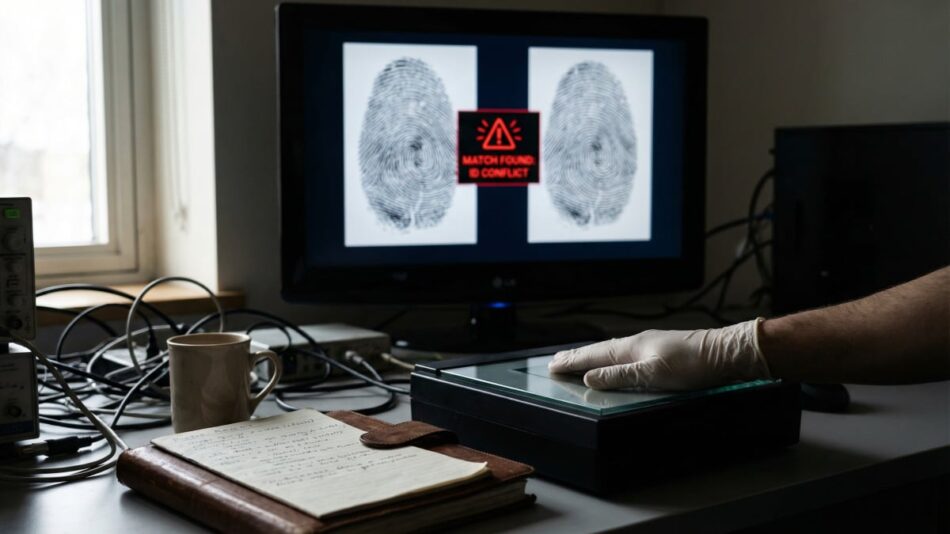
AI Has Just Discovered Something About Our Fingerprints That Could Overturn the Justice System and Our Security
In a groundbreaking revelation, artificial intelligence (AI) has made a discovery that challenges the long-standing belief in the uniqueness of human fingerprints. This finding could have profound implications for the justice system and security protocols worldwide. For over a century, the assumption that no two individuals possess identical fingerprints has been a cornerstone of forensic science, leading to countless convictions based on fingerprint evidence. However, recent AI analysis suggests that the reality may be far more complex than previously thought.
The Foundation of Fingerprint Identification
Fingerprint identification has been an integral part of criminal justice since the early 20th century. Law enforcement agencies across the globe rely on the premise that each person’s fingerprints are unique. This assumption has been pivotal in solving crimes, identifying suspects, and securing convictions. The process typically involves comparing a suspect’s fingerprints to those found at crime scenes, with the expectation that a match indicates guilt.
Historically, fingerprint analysis has been conducted by trained experts who examine the minutiae—small details such as ridge endings and bifurcations—of fingerprints. This method has been considered reliable, leading to its widespread acceptance in courts. However, the recent findings from AI research raise critical questions about the validity of this practice.
The Role of AI in Analyzing Fingerprints
A team of researchers utilized advanced AI algorithms trained on millions of fingerprint images to analyze patterns that were previously undetectable by human experts. This AI system was designed to identify correlations and similarities in fingerprints, not only from different individuals but also from different fingers of the same person. The results were startling.
The AI discovered that fingerprints from different fingers of the same individual can share common patterns, suggesting that the uniqueness of fingerprints may have been overstated. More alarmingly, the analysis indicated that certain fingerprints from different individuals can exhibit striking similarities when examined at specific scales. This revelation challenges the assumption that fingerprints are infallibly unique identifiers.
Implications for the Justice System
The implications of these findings are profound and far-reaching. If fingerprint evidence is not as reliable as once believed, the justice system may need to reevaluate how it uses this type of evidence in criminal cases. The potential for wrongful convictions based on flawed fingerprint identifications raises serious ethical and legal concerns.
Potential for Wrongful Convictions
One of the most pressing issues is the risk of wrongful convictions. If the degree of uniqueness attributed to fingerprints is exaggerated, it raises the question of how many individuals may have been wrongfully convicted based on erroneous fingerprint matches. A study conducted by the National Academy of Sciences found that fingerprint analysis, while generally reliable, is not infallible. The introduction of AI findings could further complicate this issue.
Reassessing Forensic Evidence
Forensic science experts are divided on the implications of the AI analysis. Some welcome the findings as a necessary correction to an overconfident system that has relied heavily on fingerprint evidence. They argue that the legal system must adapt to these new insights and consider alternative forms of evidence to avoid miscarriages of justice.
On the other hand, some forensic experts argue that the AI analysis, while intriguing, does not invalidate decades of practical experience with fingerprint identification. They contend that the traditional methods of fingerprint analysis have been rigorously tested and validated over time, and that the AI findings should be viewed with caution.
Broader Implications for Forensic Science
This discovery opens a new chapter in the ongoing debate about the reliability of forensic evidence. Beyond fingerprints, AI’s ability to analyze vast amounts of data could lead to similar revelations in other areas of forensic science. As AI technology continues to advance, it may uncover long-held assumptions that have shaped the field of criminal justice.
AI in Other Forensic Applications
The potential applications of AI in forensic science extend beyond fingerprint analysis. For example, AI is already being used to enhance the analysis of DNA evidence, ballistics, and digital forensics. The ability of AI to identify patterns and correlations in large datasets could lead to more accurate and reliable forensic analyses.
Moreover, AI can help streamline the investigative process by quickly sifting through vast amounts of data, identifying potential leads, and assisting law enforcement in solving crimes more efficiently. However, as with fingerprint analysis, the use of AI in these areas must be approached with caution to ensure that it does not lead to overreliance on technology at the expense of human judgment and expertise.
Legal and Ethical Considerations
The implications of AI’s findings on fingerprint uniqueness also raise important legal and ethical questions. As the justice system grapples with the reliability of fingerprint evidence, it must also consider the broader implications for civil liberties and individual rights.
Admissibility of Fingerprint Evidence in Court
One of the primary concerns is the admissibility of fingerprint evidence in court. If the uniqueness of fingerprints is called into question, courts may need to reevaluate the standards for admitting fingerprint evidence as reliable. This could lead to challenges in ongoing cases and a potential backlog of appeals from individuals convicted based on fingerprint evidence.
Public Trust in the Justice System
Public trust in the justice system is paramount. If the reliability of fingerprint evidence is undermined, it could erode confidence in the entire criminal justice system. This could have far-reaching consequences, including increased skepticism about the validity of other forms of forensic evidence and a growing demand for transparency in how evidence is collected and analyzed.
The Future of Forensic Science
As AI continues to evolve, it is likely to play an increasingly significant role in forensic science. The ability to analyze large datasets and identify patterns could lead to more accurate and reliable forensic analyses, but it also necessitates a careful consideration of the implications for the justice system.
Training and Education for Forensic Experts
To adapt to these changes, training and education for forensic experts must evolve. Professionals in the field will need to be equipped with the skills to understand and interpret AI-generated analyses. This includes not only technical training in AI and data analysis but also an understanding of the legal and ethical implications of using AI in forensic science.
Collaboration Between AI Experts and Forensic Scientists
Collaboration between AI experts and forensic scientists will be essential to ensure that AI technologies are applied effectively and responsibly. By working together, these professionals can develop best practices for integrating AI into forensic analyses while maintaining the integrity of the justice system.
Conclusion
As AI continues to uncover new insights into the reliability of fingerprint evidence, it is imperative for the justice system to adapt and evolve. The implications of these findings are profound, and they call for a reevaluation of how forensic evidence is used in criminal cases. The future of forensic science lies in the careful integration of AI technologies, rigorous training for professionals, and a commitment to upholding the principles of justice and fairness.
Frequently Asked Questions
The implications are significant, as they raise concerns about the reliability of fingerprint evidence, potentially leading to wrongful convictions and necessitating a reevaluation of how such evidence is used in court.
AI technology could enhance the accuracy and reliability of forensic analyses by identifying patterns in large datasets, streamlining investigations, and potentially uncovering new insights into various forms of forensic evidence.
Forensic experts should consider the legal and ethical implications of using AI, ensure proper training in data analysis, and collaborate with AI specialists to develop best practices for responsible integration of technology in forensic science.
Call To Action
As the landscape of forensic science evolves, it is crucial for legal professionals and law enforcement agencies to stay informed about the latest findings and technologies. Engage with experts in the field to understand how these changes can impact your practice and ensure justice is served accurately.
[np_contact_btn]