‘Restoring’ Old Photos With AI Is a Fundamentally Broken Concept
- Understand why AI-based photo restoration can alter the original identity of images.
- Learn the difference between art conservation and restoration and why it matters for digital photos.
- Explore the ethical and technical challenges of using AI to recover lost details in old photographs.
- Discover practical considerations for businesses and individuals using AI tools for photo enhancement.
The concept of restoring old photos with artificial intelligence is increasingly popular, promising to bring faded or damaged images back to life. However, this approach raises fundamental questions about authenticity and respect for the original material. Unlike traditional art conservation, which aims to preserve without altering, AI-driven restoration often reconstructs missing details based on algorithms rather than historical accuracy.
This article examines why the idea of AI restoration is fundamentally flawed from both an artistic and technological perspective. It also discusses the implications for digital image editing, the risks of identity distortion, and how businesses should approach the use of AI in photo enhancement workflows to maintain integrity and value.
Continue Reading
What Does ‘Restoration’ Mean in the Context of Old Photos?
Restoration traditionally means to “bring back” or “reinstate” something lost or damaged. In the context of old photographs, it implies recovering original details that time or damage has obscured or erased. However, this definition becomes problematic when applied to digital restoration using AI.
Unlike physical art restoration, where conservators work carefully to preserve the original work without adding new elements, AI restoration often generates new visual data. This data is not a faithful recovery but a reconstruction based on patterns learned from other images. The result can be a photo that looks clearer or more detailed but no longer accurately represents the original subject.
Why Art Conservators Reject the Term ‘Restoration’
At institutions like the Opificio delle Pietre Dure in Florence, experts prefer the term art conservation over restoration. Their philosophy centers on protecting and preserving what exists rather than adding or subtracting from the original work. Any addition is seen as an intrusion that compromises the artwork’s authenticity and historical value.
This mindset is crucial when considering old photographs, which are not just images but historical documents. Altering them with AI-generated details risks losing the original identity and context, effectively creating a new image rather than preserving the old one.
How AI ‘Restoration’ Alters the Identity of Photographs
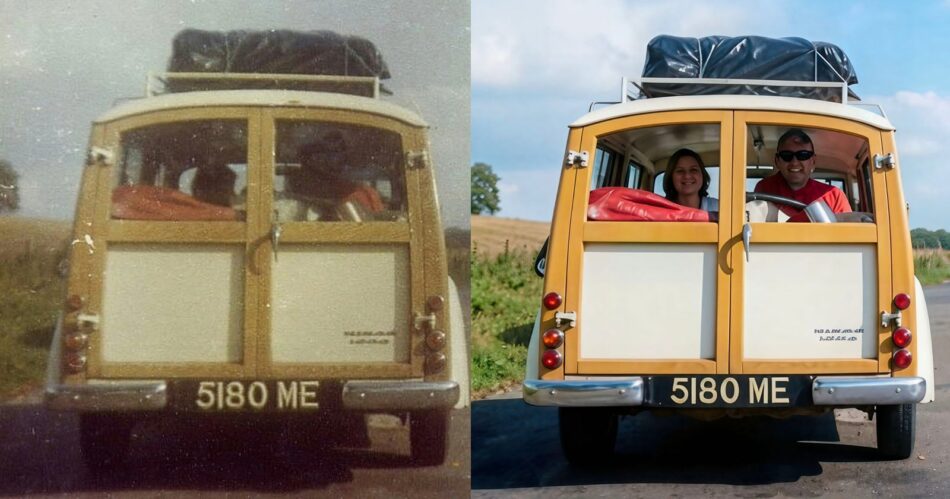
AI restoration tools use machine learning models trained on vast datasets to predict and fill in missing or damaged parts of a photo. While this can produce visually appealing results, it often changes key features such as facial details, clothing colors, and background elements. For example, a man’s jacket color or facial expression might be altered, making the restored photo represent someone different from the original subject.
This phenomenon is especially concerning for photo identity preservation in historical archives, family heirlooms, or legal evidence. The AI’s lack of contextual understanding means it cannot respect the original’s integrity, leading to distortions that may mislead viewers or researchers.
Technical and Ethical Challenges of AI Photo Restoration
- Authenticity risk: AI-generated details are fabricated, not recovered, which questions the photo’s truthfulness.
- Loss of historical accuracy: Altered images may erase or overwrite important historical context.
- Unpredictable outputs: AI models may produce inconsistent results depending on training data biases.
- Ethical dilemmas: Who owns the decision to alter a photo’s content, and how should altered images be labeled?
These challenges highlight why many experts caution against relying solely on AI for photo restoration, advocating for human oversight and transparency in the editing process.
When Is AI Photo Enhancement Appropriate?
While the concept of full restoration is problematic, AI can still be a valuable tool for photo enhancement when used judiciously. Tasks such as noise reduction, contrast adjustment, and color correction can improve image quality without altering core content.
Businesses and individuals should view AI as an assistant rather than an autonomous restorer. Combining AI tools with expert human judgment ensures that enhancements respect the original image’s integrity and historical significance.
Practical Strategies for Using AI in Photo Workflows
- Use AI tools to support, not replace, expert analysis and manual editing.
- Document all changes made to photos for transparency and accountability.
- Maintain original copies of images to preserve unaltered historical records.
- Educate clients and audiences about the nature and limits of AI-enhanced images.
- Choose AI solutions that allow granular control over the restoration process.
Adopting these strategies can help balance the benefits of AI with the need for authenticity and respect for the original work.
Cost, Scalability, and ROI Considerations
AI photo restoration tools often promise quick and cost-effective solutions compared to manual restoration. However, the potential risks to authenticity and reputation may outweigh short-term savings. Businesses must evaluate the return on investment by considering:
- The value of preserving original image identity versus enhanced aesthetics.
- The potential costs of misrepresenting historical or personal images.
- The scalability of AI tools in handling large archives without compromising quality.
- The need for ongoing human oversight and quality control.
Investing in hybrid approaches that combine AI efficiency with expert review often yields the best long-term outcomes.
Future Outlook: Can AI Improve Without Losing Authenticity?
Advances in AI research may eventually produce models better equipped to respect the boundaries of restoration versus enhancement. Techniques like explainable AI and context-aware algorithms could minimize identity distortion and improve transparency.
Until then, the consensus among art conservationists and photography experts remains that AI-based “restoration” is a fundamentally broken concept. The focus should shift toward developing AI as a tool for digital preservation and enhancement that honors the original material rather than rewriting it.
Summary
Restoring old photos with AI is not simply a technical challenge but a philosophical and ethical one. True restoration requires preserving the original identity and historical context, something AI currently cannot guarantee. Businesses and individuals must approach AI photo restoration with caution, prioritizing conservation principles and transparency to maintain trust and authenticity.
Frequently Asked Questions
Call To Action
Explore AI-powered photo enhancement solutions that prioritize authenticity and expert oversight to preserve your valuable images with care and precision.
[np_contact_btn]
Note: Provide a strategic conclusion reinforcing long-term business impact and keyword relevance.