
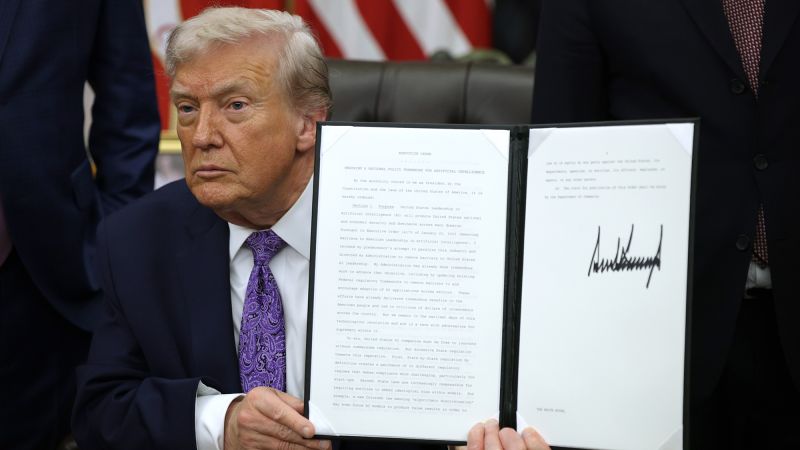
The White House just laid out how it wants to regulate AI
- Federal framework aims to unify AI regulation, preventing conflicting state laws.
- Focus on balancing rapid innovation with public safety and trust in AI technologies.
- Legislative proposals include data center streamlining, AI scam prevention, and intellectual property protections.
- Concerns remain about accountability and the potential impact on AI competitiveness globally.
The White House has unveiled a comprehensive national framework to regulate artificial intelligence, aiming to establish a unified federal approach that supersedes state-level regulations. This move is designed to maintain the United States’ leadership in AI innovation while addressing emerging safety and ethical concerns associated with the technology. The framework reflects a strategic balance between fostering rapid technological advancement and ensuring public trust and security.
By proposing sector-specific regulation and emphasizing protections against AI-enabled scams, content manipulation, and misuse of personal data, the administration seeks to create clear, actionable guidelines for AI development and deployment. However, the approach has sparked debate among industry experts and policymakers about the adequacy of oversight and the potential risks of limiting state-level regulatory efforts.
Continue Reading
What is the White House’s national AI legislative framework?
The White House’s national AI legislative framework is a federal policy proposal aimed at standardizing how artificial intelligence technologies are regulated across the United States. It was released following an executive order signed by former President Donald Trump that blocked states from implementing their own AI regulations. The framework seeks to prevent a patchwork of state laws that could hinder innovation and complicate compliance for AI developers and users nationwide.
This framework covers a wide range of AI-related issues, including data center operations, AI-enabled scams, intellectual property rights, content moderation, and the protection of children’s digital presence. It emphasizes a light-touch regulatory approach designed to foster innovation while safeguarding public interests.
Why is a unified federal approach to AI regulation important?
A unified federal approach is critical to avoiding inconsistencies that arise when individual states impose divergent AI rules. Such a patchwork can create compliance challenges for companies and slow down the adoption of new technologies. The White House argues that a consistent national policy will help the U.S. maintain a competitive edge in the global AI race, particularly against countries like China, by providing clear rules and reducing regulatory uncertainty.
Moreover, a federal framework can better address cross-jurisdictional issues such as data privacy, cybersecurity, and intellectual property, which are essential for the safe and ethical deployment of AI systems.
What are the key objectives outlined by the White House for AI regulation?
The administration has identified six core objectives to guide Congress in legislating AI:
-
Empowering parents with better tools to manage their children’s digital interactions and data privacy.
-
Streamlining permits for data centers to enable on-site power generation, supporting the infrastructure demands of AI.
-
Enhancing legal measures to combat AI-enabled scams and fraudulent activities.
-
Balancing intellectual property rights with the need to train AI models on real-world content without infringing on creators’ rights.
-
Preventing government coercion of technology providers to censor or alter content based on partisan or ideological motives.
-
Encouraging sector-specific regulatory bodies instead of a single overarching AI regulator, to address the diverse applications of AI.
How does the framework address AI safety and accountability?
The framework acknowledges the safety risks posed by AI technologies, especially as they become more integrated into critical sectors such as healthcare, finance, and law enforcement. However, critics argue that the proposed regulations lack concrete mechanisms for accountability and enforcement. For example, some experts highlight the absence of clear pathways to address harms caused by AI, such as bias, discrimination, or misinformation.
The administration’s approach focuses on enabling innovation and economic growth, but it also calls for augmenting existing laws to tackle AI-enabled scams and protecting consumers from deceptive practices. The balance between innovation and oversight remains a central challenge in the policy debate.
What are the implications for state-level AI regulations?
The White House framework explicitly calls for preempting state laws that regulate AI model development or deployment. This means that states would be prohibited from enacting their own AI rules that conflict with federal legislation. The rationale is to avoid regulatory fragmentation that could slow down technological progress and increase costs for businesses operating across multiple states.
However, this preemption has raised concerns among advocates who believe that states should have the ability to address local risks and ethical issues associated with AI. Some states have already passed laws targeting specific AI challenges like deepfakes and algorithmic bias in hiring, which may be overridden by federal legislation.
What are the reactions from industry and AI experts?
The reaction to the White House’s AI regulatory framework has been mixed. Supporters, including some venture capital firms and technology advocates, praise the move as a necessary step to provide clarity and protect innovation. They argue that federal regulation is essential to ensure the U.S. remains competitive and that clear rules will help protect users and innovators alike.
Conversely, critics from AI ethics and policy groups warn that the framework is too light on enforcement and accountability. They argue it mirrors the insufficient regulation seen in social media, potentially allowing harmful AI practices to persist unchecked. Some experts emphasize the need for stronger safeguards and transparent oversight mechanisms to prevent misuse and protect civil rights.
How will the White House work with Congress to enact AI legislation?
The administration plans to collaborate with Congress to translate the framework into formal legislation. However, many analysts believe that passing comprehensive AI regulation may be challenging before the upcoming midterm elections due to political dynamics and competing priorities. The White House’s proposal sets the stage for ongoing discussions about the scope and nature of AI oversight in the U.S.
Lawmakers will need to balance the urgency of addressing AI risks with the desire to avoid stifling innovation. Sector-specific regulatory bodies, as recommended by the framework, may play a key role in tailoring rules to different industries and use cases.
What are the potential economic and national security impacts?
Artificial intelligence is increasingly integral to economic growth, job creation, and national security. The White House framework emphasizes that a coherent regulatory approach will help the U.S. maintain leadership in AI innovation, which is vital for competitiveness in global markets and defense capabilities.
By preventing a fragmented regulatory environment, the policy aims to reduce barriers to investment and accelerate the deployment of AI technologies across sectors. However, the rapid pace of AI development also poses risks, including misuse by malicious actors and unintended consequences, which require vigilant oversight.
What challenges remain in regulating AI effectively?
Regulating AI presents unique challenges due to the technology’s complexity, rapid evolution, and broad applications. Key issues include:
-
Ensuring accountability for AI-driven decisions and harms.
-
Protecting privacy and preventing discrimination.
-
Balancing innovation incentives with consumer protections.
-
Coordinating regulation across multiple jurisdictions and sectors.
-
Addressing ethical concerns such as transparency and bias mitigation.
Effective AI regulation will require ongoing collaboration between government, industry, academia, and civil society to adapt policies as technologies and societal impacts evolve.
How does the framework address AI’s impact on children and digital privacy?
The White House framework specifically calls on Congress to empower parents with enhanced tools to manage their children’s digital presence. This includes protections against inappropriate content and unauthorized data collection. Given the increasing use of AI in digital platforms accessed by minors, safeguarding children’s privacy and well-being is a critical component of the proposed legislation.
These measures aim to provide families with greater control and transparency over how AI systems interact with young users, helping to build trust in emerging technologies.
What role do data centers play in the AI regulatory framework?
Data centers are the backbone of AI infrastructure, providing the computational power necessary to train and deploy complex models. The framework proposes streamlining permits for data centers to generate power on-site, facilitating more efficient and sustainable operations.
This initiative addresses the growing energy demands of AI technologies and supports the expansion of AI capabilities while considering environmental impacts and infrastructure needs.
How does the framework propose to handle intellectual property rights in AI?
The administration recommends a balanced approach that protects intellectual property rights while allowing AI models to be trained on real-world content. This is crucial because AI systems often require vast datasets, including copyrighted materials, to learn and improve.
The framework calls for augmenting existing legal protections to ensure creators’ rights are respected without unduly restricting AI innovation. This balance is essential for fostering creativity and technological progress.
What are the concerns about government influence on AI content moderation?
The framework explicitly warns against government coercion of technology providers to ban, compel, or alter content based on partisan or ideological agendas. It advocates for protecting the independence of AI providers in content decisions, aiming to prevent censorship driven by political motives.
This stance reflects broader debates about free speech, platform responsibility, and the role of government in regulating digital content.
What does the framework say about the structure of AI regulation?
Instead of creating a single centralized AI regulatory body, the White House recommends that Congress empower sector-specific regulatory agencies to oversee AI applications relevant to their domains. This approach recognizes the diverse nature of AI use cases, from healthcare and finance to transportation and public safety.
Sector-specific oversight can provide more tailored and effective regulation, addressing unique risks and opportunities within each industry.
How might this framework influence global AI competition?
The framework is designed to position the U.S. as a leader in the global AI landscape by providing clear, innovation-friendly regulations. By avoiding fragmented state laws and promoting a balanced regulatory environment, the U.S. aims to accelerate AI development and deployment, maintaining competitiveness against international rivals, particularly China.
Effective regulation that fosters trust and safety can also encourage investment and adoption of AI technologies, strengthening the country’s economic and strategic standing.
What are the next steps for AI regulation in the U.S.?
The White House will engage with Congress to draft legislation based on the framework’s principles. This process will involve stakeholder consultations, impact assessments, and negotiations to address concerns from industry, advocacy groups, and policymakers.
Given the complexity and rapid evolution of AI, regulatory efforts will likely be iterative, with ongoing updates to address new challenges and technological advances.
Summary
The White House’s national AI legislative framework represents a significant step toward comprehensive federal regulation of artificial intelligence. It aims to unify rules across states, promote innovation, protect consumers, and maintain U.S. leadership in AI. While the framework outlines clear objectives and a balanced approach, challenges remain in ensuring accountability, managing risks, and enacting legislation amid political complexities. The coming months will be critical as Congress considers how to translate this vision into effective laws shaping the future of AI in America.
Frequently Asked Questions
Call To Action