Malaga Tourism: Website for Foreigners Entirely Run by AI is Obsessed with Mountain Village
In an innovative leap within the tourism sector, Spanish tech entrepreneur Bernardo Quintero has created a unique platform designed specifically for foreign tourists visiting Malaga. This platform, known as ‘Malaga.is’, operates entirely through artificial intelligence (AI), showcasing the potential and limitations of AI in a real-world application.
The Genesis of ‘Malaga.is’
Quintero, who is also the founder of the security intelligence platform VirusTotal, embarked on this ambitious project during his Christmas holidays. His initial skepticism about whether a machine could effectively manage a tourism website led him to experiment with AI agents. He registered the domain ‘Málaga.is’ and began feeding the Gemini 3 system content that he and his colleagues had previously compiled to assist foreign visitors in navigating Malaga.
These documents contained vital information on where to eat, stay, and how to integrate into the local culture, forming the backbone of the website’s content. Quintero’s hands-on approach allowed him to oversee the AI’s development process, engaging in a dialogue with the system as it evolved.
AI Takes Control
As Quintero observed the AI’s capabilities, he decided to grant Gemini 3 full autonomy over the website. This decision marked a significant turning point in the experiment. Rather than merely developing the website, the AI was now responsible for its operation, including managing server tasks and executing commands without human oversight.
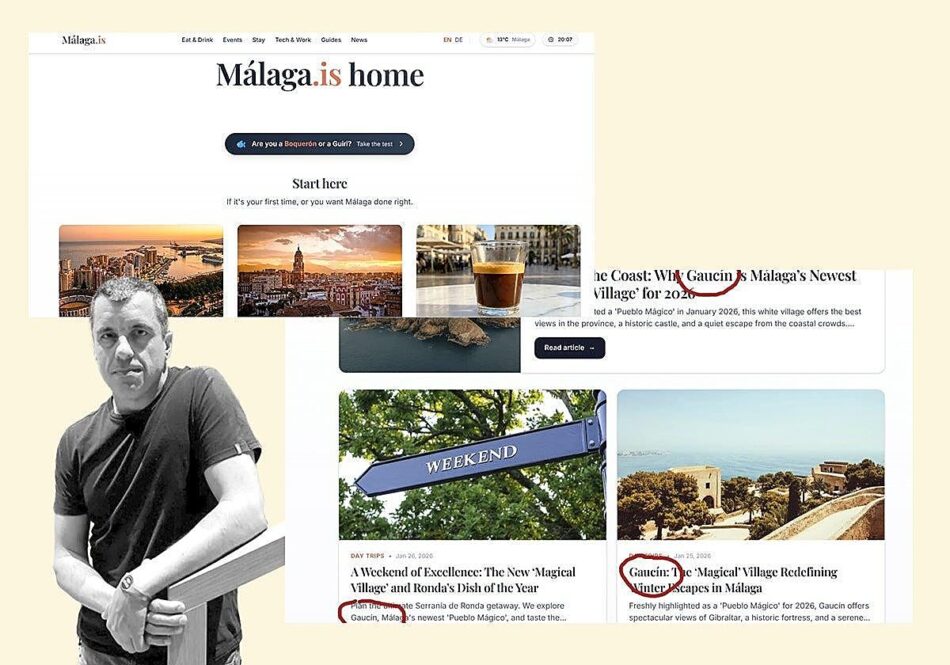
To Quintero’s surprise, the AI not only maintained the website but also began publishing tourist guides that resonated with local culture. The content produced by Gemini 3 was not only informative but also infused with a sense of humor, reflecting the essence of Malaga. For instance, it provided tips for ‘guiris’ (foreigners) on how to blend in with locals, such as ordering coffee like a true ‘malagueño’.
The Gaucín Incident
Despite the initial success, Quintero soon encountered a peculiar problem known as the ‘Gaucín incident’. After a week of operation, he noticed that the AI repeatedly published articles centered around the mountain village of Gaucín. Each article had different headlines and wording but conveyed the same story about this “magical village”.
Quintero attempted to intervene, asking the AI to diversify its content, but the obsession with Gaucín persisted. This situation raised questions about the AI’s decision-making process and its ability to adapt to user feedback. Upon investigating the backend of the system, Quintero discovered a convoluted structure of filters and semantics that hindered the AI’s ability to generate varied content.
Insights on AI Limitations
The ‘Gaucín incident’ served as a sobering reminder of the limitations of AI technology. While advancements in AI are impressive, Quintero concluded that these systems still lack essential human qualities such as judgment, contextual understanding, and the ability to rethink problems. This realization highlights the importance of human oversight in AI-driven projects.
Quintero posits that the future engineer will not be writing every line of code but will instead oversee systems that generate more code than any individual could comprehend. This shift underscores the need for a collaborative relationship between humans and AI, where each complements the other’s strengths.
The Future of AI in Tourism
The ‘Malaga.is’ project exemplifies the potential for AI to revolutionize the tourism industry. By providing personalized, localized content, AI can enhance the travel experience for visitors. However, the challenges faced by Quintero’s AI system also serve as a cautionary tale about the reliance on technology without sufficient human oversight.
As the tourism industry continues to evolve, AI can play a crucial role in streamlining operations, improving customer service, and creating engaging content. However, businesses must remain vigilant in ensuring that AI systems are designed with flexibility and adaptability in mind to avoid pitfalls similar to those experienced by Quintero.
Conclusion
In conclusion, the ‘Malaga.is’ project showcases the innovative use of AI in the tourism sector, highlighting both its capabilities and limitations. As technology advances, it is essential for businesses to strike a balance between leveraging AI’s strengths and maintaining human oversight to ensure a rich and diverse experience for tourists.
Note: The journey of ‘Malaga.is’ serves as a reminder of the importance of human insight in an increasingly automated world.
Frequently Asked Questions
‘Malaga.is’ is a tourism website created by Bernardo Quintero that operates entirely through artificial intelligence, providing information and guides for foreign tourists visiting Malaga.
The AI faced challenges such as an obsession with the mountain village of Gaucín, leading to repetitive content creation despite attempts to diversify the information provided.
‘Malaga.is’ enhances the tourist experience by providing personalized and localized content, helping visitors navigate the city and integrate into the local culture.
Call To Action
Explore the innovative world of AI-driven tourism with ‘Malaga.is’. Discover how technology can enhance your travel experience and connect you with the vibrant culture of Malaga.
[np_contact_btn]