Introducing “vibe design” with Stitch
- Leverage AI-native tools to transform natural language into high-fidelity UI designs rapidly.
- Utilize an infinite design canvas that supports diverse creative inputs including images, text, and code.
- Accelerate design iteration with instant interactive prototypes and AI-assisted user journey mapping.
- Enhance team collaboration through voice-driven commands and integrated AI design critique.
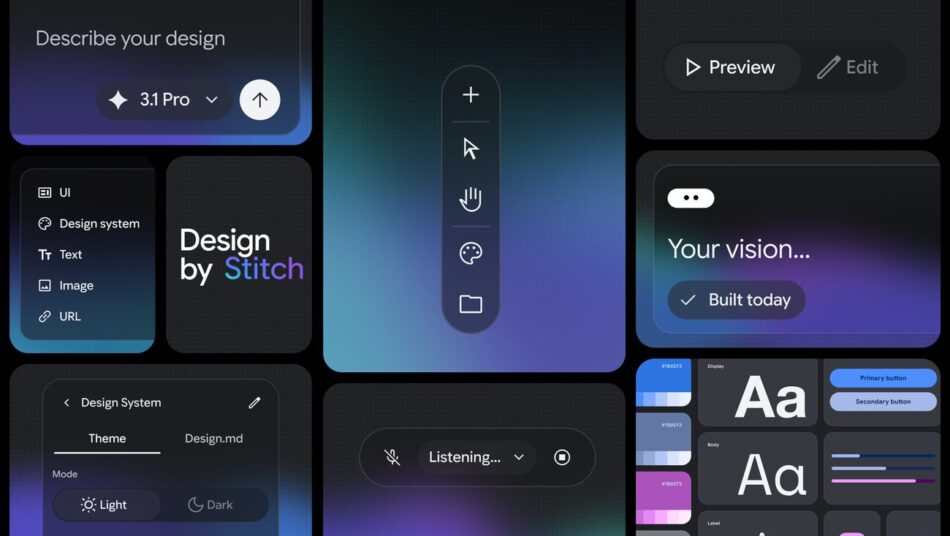
In the evolving landscape of artificial intelligence and software development, Google Labs introduces Stitch, an innovative platform that revolutionizes UI design by integrating AI deeply into the creative process. Stitch enables users to translate simple natural language prompts into sophisticated, high-fidelity user interfaces, streamlining the journey from concept to prototype.
By embracing “vibe design,” Stitch empowers designers and developers to start their projects not with rigid wireframes but with clear business goals, emotional user experiences, and inspirational references. This approach fosters creativity and efficiency, allowing rapid exploration and refinement of ideas within a dynamic, AI-powered environment.
Continue Reading
What is “vibe design” and how does Stitch enable it?
Vibe design is a novel approach to UI creation that prioritizes the intent and emotional resonance of a product over traditional structural starting points like wireframes. Instead of focusing on layout first, designers articulate the desired business outcomes, user feelings, and inspirations, allowing AI to generate design options that align with these objectives.
Stitch, developed by Google Labs, is the platform that brings vibe design to life. It acts as an AI-native software design canvas, where anyone—from seasoned designers to product managers—can create, iterate, and collaborate on UI projects using natural language inputs. This democratizes design by reducing the barrier to entry and accelerating the creative process.
How does the new AI-native infinite canvas transform design workflows?
The redesigned Stitch interface introduces an infinite canvas that supports an unrestricted flow of ideas. This canvas is not confined by traditional page or screen limits, allowing designers to develop concepts from initial sketches to fully functional prototypes in one space.
- Creative flexibility: Users can add images, text, or even code snippets directly onto the canvas, providing rich context to the AI and collaborators.
- Iterative exploration: The canvas facilitates divergence and convergence in design thinking, enabling multiple ideas to coexist and evolve simultaneously.
- Project scalability: As projects grow, the canvas accommodates expanding complexity without compromising usability.
What role does the new design agent play in Stitch?
The design agent is an AI-powered assistant embedded within Stitch that comprehends the entire project context. It tracks design evolution, suggests improvements, and manages multiple design directions through the Agent manager feature.
This agent enables users to maintain organization while experimenting with parallel concepts, reducing cognitive load and enhancing productivity. It also offers reasoning capabilities that help refine design choices based on project goals and user feedback.
How do DESIGN.md and design systems integration improve consistency?
Stitch expands its design system toolkit by introducing DESIGN.md, an agent-friendly markdown format that standardizes design rules. Users can extract design systems from existing URLs or export/import them between Stitch projects and other design or coding tools.
This interoperability ensures brand consistency and accelerates project onboarding by reusing established design components and guidelines, eliminating redundant work and fostering collaboration across teams.
How does Stitch enable rapid iteration and prototyping?
Stitch transforms static UI designs into interactive prototypes instantly. Designers can “Stitch” screens together within seconds and preview the user journey by clicking “Play.” The platform automatically generates logical next screens based on user interactions, mapping out flows effortlessly.
- Real-time feedback: Immediate prototyping allows quick validation and refinement of ideas.
- User journey mapping: AI-assisted flow generation helps visualize and optimize user experiences.
- Efficiency gains: Reduces time from concept to testable prototype, accelerating product development cycles.
What collaborative features does Stitch offer for design teams?
Stitch integrates AI-powered collaboration tools that transform the design process into a dynamic partnership between humans and AI. Voice capabilities enable users to communicate directly with the canvas, issuing commands like “show me three menu options” or “apply different color palettes.”
The design agent acts as a real-time critic and creative partner, helping teams uncover the best ideas through dialogue and iterative feedback. This hands-free interaction keeps users in their creative flow while enhancing productivity and innovation.
How does Stitch connect design to development workflows?
Beyond design, Stitch bridges the gap to development through its MCP server and SDK. Teams can leverage Stitch’s capabilities via skills and tools, integrating with developer environments such as AI Studio and Antigravity.
This seamless export and synchronization ensure that design intent is preserved throughout the software development lifecycle, fostering alignment between designers, AI, and developers for faster, higher-quality product delivery.
What are the strategic benefits of adopting Stitch for UI design?
Adopting Stitch delivers multiple strategic advantages:
- Accelerated innovation: Rapid ideation and prototyping shorten time-to-market.
- Enhanced creativity: AI-assisted exploration expands design possibilities.
- Improved collaboration: Integrated voice and AI critique streamline teamwork.
- Scalable workflows: Infinite canvas and design system integration support complex projects.
- Cost efficiency: Reduces manual design iterations and development misalignments.
Overall, Stitch empowers organizations to deliver compelling user experiences with greater speed and precision, leveraging the power of AI to transform design from a static task into an evolving creative journey.
Frequently Asked Questions
Call To Action
Start transforming your UI design process today with Stitch’s AI-native platform—accelerate innovation, enhance collaboration, and bring your product visions to life faster than ever before.
[np_contact_btn]
Note: Provide a strategic conclusion reinforcing long-term business impact and keyword relevance.