
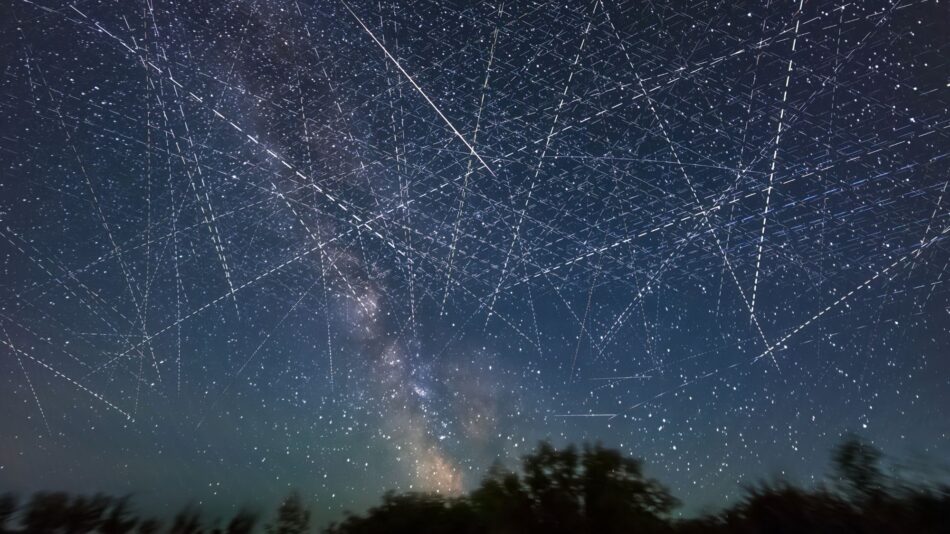
‘This is really intolerable’: Astronomers protest giant orbiting mirror project and SpaceX’s million AI satellites
- Orbiting mirror constellations threaten to significantly increase sky brightness, disrupting astronomical observations.
- SpaceX’s plan for up to one million AI-powered satellites raises concerns about space debris and scientific interference.
- Astronomical societies emphasize the cultural and scientific importance of preserving dark skies for future research and heritage.
- Regulatory bodies like the FCC face pressure to balance technological innovation with environmental and scientific preservation.
The night sky, a vital resource for both scientific discovery and cultural heritage, faces unprecedented threats from ambitious space projects. Among these, a proposed constellation of tens of thousands of orbiting mirrors designed to reflect sunlight onto terrestrial solar power plants has alarmed astronomers worldwide. Simultaneously, SpaceX’s vision of deploying up to one million AI-powered satellites as orbiting data centers has intensified concerns about the increasing saturation of Earth’s orbital environment.
Experts warn that these developments could irreversibly damage the quality of astronomical observations by increasing light pollution and physical obstructions in orbit. The British Royal Astronomical Society and other scientific organizations have voiced strong opposition, urging regulators to reconsider approvals that could lead to the destruction of a central part of human heritage — the pristine night sky.
Continue Reading
What are the giant orbiting mirror projects and why do they concern astronomers?
The giant orbiting mirror projects involve deploying tens of thousands of reflective satellites in low Earth orbit (LEO) to redirect sunlight onto solar power plants on the ground. This innovative approach aims to increase solar energy generation efficiency by providing illumination during nighttime or cloudy conditions. However, astronomers warn that the sheer number of these mirrors and their reflective surfaces will dramatically increase light pollution in space, making it difficult to conduct sensitive astronomical observations.
Unlike traditional light pollution from urban areas, this form of artificial sky brightness originates from space, affecting the entire globe. The mirrors’ brightness and movement across the sky will create streaks and glare in telescope images, obscuring faint celestial objects and reducing the quality of data collected by professional and amateur astronomers alike.
How does SpaceX’s plan for one million AI satellites impact astronomy and space safety?
SpaceX has proposed an ambitious plan to deploy up to one million orbiting data centers equipped with artificial intelligence capabilities. These satellites are intended to form a massive satellite megaconstellation to provide global internet coverage and advanced computing services from space. While this could revolutionize connectivity and cloud computing, the plan raises serious concerns about orbital congestion, space debris risks, and interference with astronomical research.
The proliferation of such a large number of satellites in LEO increases the chances of collisions, generating debris that could threaten other satellites and spacecraft. Moreover, the brightness and density of these satellites can obscure the night sky, complicating efforts to study distant stars, galaxies, and transient cosmic events. The cumulative effect could be a significant setback for space science and astrophysics.
Why do astronomers consider the night sky a central part of human heritage?
Astronomers and cultural historians alike emphasize that the night sky is a shared heritage of humanity, inspiring scientific inquiry, artistic expression, and philosophical reflection throughout history. The clarity of the dark sky enables discoveries about the universe’s origins, the nature of celestial bodies, and the fundamental laws of physics. It also holds cultural significance for indigenous peoples and societies worldwide.
Robert Massey, deputy executive director of the British Royal Astronomical Society (RAS), stated, “It’s absolutely the destruction of a central part of human heritage.” The loss of dark skies due to artificial illumination from orbiting mirrors or satellite constellations would diminish humanity’s ability to connect with the cosmos and conduct essential scientific research.
What regulatory challenges arise from these space projects?
The U.S. Federal Communications Commission (FCC) and other international regulatory bodies face complex decisions balancing technological innovation with environmental and scientific preservation. Approving large-scale satellite constellations and orbiting mirror projects involves assessing their impact on space traffic management, orbital sustainability, and the preservation of dark skies.
Stakeholders including astronomers, environmentalists, industry representatives, and policymakers must collaborate to develop guidelines that mitigate negative effects. This may include limiting satellite brightness, optimizing orbital altitudes, and implementing debris mitigation strategies. Failure to address these concerns could lead to irreversible damage to the space environment and scientific capabilities.
What are the potential solutions to protect astronomy while enabling space innovation?
Several approaches can help balance the benefits of satellite-based technologies with the need to protect astronomical observations:
- Satellite design improvements to reduce reflectivity and brightness, such as dark coatings or sunshades.
- Regulating the number and orbital placement of satellites to minimize interference and collision risks.
- Developing advanced space traffic management systems to track and coordinate satellite movements.
- Encouraging transparency and cooperation between satellite operators and the scientific community.
- Investing in ground-based and space-based telescopes equipped with adaptive optics and AI-powered image processing to mitigate light pollution effects.
Implementing these strategies requires international coordination and proactive policymaking to ensure sustainable use of near-Earth space.
How will these developments affect the future of space-based artificial intelligence and data centers?
The integration of artificial intelligence in space through orbiting data centers promises enhanced computational power and real-time data processing capabilities for various applications, including Earth observation, climate monitoring, and global communications. However, the scale of deployment proposed by companies like SpaceX demands careful consideration of environmental and scientific impacts.
Future growth in space-based AI infrastructure must prioritize scalability and sustainability, ensuring that benefits do not come at the cost of increased space debris or diminished scientific access to the night sky. Collaborative frameworks and innovative engineering solutions will be critical to harmonize these objectives.
What is the broader impact of satellite megaconstellations on society and the environment?
Beyond astronomy, the expansion of satellite megaconstellations influences global communications, national security, and environmental monitoring. While they offer improved internet access and data services, they also raise concerns about electromagnetic interference, privacy, and the militarization of space.
Environmental impacts include the risk of increased atmospheric pollution from rocket launches and reentries, as well as the long-term sustainability of orbital zones. Experts warn that without responsible management, the growing satellite population could lead to cascading collisions known as the Kessler Syndrome, severely limiting future space operations.
How can the public and scientific communities advocate for responsible space development?
Public awareness and advocacy play vital roles in shaping policies that protect the night sky and space environment. Scientific organizations like the RAS, along with international coalitions, are actively engaging with regulators and industry stakeholders to promote responsible practices.
Individuals can support these efforts by staying informed, participating in citizen science projects, and encouraging policymakers to prioritize sustainable space activities. Transparency from satellite operators and inclusive dialogue will be essential to balance innovation with preservation.
Summary of key considerations for businesses and policymakers
- Assess the return on investment of satellite projects against potential risks to scientific research and environmental sustainability.
- Incorporate risk management strategies for space debris and light pollution early in project planning.
- Promote cross-sector collaboration to develop scalable and sustainable space infrastructure.
- Invest in technologies that mitigate negative impacts on astronomy and space safety.
- Engage in transparent communication with the public to build trust and support for space initiatives.
Frequently Asked Questions
Call To Action
Engage with policymakers and industry leaders to advocate for sustainable satellite deployment that protects our night skies while fostering innovation in space-based AI technologies.
Note: Provide a strategic conclusion reinforcing long-term business impact and keyword relevance.