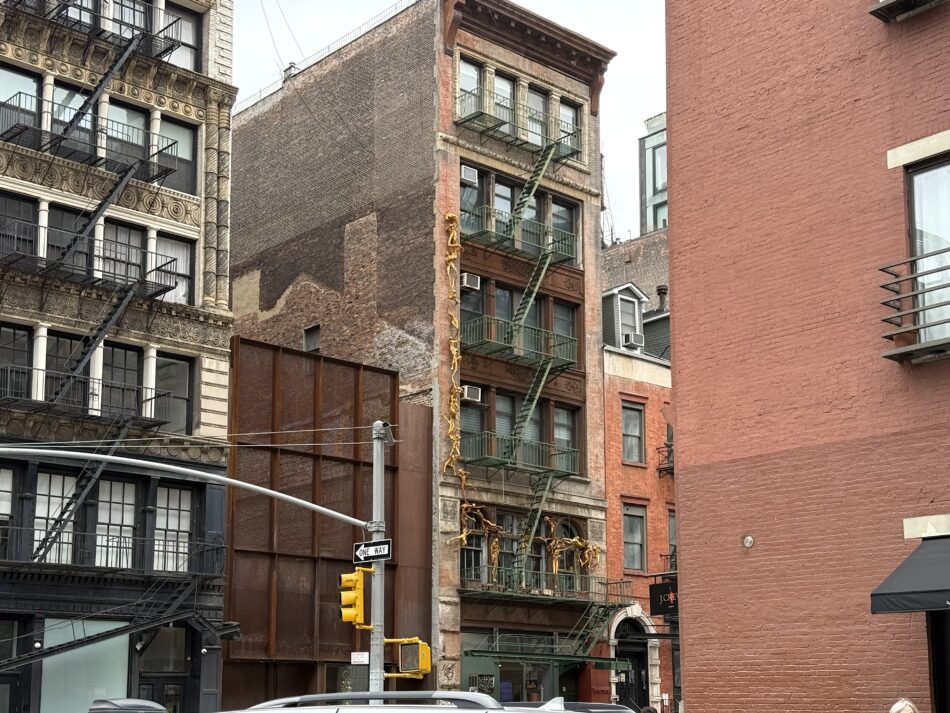
The enduring phantom outline of a long-gone early 19th century house on Bond Street
- Discover the historical significance of Bond Street as an exclusive 19th-century residential enclave in New York City.
- Learn how the Federal-style architecture shaped the early urban fabric of Bond Street and its lasting visual traces.
- Understand the impact of urban development and industrialization on historic residential neighborhoods in Manhattan.
- Explore the cultural legacy and preservation challenges of ghost outlines of demolished historic buildings in modern cityscapes.
Bond Street, located in Manhattan’s East Village, was once a prestigious residential street in the early 19th century. Known for its elegant Federal-style houses, the street attracted wealthy New Yorkers seeking refuge from the crowded downtown areas. Although most of these homes have vanished, one particular house at 22 Bond Street left behind a haunting phantom outline on the adjacent building, preserving a ghostly reminder of the past.
This article delves into the architectural and social history of Bond Street, the forces that led to the disappearance of its historic homes, and the enduring visual legacy of the vanished 22 Bond Street house. We also examine how such historic preservation phenomena contribute to our understanding of urban transformation and cultural memory in New York City.
Continue Reading
What was Bond Street like in the early 19th century?
Bond Street was one of New York City’s most exclusive neighborhoods during the 1830s. Wealthy residents, eager to escape the increasingly commercial and congested areas below Houston Street, settled here. The street stretched only two blocks from Broadway to the Bowery, yet it was lined with elegant townhouses that embodied the refined tastes of the time.
The homes were predominantly Federal-style houses, characterized by their brick facades, white trim, dormer windows, and sometimes classical columns framing the entrances. These houses were typically three or four stories tall, designed to accommodate the lifestyle and social status of affluent families. Bond Street’s architecture and community reflected a period when New York was expanding northward, and residential enclaves were carefully crafted to convey exclusivity and elegance.
What defines Federal-style architecture and why was it popular on Bond Street?
The Federal-style architecture emerged in the United States between roughly 1780 and 1840, inspired by European neoclassical design but adapted for American tastes. Key features include symmetrical facades, brick construction, decorative moldings, and modest classical details such as elliptical fanlights and slender columns.
On Bond Street, these houses represented the cutting edge of urban residential design. Their clean lines and restrained ornamentation conveyed a sense of order and refinement. The style was well-suited to the narrow lots and dense urban setting, allowing for elegant but efficient use of space. The houses at 22 and 26 Bond Street exemplified this style, with 26 Bond Street still standing today as a rare survivor.
Why did the Federal-style homes on Bond Street disappear?
The mid-19th century brought significant changes to Manhattan’s urban landscape. Industrialization and commercial expansion began to encroach on residential neighborhoods like Bond Street. Business interests and manufacturing facilities moved in, increasing noise, pollution, and traffic. Wealthy residents, unwilling to tolerate these conditions, migrated further north to newer, more exclusive areas such as the Upper East Side and Harlem.
As a result, the Federal-style houses on Bond Street were gradually demolished. Many were replaced by commercial buildings or tenements. The houses, once symbols of prestige, were deemed too small and outdated for the evolving tastes of the Gilded Age elite. The house at 22 Bond Street was torn down in the early 20th century, replaced by a small garage by 1940, yet its outline mysteriously remained visible on the neighboring building at 24 Bond Street.
What is the significance of the phantom outline at 22 Bond Street?
The phantom outline of the 22 Bond Street house is a rare architectural ghost that provides a tangible link to the city’s antebellum past. Visible as a faded silhouette on the brick wall of 24 Bond Street, it shows the peaked roof, twin chimneys, and general shape of the original house. This outline has persisted despite decades of urban change, symbolizing the layers of history embedded in New York’s built environment.
Such ghost outlines are important for historians, architects, and urban enthusiasts because they reveal the physical traces of vanished structures and the stories they carry. They also raise awareness about the impermanence of urban architecture and the value of historic preservation efforts.
How does the surviving house at 26 Bond Street compare?
The house at 26 Bond Street, located just east of Broadway, remains one of the few intact examples of the Federal-style houses that once dominated the street. It shares many architectural features with the vanished 22 Bond Street home, including red brick construction, dormer windows, and a peaked roof. Although modernized with additions like fire escapes and air conditioning units, it retains much of its original character.
This surviving house serves as a visual reference point to understand what the neighborhood looked like in the early 19th century. It also highlights the contrast between preservation and loss, showing how some historic buildings can endure while others disappear entirely.
What can the story of Bond Street teach us about urban change and preservation?
The transformation of Bond Street from an exclusive residential enclave to a commercial and industrial zone illustrates broader patterns of urban evolution. As cities grow and economies shift, neighborhoods often undergo dramatic changes in function and form. The disappearance of historic homes like those on Bond Street reflects economic pressures, changing social preferences, and the challenges of balancing growth with heritage conservation.
The ghost outlines and surviving buildings on Bond Street remind us of the importance of documenting and preserving architectural history. They encourage cities to consider adaptive reuse, contextual development, and the integration of historic elements into modern urban fabric. This approach can enrich community identity and provide continuity amid change.
What role does Bond Street’s history play in today’s East Village?
Today, Bond Street is part of the vibrant and diverse East Village, known for its cultural richness and dynamic urban life. While the street no longer holds the same exclusivity it once did, its history adds depth to the neighborhood’s character. The historic architecture and stories of Bond Street’s past residents contribute to the cultural tapestry that attracts residents and visitors alike.
Preserving and interpreting sites like the phantom outline at 22 Bond Street helps connect current generations to the city’s layered history. It also fosters appreciation for the architectural and social transformations that have shaped the East Village and New York City as a whole.
How can digital platforms and WordPress support sharing historic urban stories?
Digital platforms, including WordPress websites, play a crucial role in documenting and disseminating urban history. Blogs, photo archives, and interactive maps allow historians, enthusiasts, and communities to share research, images, and personal narratives about places like Bond Street.
Using WordPress for such projects offers flexibility, scalability, and ease of management. It supports multimedia content, SEO optimization, and community engagement tools that can amplify awareness of historic preservation issues. By leveraging these digital tools, the stories of vanished houses and ghost outlines can reach wider audiences and inspire preservation advocacy.
What are the challenges and opportunities in preserving urban architectural ghosts?
Preserving architectural ghosts like the outline of 22 Bond Street involves challenges such as environmental degradation, urban development pressures, and limited public awareness. These remnants are often fragile and may be overlooked in planning processes.
However, they also present opportunities to creatively interpret urban history. Cities can incorporate ghost outlines into public art, educational programs, and heritage trails. This approach can enhance cultural tourism, foster community pride, and encourage sustainable urban development that respects historical layers.
Summary: The lasting legacy of Bond Street’s early 19th-century houses
The story of the long-gone house at 22 Bond Street and its enduring phantom outline encapsulates the complex interplay between history, architecture, and urban change. It highlights the significance of Federal-style architecture in shaping early New York neighborhoods and the impact of economic and social shifts on residential patterns.
By studying and preserving these ghostly traces, we gain insight into the city’s evolution and enrich our collective memory. Bond Street’s architectural ghosts remind us that beneath the modern cityscape lie stories waiting to be rediscovered and honored.
Frequently Asked Questions
Call To Action
Explore the rich history of your neighborhood by creating a WordPress site that documents and shares architectural heritage, ensuring that stories like Bond Street’s phantom outline continue to inspire and educate future generations.
Note: Provide a strategic conclusion reinforcing long-term business impact and keyword relevance.