Mobile POS Market Is Booming So Rapidly
- Leverage mobile POS systems to enhance payment flexibility and customer experience.
- Understand key market drivers such as digital payment growth and smartphone penetration.
- Explore regional growth opportunities, especially in Asia-Pacific and North America.
- Prepare for challenges like cybersecurity risks and regulatory compliance in mobile transactions.
The mobile POS market is experiencing unprecedented growth, driven by the rapid adoption of digital payments and the proliferation of smartphones worldwide. Businesses of all sizes are increasingly turning to portable payment solutions that enable seamless transactions anytime and anywhere. This surge is reshaping retail, hospitality, and small business operations by offering enhanced flexibility and integration with inventory and customer management systems.
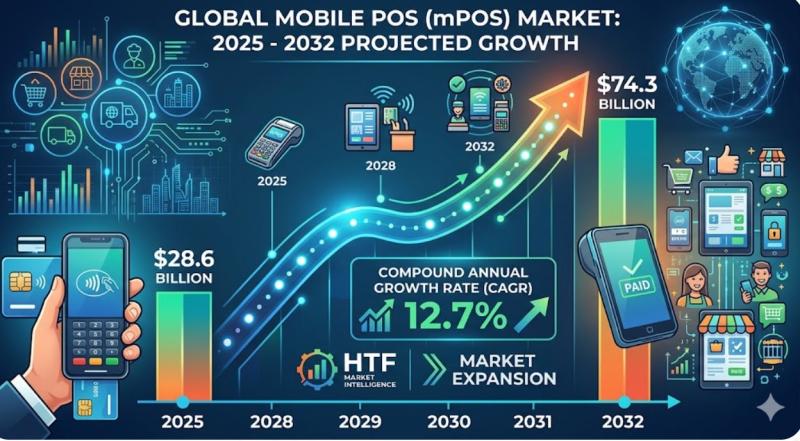
With projections indicating a compound annual growth rate (CAGR) of 12.7% from 2025 to 2032, the mobile POS sector is set to expand from $28.6 billion in 2025 to an estimated $74.3 billion by 2032. Key players like Shopify, PayPal, and Ingenico are innovating to capture this expanding market, while emerging regions such as Asia-Pacific present significant growth potential. Understanding the dynamics of this market is essential for businesses aiming to capitalize on the evolving payment landscape.
Continue Reading
What Is Driving the Explosive Growth of the Mobile POS Market?
The primary drivers behind the booming mobile POS market growth include the widespread adoption of digital payment methods, increasing smartphone penetration, and a global push towards cashless economies. Small and medium-sized enterprises (SMEs) and retailers are seeking cost-effective, portable payment solutions that support contactless transactions and integrate with other business systems.
Governments worldwide are encouraging cashless payments to improve transaction transparency and reduce fraud, further fueling demand. Additionally, the rise of app-based POS solutions and cloud-based transaction management systems provides businesses with scalable and flexible options to meet evolving consumer expectations.
Key Types of Mobile POS Systems and Their Applications
Mobile POS technology comes in various forms, each suited to different business needs:
- Portable POS terminals offer dedicated hardware for payment processing on the go.
- Smartphone POS systems utilize mobile devices with card readers to enable quick payments.
- Tablet POS solutions provide larger screens and more functionality for complex transactions.
- Cloud-based POS systems allow real-time data synchronization and remote management.
- Contactless POS supports NFC and QR code payments, enhancing speed and hygiene.
These systems find applications across retail stores, restaurants, hospitality, transportation, and various small business sectors, enabling seamless customer experiences and operational efficiency.
Regional Insights: Where Is the Mobile POS Market Expanding Fastest?
North America currently dominates the mobile POS market, driven by advanced digital infrastructure and high consumer adoption of contactless payments. However, the Asia-Pacific region is the fastest-growing market, fueled by rising smartphone penetration, expanding e-commerce, and supportive government initiatives promoting cashless transactions.
Emerging markets in Latin America, the Middle East, and Africa also present substantial opportunities due to increasing mobile connectivity and the informal retail sector’s adoption of mobile payments.
Market Trends Shaping the Future of Mobile POS
Several trends are influencing the evolution of mobile POS technology:
- Integration with inventory and customer relationship management systems to streamline operations.
- Adoption of QR code and Unified Payments Interface (UPI) payments, especially in Asia.
- Shift towards subscription-based service models offering ongoing software updates and support.
- Omnichannel retail integration enabling consistent customer experiences across physical and digital channels.
- Enhanced security protocols to mitigate growing cybersecurity risks.
Challenges and Risks Facing Mobile POS Adoption
Despite its rapid growth, the mobile POS market faces several challenges:
- Cybersecurity risks threaten transaction integrity and customer data privacy.
- Dependence on reliable network connectivity can affect transaction speed and reliability.
- Regulatory compliance varies by region, requiring businesses to adapt to different legal frameworks.
- Intense competition among providers drives innovation but can also lead to market fragmentation.
Addressing these challenges is critical for businesses to fully leverage mobile POS benefits and maintain consumer trust.
How Can Businesses Implement Mobile POS Solutions Effectively?
To successfully deploy mobile POS systems, businesses should:
- Assess their specific operational needs and customer preferences to select the appropriate POS type.
- Choose solutions that integrate seamlessly with existing inventory and customer management tools.
- Prioritize security features such as encryption and tokenization to protect payment data.
- Train staff to handle mobile POS devices and troubleshoot common issues.
- Monitor transaction data to optimize sales strategies and inventory control.
By adopting a strategic approach, businesses can enhance their payment processes, improve customer satisfaction, and increase operational agility.
What Is the ROI and Scalability Potential of Mobile POS Systems?
Investing in mobile POS technology offers strong ROI through increased sales, faster checkout times, and reduced hardware costs compared to traditional POS systems. The scalability of cloud-based and app-driven solutions allows businesses to expand their payment capabilities as they grow without significant upfront investments.
Subscription models provide predictable costs and ongoing updates, ensuring that businesses stay current with payment innovations and compliance requirements. This scalability supports long-term growth and adaptability in a competitive marketplace.
Who Are the Leading Players in the Mobile POS Market?
Major companies shaping the mobile POS landscape include Shopify, PayPal, Square (Block Inc.), Ingenico (Worldline), Verifone, and PAX Technology. These providers offer diverse solutions ranging from hardware terminals to cloud-based software platforms. Their strategies focus on innovation, partnerships, and expanding into emerging markets to capture broader customer segments.
Future Outlook: What to Expect in the Mobile POS Market by 2032?
With a projected market value exceeding $74 billion by 2032, the mobile POS sector will continue evolving through technological advancements and expanding adoption. Key future developments include:
- Greater integration with artificial intelligence and machine learning for personalized customer experiences.
- Enhanced cross-border payment capabilities facilitating global commerce.
- Expansion into new verticals such as healthcare and transportation.
- Increased emphasis on sustainability with eco-friendly hardware and reduced paper receipts.
Businesses that stay ahead of these trends will be well-positioned to capitalize on the mobile POS market’s rapid growth and transformation.
Frequently Asked Questions
Call To Action
Unlock the full potential of your business by adopting advanced mobile POS solutions today. Contact us to explore tailored strategies that enhance payment flexibility, improve customer experience, and drive growth in the evolving digital economy.
Note: Provide a strategic conclusion reinforcing long-term business impact and keyword relevance.