
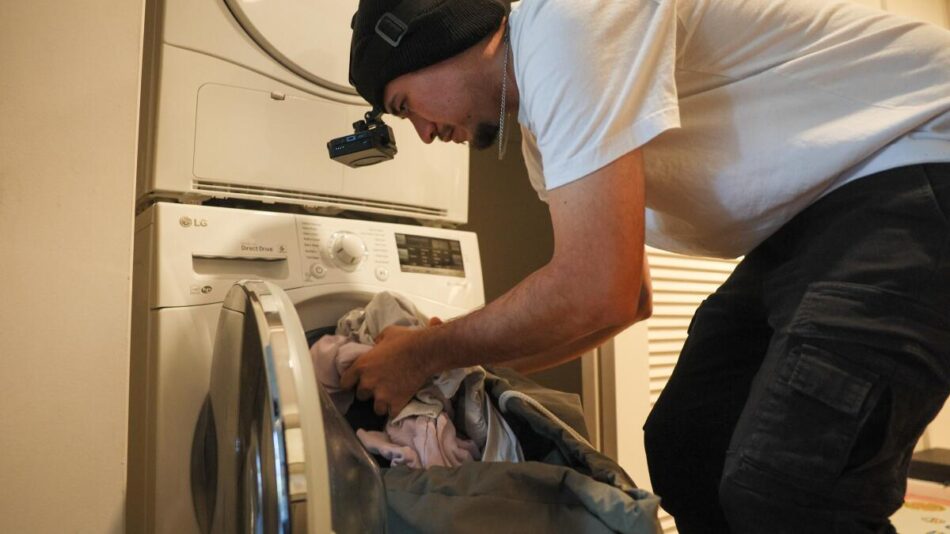
Why people in L.A. are strapping cameras on their bodies to do chores
- Workers in Los Angeles are paid to record their daily household tasks to train AI and robotics systems.
- This emerging gig economy role supports the development of physical AI by providing real-world human movement data.
- Companies leverage head-mounted cameras to capture detailed chore performances for robotic model training.
- The market for humanoid robots and associated data collection is rapidly growing, with significant investment and global competition.
In Los Angeles, a novel gig economy job has emerged where hundreds of people strap cameras on their bodies to perform everyday chores. This unique role is designed to help artificial intelligence systems learn how humans move and interact with their environment by capturing detailed first-person video footage. From washing dishes to watering plants, these recordings provide invaluable data for training robots to perform similar tasks autonomously.
This trend reflects a broader push within the robotics industry to develop humanoid robots capable of assisting in household and commercial environments. As AI models require extensive real-world movement data, companies are turning to human workers to supply the “ground truth” necessary for effective machine learning. The resulting micro-economy not only supports AI innovation but also raises important questions about labor, compensation, and the future of work in an increasingly automated world.
Continue Reading
What is driving the trend of body cameras for chore recording in L.A.?
The primary driver behind this phenomenon is the need for authentic, high-quality data to train robotic systems in understanding and replicating human movements. While AI models like ChatGPT have mastered language and digital creativity by processing vast amounts of internet data, physical AI requires detailed observation of how humans perform tasks in the real world.
Robotics companies and AI startups are investing heavily in capturing this data because it is not readily available online or through traditional datasets. By equipping workers with head-mounted cameras and phone mounts, these companies collect first-person videos of everyday activities such as making coffee, cleaning, and folding laundry. This footage is then analyzed and annotated to teach robots how to mimic these actions accurately.
How does the gig economy support this new AI training method?
Hundreds of gig workers across Los Angeles—from Santa Monica to Koreatown—participate in this emerging job. They receive equipment like headbands with phone mounts from firms such as Instawork, which connects blue-collar workers with tech companies needing physical AI data. Workers are paid to perform their usual household chores while recording themselves, turning routine activities into valuable training material for AI.
This setup benefits workers by providing flexible income opportunities. For example, Salvador Arciga, a gig worker with diverse job experience, earns $80 for two hours of recording his chores. This pay model offers an alternative source of revenue for those who already spend time on these tasks daily.
What types of companies and technologies are involved?
Several key players are advancing the development of humanoid robots through this data collection approach. Major tech companies like Tesla and Google, alongside California startups such as Figure AI and Dyna Robotics, are investing in physical AI research. These firms aim to create robots that can navigate and perform tasks in human environments with dexterity and precision.
Additionally, data labeling and collection companies like Encord, Scale AI, and Micro1 play crucial roles by managing the vast amounts of footage captured. They employ thousands globally to annotate and structure the data, ensuring it is usable for training machine learning models. This ecosystem supports a growing market projected to reach billions in value within the next decade.
What are the economic and ethical implications?
The rise of this micro-economy highlights both opportunities and challenges. On one hand, it creates new jobs and income streams for workers in the gig economy, especially in urban centers like Los Angeles. On the other hand, critics argue that the work is often low-paid and extractive, as the AI systems being trained may eventually replace human labor.
There are also concerns about privacy, data security, and the long-term impact on employment. As robots become more capable of performing household and service tasks, the balance between human work and automation will continue to evolve. Policymakers and industry leaders must consider fair compensation, worker protections, and ethical AI development to ensure equitable outcomes.
How is this trend shaping the future of AI and robotics?
The integration of human-recorded chore data is accelerating the progress of humanoid robotics and physical AI. By grounding AI models in real-world human behavior, developers can create robots that better understand context, adapt to varied environments, and perform complex tasks safely.
This evolution is expected to impact multiple sectors, including home automation, healthcare, manufacturing, and logistics. As the market for humanoid robots is forecasted to reach $38 billion by 2035, the demand for high-quality movement data and human demonstrations will continue to grow, driving innovation and economic activity worldwide.
Practical insights for businesses and workers
- Businesses developing AI robotics should invest in comprehensive data collection strategies that include diverse human movements and environments to improve model accuracy.
- Workers interested in this gig economy niche can leverage existing household routines to generate income by participating in chore recording projects.
- Companies must ensure fair pay and transparent communication to address ethical concerns and sustain workforce engagement.
- Investing in data annotation and management infrastructure is critical to process and utilize the vast footage efficiently.
- Monitoring regulatory developments around AI labor and privacy will help businesses stay compliant and socially responsible.
Frequently Asked Questions
Call To Action
Explore innovative ways to integrate physical AI data collection into your robotics projects and tap into the growing market for humanoid automation by partnering with skilled gig workers today.
[np_contact_btn]
Note: Provide a strategic conclusion reinforcing long-term business impact and keyword relevance.