
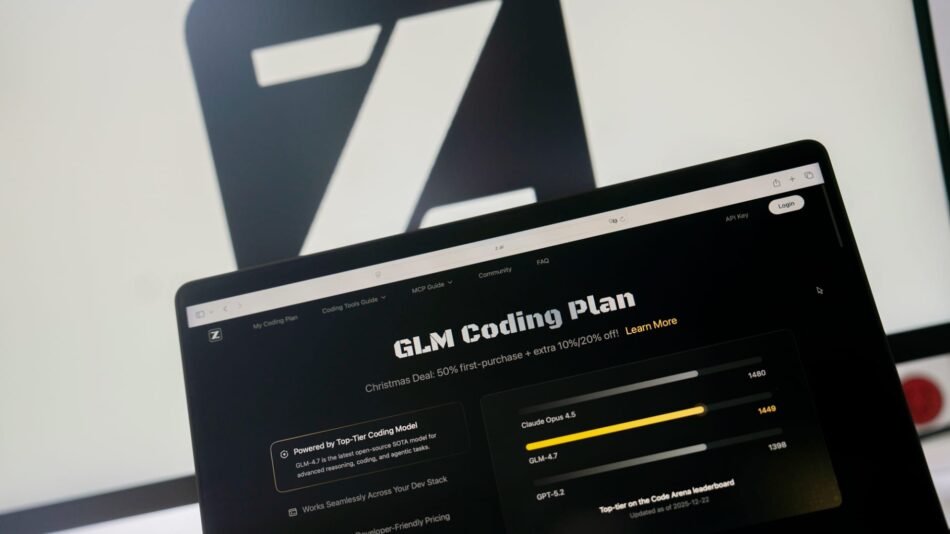
Zhipu Leads Rally in Chinese AI Stocks, Surging 30%, as a Wave of New Releases Hits Market
In recent days, the Chinese artificial intelligence (AI) market has witnessed a significant surge, with various companies unveiling upgraded models that have captivated investor interest. Leading this rally is Zhipu AI, also known as Knowledge Atlas Technology, which saw its stock price soar nearly 30% following the launch of its latest product, the GLM-5. This article explores the factors contributing to this rally, the competitive landscape of the AI sector in China, and the implications for investors and the market as a whole.
The Surge of Zhipu AI
Zhipu AI’s stock closed at 405 Hong Kong dollars ($51.8) after the announcement of its GLM-5 model, an open-source large-language model that boasts enhanced coding capabilities and long-running agent tasks. The company claims that the GLM-5 approaches the performance of Anthropic’s Claude Opus 4.5 in coding benchmarks while surpassing Google’s Gemini 3 Pro in certain tests. Although these claims have yet to be independently verified, they have significantly boosted investor sentiment.
Investors are particularly excited about the GLM-5 due to its potential applications in various industries, including finance, healthcare, and technology. By enhancing coding capabilities, Zhipu AI aims to streamline processes and improve efficiency, making it an attractive option for businesses looking to integrate AI into their operations.
Other Key Players in the Market
While Zhipu AI is leading the charge, it is not alone in this competitive landscape. Other companies have also reported substantial gains following their product launches:
- MiniMax: Shares surged by 13.7% to 70.5 Hong Kong dollars after the launch of its updated M2.5 open-source model, which includes enhanced AI agent tools.
- UCloud Tech: This company, which provides computing support for Zhipu, saw its shares rise by 20%, reaching the daily limit.
- SenseTime: After shifting focus from facial recognition to AI software platforms, SenseTime’s shares jumped by 6.8%.
- DeepSeek: The company upgraded its flagship AI model, adding support for a larger context window and more up-to-date knowledge.
- Ant Group: Released its open-source AI model, Ming-Flash-Omni 2.0, capable of generating speech, music, sound effects, and visuals.
- ByteDance: Launched the latest iteration of its AI video generation app, Seedance 2.0, which has also contributed to a rally in Chinese AI app stocks.
Government Support and Policy Implications
The surge in AI stocks is not solely driven by company innovations; it is also supported by government initiatives. Chinese Premier Li Qiang recently emphasized the need for a comprehensive push towards the “scaled and commercialized application of AI.” This includes better coordination of power and computing resources to advance the technology and improve the environment for AI talent and companies.
Such government backing is crucial for the growth of AI in China, as it fosters an ecosystem where companies can thrive. The emphasis on AI aligns with China’s broader goals of becoming a global leader in technology and innovation.
Market Dynamics and Competition
The AI sector in China is characterized by intense competition, particularly as developers strive to match their U.S. counterparts. The recent wave of product releases highlights the urgency among Chinese firms to innovate and capture market share. This competition is further intensified by the volatility observed in the AI trade on Wall Street, where investors have oscillated between enthusiasm for the technology’s transformative potential and concerns over inflated valuations.
According to Tai Hui, the APAC chief market strategist at JP Morgan, the discussion surrounding an AI bubble is “a little premature.” He notes that numerous quality companies are backed by solid fundamentals, suggesting that the market may be experiencing a necessary correction rather than a bubble burst.
Investment Considerations
For investors, the current landscape presents both opportunities and challenges. The recent rally in AI stocks indicates a growing interest in the sector, but it is essential to approach investments with caution. Here are some key considerations:
- Evaluate Company Fundamentals: Investors should assess the financial health and growth potential of AI companies before making investment decisions.
- Monitor Market Trends: The AI sector is rapidly evolving, and staying informed about new developments and trends is crucial for making informed investment choices.
- Consider Diversification: Given the volatility in the tech sector, diversifying investments across various industries can help mitigate risks.
Chinese Tech Giants vs. Pure-Play AI Startups
While pure-play AI startups like Zhipu AI are experiencing significant growth, traditional tech giants such as Tencent and Alibaba are facing challenges. Shares of these companies fell by 2.6% and 2.1%, respectively, amid a broader slump in the Chinese tech sector. The Hang Seng Tech index also dropped by 1.7%.
This divergence highlights the differing trajectories of established tech companies and emerging AI startups. While tech giants have diversified portfolios, they may struggle to keep pace with the rapid innovation seen in smaller, specialized firms. As the market continues to evolve, it will be interesting to see how these dynamics play out.
Conclusion
The recent surge in Chinese AI stocks, led by Zhipu AI, reflects a growing enthusiasm for artificial intelligence technology and its potential applications across various industries. With government support and a wave of new product releases, the sector is poised for further growth. However, investors should remain vigilant and consider the inherent risks and market dynamics as they navigate this rapidly changing landscape.
Note: The information presented in this article is based on current market trends and developments as of February 2026. Investors should conduct their own research and consult with financial advisors before making investment decisions.
Frequently Asked Questions
The surge is primarily driven by the release of upgraded AI models by companies like Zhipu AI, which launched its GLM-5 model, and positive government support for AI technology adoption.
Chinese AI companies are racing to match U.S. rivals in terms of innovation and capabilities, with recent product launches indicating a strong competitive spirit in the market.
Investors should evaluate company fundamentals, monitor market trends, and consider diversifying their investments to mitigate risks in the volatile tech sector.
Call To Action
If you are interested in exploring investment opportunities in the rapidly evolving AI sector, now is the time to act. Stay informed and consider consulting with a financial advisor to navigate this dynamic market.
[np_contact_btn]