
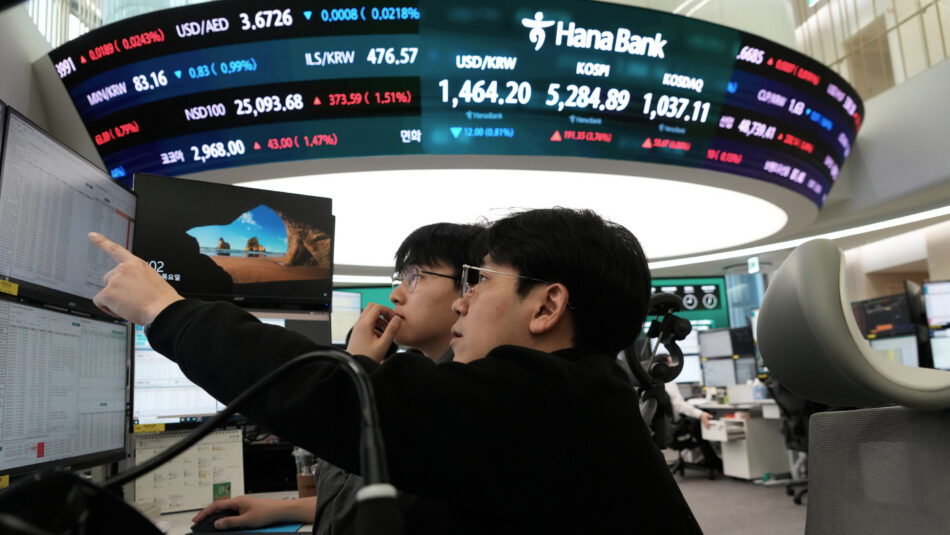
What the Extraordinary Market Volatility in Asia Says About Energy and A.I.
- Understanding the correlation between market volatility and energy prices can guide investment strategies.
- Leveraging AI technologies can enhance predictive analytics for better risk management.
- Investors should focus on sectors that benefit from energy transitions to capitalize on market shifts.
- Monitoring geopolitical factors is crucial for anticipating market trends in Asia.
The recent fluctuations in Asian markets have revealed critical insights into the relationship between energy prices and the role of artificial intelligence in market predictions. As investors grapple with uncertainty, understanding these dynamics becomes essential for strategic decision-making.
Market volatility not only affects investment portfolios but also reflects broader economic trends. The interplay between energy supply, demand, and technological advancements in AI provides a framework for analyzing current and future market conditions.
Continue Reading
Introduction to Market Volatility in Asia
In recent months, Asian markets have experienced unprecedented volatility, influenced by a myriad of factors including geopolitical tensions, fluctuating energy prices, and the rapid evolution of AI technologies. This volatility poses both risks and opportunities for investors, prompting a need to delve deeper into the underlying causes and potential implications.
The Impact of Energy Prices on Market Stability
Energy prices are a significant driver of market stability in Asia. The region is heavily reliant on energy imports, making it particularly vulnerable to fluctuations in global oil and gas markets. As energy prices rise or fall, they directly impact inflation rates, consumer spending, and overall economic growth.
For instance, the recent surge in oil prices has led to increased costs for businesses and consumers alike, resulting in a ripple effect across various sectors. Understanding these dynamics is essential for investors looking to navigate the turbulent waters of the Asian markets.
Geopolitical Factors Influencing Energy Prices
Geopolitical tensions, particularly in energy-rich regions, have a profound impact on market volatility. Events such as conflicts, sanctions, and trade disputes can disrupt supply chains and lead to sudden spikes in energy costs. Investors must stay informed about these developments to anticipate their effects on market conditions.
- Oil supply disruptions can lead to immediate price hikes.
- Trade tensions can affect the availability of energy resources.
- Political instability in key regions often results in market uncertainty.
Artificial Intelligence: A Game Changer in Market Analysis
The integration of AI technologies into market analysis has transformed how investors assess risks and opportunities. AI algorithms can process vast amounts of data, identifying patterns and trends that may not be immediately apparent to human analysts.
By leveraging machine learning and predictive analytics, investors can gain insights into potential market movements, allowing for more informed decision-making. This capability is particularly valuable in the context of the rapid changes occurring in energy markets.
Predictive Analytics and Risk Management
Predictive analytics powered by AI can enhance risk management strategies. By analyzing historical data and current market conditions, AI tools can forecast potential price movements and volatility. This allows investors to adjust their portfolios proactively, mitigating risks associated with sudden market shifts.
- AI can identify emerging market trends before they become mainstream.
- Investors can use AI-driven insights to optimize their asset allocations.
- Real-time data analysis enables quicker responses to market changes.
Sector Analysis: Opportunities in Energy Transition
The transition towards sustainable energy sources presents significant opportunities for investors. As governments and corporations commit to reducing carbon emissions, sectors such as renewable energy, electric vehicles, and energy storage are poised for growth.
Investors should focus on identifying companies that are leading the charge in these areas. By aligning investment strategies with the global shift towards sustainability, investors can capitalize on long-term growth potential.
Key Sectors to Watch
- Renewable energy companies are likely to benefit from increased government support.
- Electric vehicle manufacturers are experiencing rapid growth as consumer preferences shift.
- Energy storage solutions are becoming essential for managing renewable energy supply.
Market Trends and Future Outlook
As we look to the future, several trends are emerging that will shape the landscape of Asian markets. Understanding these trends is crucial for developing effective investment strategies.
Technological Advancements and Market Adaptation
The rapid advancement of technology, particularly in AI and renewable energy, is reshaping market dynamics. Companies that adapt to these changes are more likely to thrive in the evolving landscape.
- Investors should monitor advancements in energy technologies that improve efficiency and reduce costs.
- AI-driven innovations can enhance operational efficiencies across various sectors.
- Staying ahead of technological trends will provide a competitive advantage.
Geopolitical Considerations
Geopolitical factors will continue to play a significant role in market volatility. Investors must remain vigilant in monitoring international relations and their potential impact on energy prices and market stability.
Developments such as trade agreements, sanctions, and diplomatic negotiations can create both risks and opportunities in the market. A proactive approach to these factors will be essential for successful investment strategies.
Conclusion
In conclusion, the extraordinary market volatility in Asia serves as a reminder of the intricate relationship between energy prices and the evolving role of artificial intelligence in market analysis. By understanding these dynamics, investors can develop strategies that not only mitigate risks but also capitalize on emerging opportunities in a rapidly changing environment.
Frequently Asked Questions
Energy price volatility can lead to fluctuations in inflation rates, consumer spending, and overall economic growth, impacting investor confidence and market stability.
AI enhances market analysis by processing large datasets to identify trends and patterns, allowing investors to make informed decisions and manage risks effectively.
Sectors such as renewable energy, electric vehicles, and energy storage are expected to benefit significantly from the global shift towards sustainable energy sources.
Call To Action
Stay ahead of market trends by leveraging insights into energy prices and AI technologies. Invest strategically to maximize your returns in these dynamic sectors.
[np_contact_btn]
Note: Provide a strategic conclusion reinforcing long-term business impact and keyword relevance.