
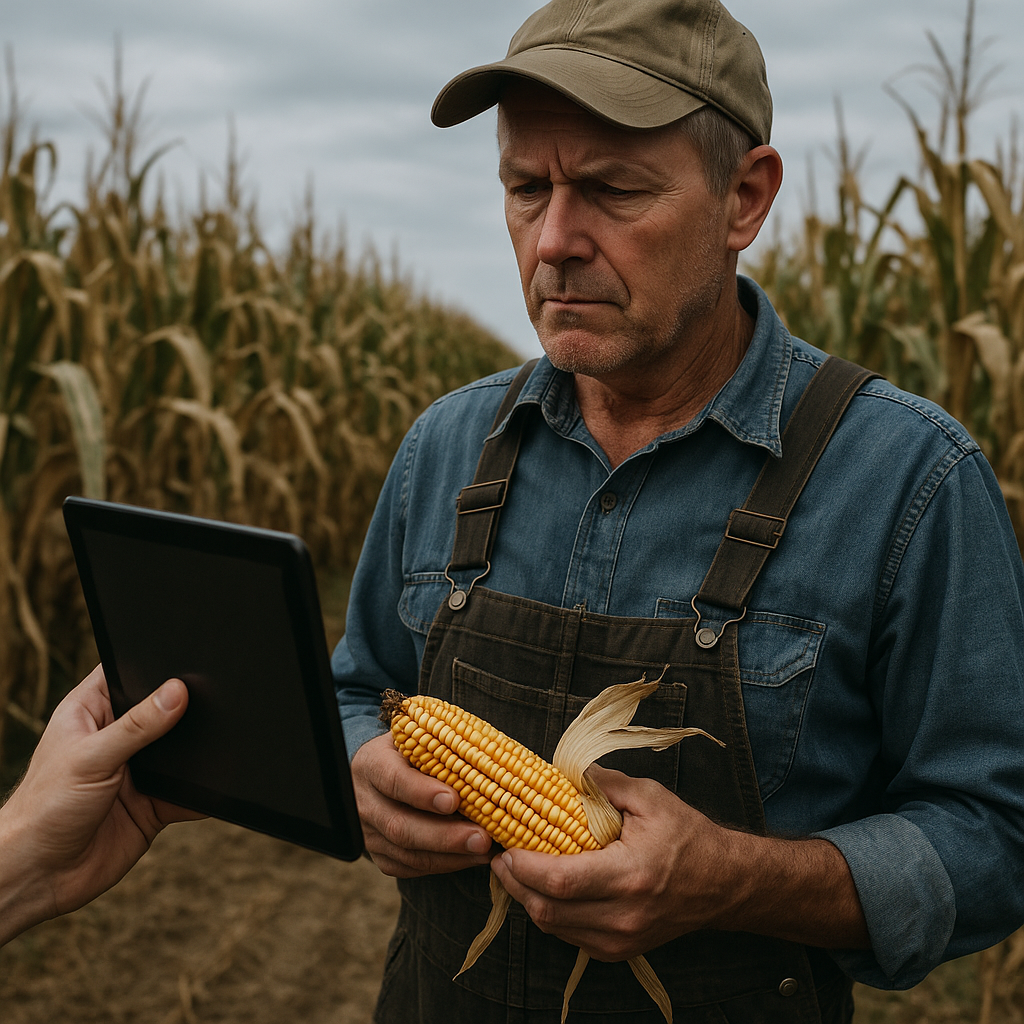
Tech Firms and AI Farming Tools: Playing with the Food System
- Tech companies are influencing agricultural practices, leading to a focus on a limited number of crops.
- Farmers may become dependent on multinational corporations for seeds and agricultural inputs.
- Local agricultural knowledge and biodiversity are at risk due to a top-down approach in farming.
The intersection of technology and agriculture has led to significant advancements, particularly with the rise of AI farming tools. However, a recent report from the International Panel of Experts on Sustainable Food Systems (IPES-Food) warns that this trend may jeopardize food security and local farming practices.
As tech giants like Google, Microsoft, and Amazon collaborate with industrial agriculture, the implications for farmers and local food systems are profound. The report highlights the risks of a globalized food system dominated by a few major crops, which could undermine the diversity and resilience of local agriculture.
Continue Reading
The Role of Tech Companies in Agriculture
In recent years, major tech firms have increasingly turned their attention to agriculture, leveraging AI and data analytics to optimize farming practices. Companies such as Google, Microsoft, Amazon, IBM, and Alibaba are developing algorithms that analyze vast amounts of data collected from farmers, satellite imagery, and drone sensors. This information is then used to advise farmers on crop selection, soil management, and pest control.
However, experts argue that this approach is fundamentally flawed. Pat Mooney, a Canadian author and agriculture expert, asserts that these companies are taking a “top-down” approach, dictating what farmers should grow based on profitability rather than local needs. This often results in a narrow focus on a handful of crops, including corn, rice, wheat, soybeans, and potatoes, while neglecting locally adapted varieties.
Implications for Farmers
The reliance on AI-driven recommendations can lead to a dependency on multinational corporations for seeds and agricultural inputs. Farmers may find themselves locked into a system where they must purchase proprietary seeds and chemical inputs, which can be costly and unsustainable. Mooney emphasizes that this model undermines the traditional knowledge of farmers who have cultivated diverse crops suited to their local environments for generations.
Furthermore, the report warns that this trend could exacerbate vulnerabilities within the global food system. Events such as the climate crisis and geopolitical conflicts, like the war in Ukraine, have already demonstrated the fragility of a globalized food supply. Mooney argues that food security must be rooted in local practices, advocating for a shift away from a globalized system that has proven to be unreliable.
The Data-Driven Approach to Farming
Tech companies utilize sophisticated algorithms to analyze data related to climate conditions, soil health, and crop performance. By processing this information, they can provide farmers with tailored recommendations on what crops to plant and how to manage their fields. While this may seem beneficial, critics point out that these suggestions often favor crops that align with the interests of the tech companies, rather than those that are best suited for local conditions.
For instance, a farmer in Ethiopia might receive advice to plant corn, a crop that is well-known to the tech companies, rather than teff, a grain that has been cultivated locally for centuries. This focus on a limited number of crops can lead to a loss of agricultural biodiversity and resilience, as farmers abandon traditional practices in favor of standardized solutions.
Financial Incentives and Market Growth
The market for digital agriculture tools was valued at approximately $30 billion in 2021 and is projected to grow to $84 billion by 2034, according to Fortune Business Insights. This rapid growth has attracted significant investment from both private and public sectors. The World Bank has financed over $1.15 billion in loans for digital agriculture projects, while the European Union has allocated €200 million for research in this area.
Despite the potential benefits of digital tools, the report emphasizes the need for caution. Lim Li Ching, co-chair of IPES-Food, argues that “farming by algorithm” is not what farmers desire. Instead, there should be a focus on a bottom-up approach that prioritizes the knowledge and needs of local farmers. Innovations in agriculture should empower farmers and support sustainable practices rather than perpetuate industrial agriculture and monocultures.
Local Innovations and Agroecology
There are numerous examples of successful local innovations that demonstrate the potential for sustainable agriculture. In Peru, for instance, farming communities are preserving hundreds of varieties of potatoes, showcasing the importance of biodiversity in food systems. Similarly, farmers in China are actively conserving seeds, ensuring the survival of traditional crops.
In Tanzania, social media is being used as a tool for farmers to communicate about weather conditions and market prices, fostering a sense of community and collaboration. These examples highlight the importance of supporting local knowledge and practices in the face of global pressures from industrial agriculture.
Policy Recommendations for Sustainable Agriculture
To address the challenges posed by the increasing influence of tech companies in agriculture, policymakers must prioritize funding for research that supports local farmers and their innovations. This includes investing in agroecological practices that enhance biodiversity and resilience within food systems.
By shifting the focus from a top-down approach to one that values local knowledge and practices, governments can help ensure food security and sustainability. This could involve creating policies that promote the cultivation of diverse crops and support farmers in their efforts to adapt to changing environmental conditions.
Conclusion
The integration of technology in agriculture presents both opportunities and challenges. While AI and digital tools can enhance productivity, there is a significant risk that they may undermine local farming practices and food security. It is crucial for stakeholders to recognize the importance of supporting local farmers and prioritizing biodiversity in agricultural systems.
As the global food system continues to evolve, a balanced approach that values both innovation and traditional knowledge will be essential for ensuring a sustainable future for agriculture.
Frequently Asked Questions
Tech companies are using AI and algorithms to analyze agricultural data, providing recommendations on crop selection and management. However, this often leads to a focus on a limited number of profitable crops, undermining local farming practices.
A globalized food system can be vulnerable to shocks such as climate change and geopolitical conflicts, leading to food insecurity. Localized food systems are more resilient and better suited to meet the needs of communities.
Agroecology is an approach to farming that emphasizes sustainability, biodiversity, and local knowledge. It is important because it supports food security and resilience in agricultural systems while reducing dependency on industrial agriculture.
Call To Action
To ensure a sustainable future for agriculture, it is essential to support local farmers and prioritize biodiversity. Engage with local agricultural initiatives and advocate for policies that promote sustainable practices.
[np_contact_btn]
Note: The long-term impact of technology on agriculture will depend on our ability to balance innovation with the preservation of local knowledge and practices.