David Sacks is done as AI czar — here’s what he’s doing instead
- David Sacks transitions from AI czar to co-chair of the President’s Council of Advisors on Science and Technology (PCAST).
- PCAST’s new focus expands beyond AI to include advanced semiconductors, quantum computing, and nuclear power.
- The council aims to streamline technology regulation, addressing fragmented state-level AI policies.
- Sacks returns to private sector roles, continuing as an investor and entrepreneur while influencing tech policy advisory.
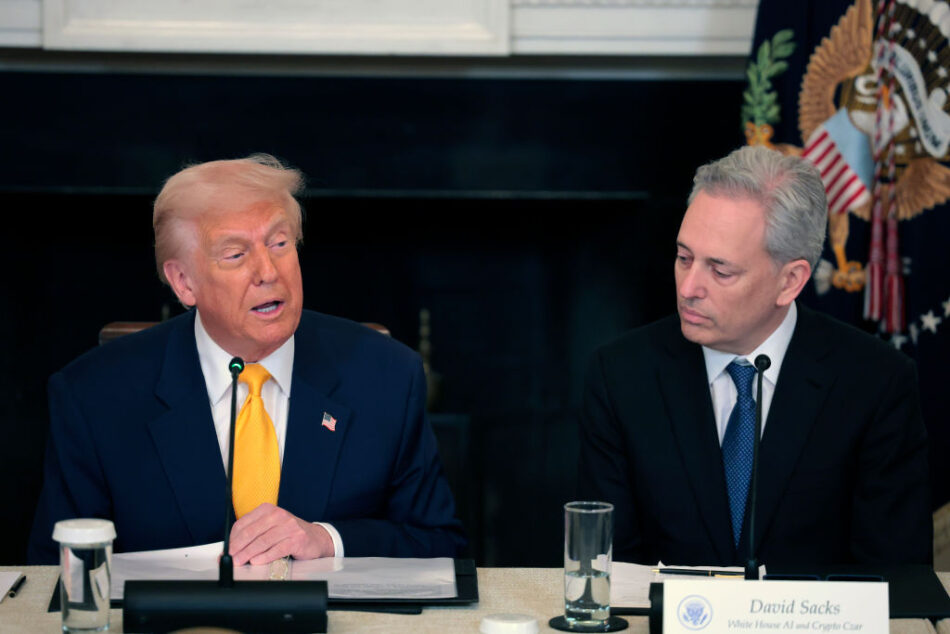
David Sacks, former AI czar under the Trump administration, has officially concluded his 130-day tenure as a special government employee focused on artificial intelligence and crypto policy. Moving forward, he will serve as co-chair of the President’s Council of Advisors on Science and Technology (PCAST), a federal advisory body with a broader technology mandate. This shift marks a change from direct policy influence to a more consultative role, advising on a wide array of emerging technologies including AI, semiconductors, quantum computing, and nuclear power.
Despite stepping away from the frontline AI czar role, Sacks remains a key figure in shaping the U.S. technology landscape. His involvement with PCAST, which includes industry heavyweights such as Nvidia’s Jensen Huang and Meta’s Mark Zuckerberg, positions him to impact federal technology recommendations. Meanwhile, Sacks resumes his entrepreneurial and investment activities, balancing public advisory duties with private sector innovation.
Continue Reading
Who is David Sacks and what was his role as AI czar?
David Sacks is a well-known entrepreneur, investor, and podcaster who briefly served as the AI czar during Donald Trump’s second administration. His role was to advise on artificial intelligence and cryptocurrency policy at a time when these technologies were rapidly evolving and increasingly impacting both the economy and national security. As AI czar, Sacks had a direct line to the President and helped shape early federal AI policy frameworks.
His tenure lasted 130 non-consecutive days, during which he navigated complex regulatory landscapes and worked to unify fragmented state-level AI regulations. However, his position was not permanent, and his recent transition to co-chair of PCAST signals a shift in his influence from direct policymaking to advisory and strategic roles.
What is the President’s Council of Advisors on Science and Technology (PCAST)?
PCAST is a federal advisory committee that provides the President and the Executive Office with expert advice on science, technology, and innovation. Established during Franklin D. Roosevelt’s administration, the council has evolved over the decades, with varying degrees of influence depending on the administration. Unlike the AI czar role, PCAST does not make policy but studies emerging technologies, produces detailed reports, and issues recommendations to guide federal decision-making.
The current iteration of PCAST is notable for its composition, featuring top executives from leading technology companies such as Nvidia, Meta, Oracle, Google, AMD, and Dell. This “star-studded” lineup reflects a strategic move to incorporate industry expertise directly into federal advisory processes, particularly on cutting-edge technologies.
What technologies will PCAST focus on under David Sacks’ co-chairmanship?
Under Sacks’ leadership alongside senior White House technology adviser Michael Kratsios, PCAST will focus on a broad range of critical technology sectors:
-
Artificial intelligence: Building on the national AI framework to create cohesive federal approaches and reduce regulatory patchworks across states.
-
Advanced semiconductors: Supporting innovation in chip manufacturing, which is vital for AI, computing, and defense technologies.
-
Quantum computing: Advising on the development and potential applications of quantum technologies that promise revolutionary computing power.
-
Nuclear power: Exploring next-generation nuclear technologies as part of the broader energy and technology strategy.
The council’s near-term priority will be to advance Trump’s recently released national AI framework, which aims to replace inconsistent state regulations with a unified federal approach. Sacks highlighted the challenges innovators face due to 50 different state rules, emphasizing the need for streamlined policies to foster growth and compliance.
Why is David Sacks stepping down as AI czar now?
The exact reasons for Sacks’ transition from AI czar to PCAST co-chair have not been fully disclosed. However, his recent public commentary on foreign policy, particularly his calls for a diplomatic exit from the ongoing U.S.-backed conflict with Iran, may have influenced the timing. Sacks expressed personal views on the “All In” podcast that were not officially aligned with the administration’s stance, and President Trump noted that Sacks had not discussed these views with him directly.
Regardless, Sacks clarified that his podcast opinions were personal and not part of his official government role. His move to PCAST, a body with advisory rather than policymaking power, places him further from the immediate political spotlight while maintaining his influence on technology policy.
How does PCAST’s influence compare to previous administrations?
PCAST’s impact has varied significantly across administrations. For example:
-
Under President Obama, PCAST was highly productive, producing 36 reports over eight years and influencing policies such as FDA regulations for over-the-counter hearing aids.
-
President Trump’s first-term PCAST was slower to organize, produced fewer reports, and had limited policy impact.
-
President Biden’s council was more academic, featuring Nobel laureates and scholars, with modest output before the administration ended.
The current PCAST, under Sacks and Kratsios, is distinct because it is composed largely of tech industry executives rather than academics or government officials. This composition is intended to bring practical, real-world innovation insights directly into federal advisory processes, potentially increasing the council’s relevance and influence in shaping technology policy.
What is David Sacks doing outside of government advisory roles?
Alongside his government advisory duties, David Sacks remains an active investor and entrepreneur. He is a co-founder and partner at Craft Ventures, a venture capital firm focused on technology startups. During his government service, Sacks maintained financial stakes in AI and crypto companies through ethics waivers, an arrangement that drew some criticism but allowed him to stay connected to the industries he advises on.
Now that his AI czar role has ended, Sacks is free to fully resume his private sector activities. His dual experience in government and technology investment positions him uniquely to influence the future of AI and other emerging technologies both inside and outside of Washington.
What challenges does the fragmented AI regulatory landscape pose?
The current AI regulatory environment in the United States is fragmented, with individual states implementing their own rules and standards. This patchwork creates significant compliance challenges for innovators and companies operating across state lines. Sacks has emphasized that this regulatory inconsistency stifles innovation and complicates business operations.
The national AI framework, which PCAST will help promote, seeks to unify these diverse regulations under a coherent federal policy. Such harmonization aims to reduce legal uncertainty, accelerate AI adoption, and ensure that the U.S. remains competitive in global AI development.
What is the broader significance of Sacks’ move for the AI and tech industry?
David Sacks’ transition from AI czar to PCAST co-chair reflects a broader trend of integrating industry expertise into government advisory roles. His presence in PCAST, alongside other tech leaders, signals a collaborative approach to technology governance that balances innovation with responsible oversight.
This shift also underscores the evolving nature of AI policy, moving from rapid, direct intervention to a more strategic, multi-technology advisory model. For businesses and investors, Sacks’ continued involvement offers a valuable bridge between Silicon Valley innovation and federal technology strategy.
Summary of David Sacks’ current and future roles
-
Former AI czar with direct influence on Trump administration AI and crypto policy.
-
Now co-chair of PCAST, advising on a broad spectrum of emerging technologies.
-
Focused on unifying AI regulations, advancing semiconductor and quantum computing development, and exploring nuclear power innovation.
-
Resuming private sector investment and entrepreneurship with Craft Ventures.
Frequently Asked Questions
Call To Action
Leverage insights from technology leaders like David Sacks by aligning your business strategy with emerging AI and tech policy trends to stay competitive in a rapidly evolving landscape.
[np_contact_btn]
Note: Provide a strategic conclusion reinforcing long-term business impact and keyword relevance.