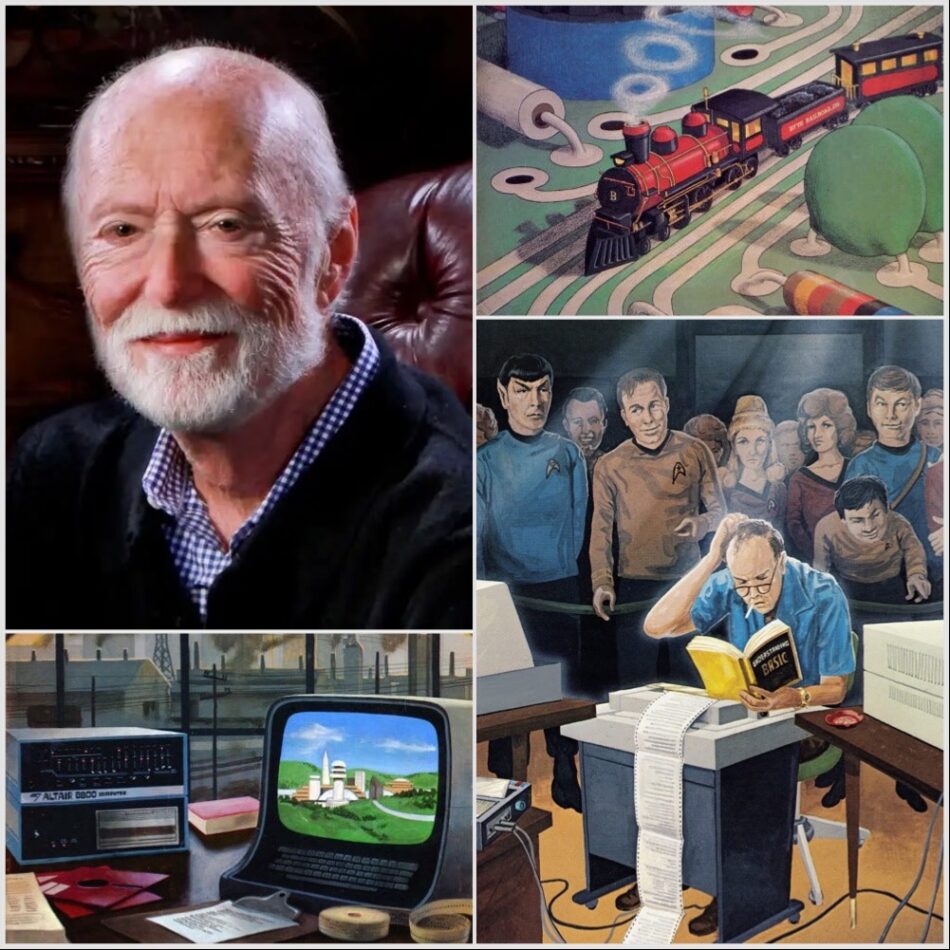
In Memoriam: BYTE Magazine Illustrator Robert Tinney
We are saddened to report the passing of Robert Tinney, an American artist renowned for his captivating covers for BYTE Magazine, a publication that played a pivotal role in the emergence of the microcomputing age from the mid-1970s through the 1990s. His artistic contributions significantly shaped the visual identity of the personal computing revolution.
Robert Frank Tinney, hailing from Washington, Louisiana, passed away peacefully at River Oaks Nursing & Rehabilitation Center on February 1, 2026, at the age of 78. Born in 1947 in Penn Yan, New York, Robert pursued his passion for illustration and graphic design in commercial art at Louisiana Tech University. After completing his studies and serving in the Vietnam War, he embarked on a career that would see his artwork grace the covers and pages of some of the most recognized computing publications globally, with BYTE Magazine being the most notable.
The Artistic Journey of Robert Tinney
Robert Tinney’s artistic journey began with a unique vision that combined creativity and technology. His signature artistic style quickly became synonymous with the burgeoning world of computing technology. According to a tribute on his official website, Robert’s imaginative illustrations captured the essence of an era defined by rapid technological advancement.
Early Life and Education
Robert Tinney was born into a world that was on the brink of technological change. Growing up in upstate New York, he developed an interest in art at a young age. His formal education in illustration and graphic design at Louisiana Tech University laid the foundation for his future career. After graduating, he served in the Vietnam War, an experience that would shape his perspective on life and art.
Career Highlights
After returning from military service, Robert began his career in the world of publishing and illustration. His breakthrough moment came when he was hired by BYTE Magazine, which was founded in 1975 by Carl Helmers. The magazine aimed to attract a broad audience by offering high-level, conceptual covers akin to those of Scientific American. Helmers strategically chose Tinney, an artist without a technical background, to ensure that the covers would be driven by metaphor rather than technical schematics.
One of Robert’s most iconic covers for BYTE Magazine was the December 1977 issue, titled “Spaceport Gamma 6 Holographic Museum of Ancient Technology.” This imaginative illustration depicted a visit by the crew of the U.S.S. Enterprise to a holographic museum dedicated to ancient technology, showcasing personal computing as a significant part of the future. The artwork was inspired by the technology of the time, including a Willard Nico and an 8080-based computer system, which he used as models for the diorama.
Legacy in the Computing Community
Robert Tinney’s art did more than merely decorate magazine covers; it encapsulated the wonder, promise, and excitement of an entirely new era in technology. For countless computer enthusiasts, his illustrations were the first visual encounter with the world of computing. His work was instrumental in shaping the public’s perception of personal computing and inspiring a generation of innovators.
In an interview featured in COMPUTE! Magazine’s August 2025 issue, Robert reflected on his career and the impact of his work. He expressed gratitude for the opportunity to contribute to the computing community and acknowledged the profound connections he formed through his art. His vivid and imaginative cover illustrations resonated with readers, making him a beloved figure in the tech world.
Personal Life and Community Involvement
Robert Tinney was not only a talented artist but also a devoted family man. He married his wife, Susan, in 1978, and together they raised three children. The couple lived and worked in Baton Rouge until 1987 when they relocated to Washington, Louisiana. There, they restored an historic landmark home, the Crawford House, which became a testament to their commitment to preserving history and community.
Throughout their lives, Robert and Susan were actively involved in their community, nurturing friendships and creating lasting memories. Their home became a hub for family gatherings and community events, reflecting their open-hearted nature and dedication to serving others. Robert’s philosophical intellect, refreshing humor, and profoundly sympathetic nature endeared him to many, and he will be sorely missed by his family, friends, and admirers.
Tributes and Remembrance
Following Robert’s passing, tributes poured in from all corners of the computing community. Many remembered him not only for his artistic contributions but also for the warmth and kindness he extended to others. COMPUTE! Gazette magazine noted, “Robert’s signature artistic style made his name synonymous with the golden age of computing.” His art continues to inspire and evoke nostalgia among those who experienced the dawn of personal computing.
Robert is survived by his devoted wife, Susan, three children, nine grandchildren, and one great-grandchild. His family has expressed their gratitude for the outpouring of love and support during this difficult time. A celebration of Robert’s life is planned for May 2026, where friends and family will gather to honor his legacy and share cherished memories.
Conclusion
Robert Tinney’s contributions to the world of art and technology will not be forgotten. His imaginative illustrations captured the spirit of an era and inspired countless individuals to embrace the possibilities of personal computing. As we remember his life and work, we celebrate the lasting impact he has made on the computing community and the artistic world.
Frequently Asked Questions
Robert Tinney was known for his imaginative cover illustrations for BYTE Magazine, which played a significant role in defining the visual identity of the personal computing revolution from the mid-1970s through the 1990s.
Tinney’s artwork captured the wonder and excitement of the emerging technology era, inspiring a generation of computer enthusiasts and shaping public perception of personal computing.
Robert Tinney was actively involved in his community, nurturing friendships and creating lasting memories with family and friends. He and his wife restored a historic home and served their community with open arms.
Call To Action
If you would like to learn more about the impact of artists like Robert Tinney on the technology and art communities, or if you wish to celebrate the legacy of computing, consider exploring our resources or joining our upcoming events.
[np_contact_btn]