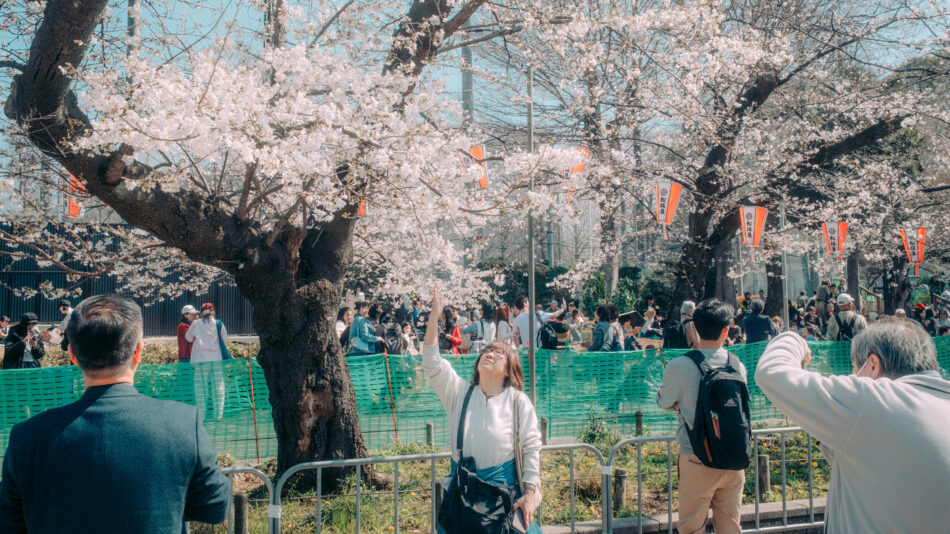
When Will Japan’s Cherry Blossoms Bloom? A.I. Can Help Answer That
- Leverage machine learning models to predict cherry blossom blooming dates with higher accuracy.
- Understand how climate change impacts traditional blooming patterns in Japan.
- Explore the integration of satellite imagery and historical data for real-time bloom forecasting.
- Discover the economic and cultural benefits of precise phenology prediction for tourism and local businesses.
Each spring, millions eagerly await the cherry blossom season in Japan, a cultural event deeply embedded in tradition and tourism. However, predicting the exact blooming dates has become increasingly challenging due to shifting weather patterns and climate variability. Recent advances in artificial intelligence offer promising solutions to this age-old question by analyzing vast datasets to forecast bloom times more accurately than ever before.
By combining historical weather data, satellite observations, and machine learning algorithms, researchers and local authorities can provide timely and reliable predictions. This not only enhances the visitor experience but also helps businesses optimize operations and mitigate risks associated with unpredictable blooming seasons.
Continue Reading
How Does A.I. Predict Cherry Blossom Blooming?
The prediction of cherry blossom blooming dates using artificial intelligence starts with collecting extensive datasets that include temperature trends, precipitation levels, sunlight exposure, and historical bloom records. Machine learning models analyze these variables to identify patterns and correlations that traditional methods might overlook.
For example, neural networks and regression models are trained on decades of phenological data to forecast the timing of the first bloom (kaika) and full bloom (mankai). These models continuously improve as they ingest new data, adapting to anomalies caused by climate change or unexpected weather events.
Key Data Inputs for Accurate Bloom Forecasting
- Historical temperature records to detect warming trends that affect flowering times.
- Satellite imagery to monitor vegetation health and early signs of blooming.
- Local weather station data providing real-time updates on microclimate conditions.
- Phenological observations submitted by citizen scientists and experts.
Why Are Traditional Prediction Methods Becoming Less Reliable?
Traditionally, cherry blossom forecasts relied heavily on historical averages and expert observation, which worked well when climate conditions were relatively stable. However, climate variability and extreme weather events have introduced significant unpredictability. Early springs, late frosts, and unusual rainfall patterns disrupt the natural cues that trees use to initiate blooming.
This growing uncertainty has made it difficult for tourism boards and businesses to plan events, manage crowds, and optimize marketing strategies. For instance, a sudden early bloom can cause festivals to miss peak visitor interest, while delayed blossoms may reduce tourist turnout. Hence, integrating AI-powered forecasting is essential for adapting to these new environmental realities.
How Does Satellite Technology Enhance Bloom Predictions?
Satellite imagery provides a bird’s-eye view of vegetation health and phenological changes across large geographic areas. By analyzing changes in leaf color, canopy density, and other spectral signatures, AI models can detect early signs of blooming before they become visible to the naked eye.
This remote sensing data complements ground-based observations and helps fill gaps in regions with limited monitoring infrastructure. When combined with machine learning, satellite data improves the spatial and temporal resolution of bloom forecasts, enabling localized predictions for specific parks, gardens, or urban areas.
Economic Impact of Accurate Bloom Forecasting
Accurate cherry blossom forecasts have significant economic implications. The tourism industry in Japan heavily depends on the timing of sakura season, with millions traveling domestically and internationally to witness the spectacle. Precise predictions allow hotels, restaurants, and transport services to optimize capacity and pricing strategies.
Moreover, local governments can better manage crowd control, public safety, and environmental conservation efforts during peak bloom periods. Businesses selling seasonal products or hosting events benefit from targeted marketing campaigns aligned with the predicted bloom window, maximizing revenue opportunities.
Case Study: Tokyo’s AI-Driven Bloom Forecast
Tokyo Metropolitan Government partnered with AI researchers to develop a bloom prediction system using deep learning techniques. By integrating over 50 years of temperature data and real-time weather inputs, the model achieved a prediction accuracy within a 3-day margin, a significant improvement over traditional methods.
This advance helped local businesses prepare for the influx of tourists and allowed city planners to coordinate public transportation and event scheduling more effectively, demonstrating the practical benefits of AI in cultural event management.
Challenges and Limitations of AI in Bloom Prediction
Despite its advantages, AI-based cherry blossom forecasting faces challenges. Data quality and availability remain critical issues, especially in rural or less-monitored areas. Incomplete or inconsistent datasets can reduce model accuracy.
Additionally, the complexity of biological responses to environmental stimuli means that no model can guarantee perfect predictions. Unexpected weather anomalies or disease outbreaks affecting trees can disrupt blooming patterns beyond AI’s predictive capabilities.
Furthermore, the cost of deploying and maintaining sophisticated AI systems and satellite monitoring can be prohibitive for smaller municipalities or organizations.
Future Trends: Integrating AI with Citizen Science and IoT
The future of cherry blossom forecasting lies in integrating AI with emerging technologies such as the Internet of Things (IoT) and citizen science platforms. Sensors placed in parks can provide continuous environmental data, while mobile apps enable enthusiasts to submit real-time bloom observations.
These data streams feed into AI models, enhancing their responsiveness and accuracy. This collaborative approach democratizes phenology monitoring and creates a dynamic feedback loop between nature, technology, and the public.
Scalability and Global Applications
While Japan’s cherry blossom season is iconic, the AI methodologies developed here can scale globally to predict flowering and agricultural cycles in other regions. This has implications for food security, climate adaptation, and biodiversity conservation worldwide.
How Businesses Can Leverage AI Bloom Predictions
- Tourism operators can tailor packages and promotions based on accurate bloom windows.
- Event planners can schedule festivals and cultural activities to maximize attendance.
- Retailers can optimize inventory for seasonal products linked to cherry blossom themes.
- Local governments can improve public safety and transportation logistics during peak times.
Conclusion: Embracing AI for a More Predictable Sakura Season
AI-powered cherry blossom forecasting represents a fusion of tradition and technology, offering a sophisticated tool to navigate the uncertainties of climate and nature. By harnessing machine learning, satellite data, and community engagement, Japan can preserve the magic of sakura season while enhancing economic and cultural outcomes.
As these technologies evolve, the ability to predict natural phenomena with precision will become increasingly vital for sustainable tourism, environmental stewardship, and cultural preservation.
Frequently Asked Questions
Call To Action
Unlock the power of AI to enhance your environmental forecasting and business planning. Contact us today to explore tailored AI solutions that predict natural phenomena with precision and drive sustainable growth.
[np_contact_btn]
Note: Provide a strategic conclusion reinforcing long-term business impact and keyword relevance.