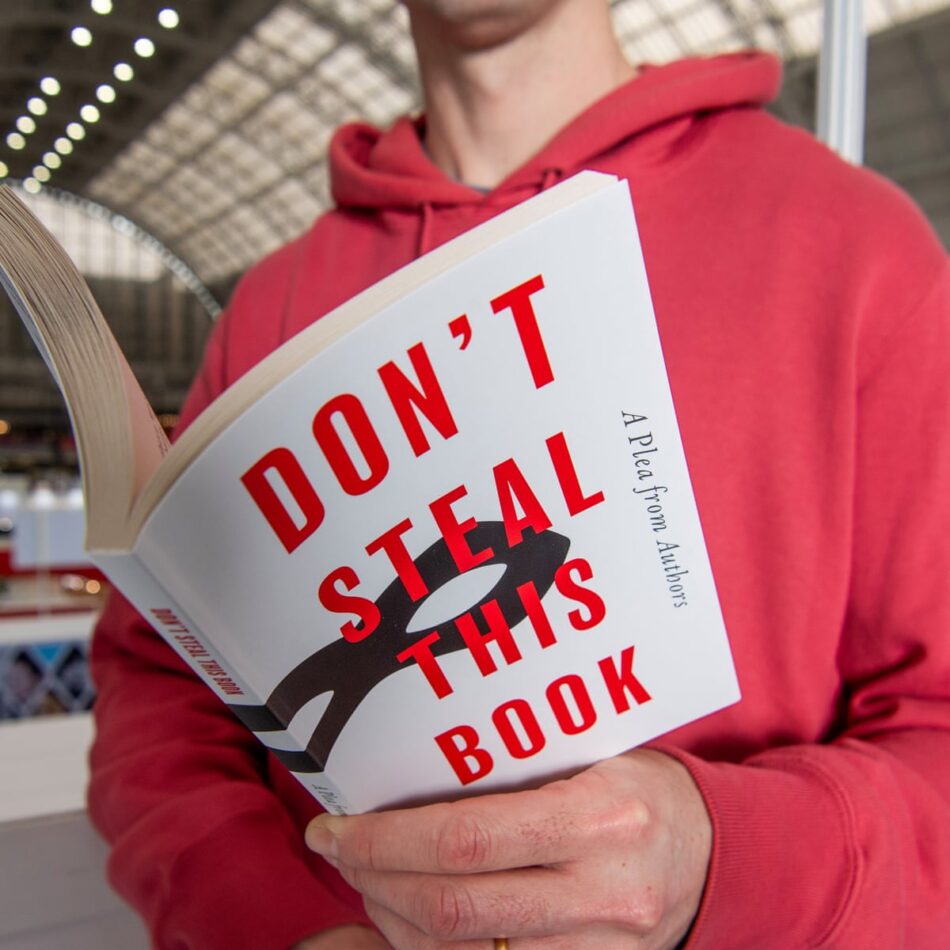
Thousands of authors publish ‘empty’ book in protest over AI using their work
- Over 10,000 authors unite to protest unauthorized AI use of copyrighted works.
- The protest book contains only contributors’ names, symbolizing the erasure of creative content.
- UK government faces pressure to reconsider copyright reforms favoring AI companies.
- Publishers propose collective licensing to protect authors and regulate AI training data.
In a powerful demonstration against the unauthorized use of creative works by artificial intelligence companies, thousands of authors have published an “empty” book titled Don’t Steal This Book. This unique publication contains only a list of contributors’ names, symbolizing the absence of their original content now exploited by AI without permission or compensation. The protest highlights growing concerns about the impact of AI on the livelihoods of writers and other creatives, especially as governments consider legal reforms that could legalize such practices.
The protest coincides with key developments in the UK, where the government is expected to release an economic impact assessment on proposed copyright law changes. These changes could allow AI firms to use copyrighted works unless authors explicitly opt out, a move many creatives view as a threat to their intellectual property rights and financial sustainability. This collective action underscores the urgent need for balanced policies that protect human creativity while fostering technological innovation.
Continue Reading
Why Did Thousands of Authors Publish an ‘Empty’ Book?
The primary reason thousands of authors, including renowned names like Kazuo Ishiguro, Philippa Gregory, and Richard Osman, published an “empty” book is to protest the widespread use of their copyrighted works by AI companies without permission or payment. The book, titled Don’t Steal This Book, contains no traditional content but a comprehensive list of contributors’ names, symbolizing the creative void left when AI systems train on stolen literary works.
This protest aims to draw public and governmental attention to the ethical and economic implications of AI firms using copyrighted materials to develop generative models such as chatbots and image generators. Authors argue that this practice undermines their livelihoods by competing unfairly with their original works, as AI-generated content can be produced rapidly and at scale without compensating the original creators.
What Are the UK Government’s Proposed Copyright Changes?
The UK government is currently consulting on copyright reforms that could significantly affect how AI companies access and use copyrighted works. The main proposal would allow AI firms to use copyrighted materials without explicit permission unless the copyright holders opt out. This “opt-out” approach has sparked outrage among creative professionals who fear it effectively legalizes the unauthorized use of their work.
In addition to the opt-out proposal, the government has outlined three alternative options: maintaining the current copyright framework, requiring AI firms to obtain licenses for copyrighted content, or permitting AI use without any opt-out option for creators. There is also concern about a potential copyright waiver for “commercial research,” which could further erode protections for creative works.
How Are Authors and Publishers Responding?
Authors have united in their opposition, with prominent figures like Malorie Blackman and Mick Herron publicly condemning the proposals. Blackman emphasized the reasonableness of expecting AI companies to pay for using authors’ books, highlighting the need for fair compensation.
Publishers are also taking action by launching an AI licensing initiative through Publishers’ Licensing Services, a non-profit industry body. This collective licensing scheme aims to provide legal access to published works for AI training while ensuring authors receive appropriate royalties. The initiative invites publishers and authors to participate, offering a scalable solution that balances innovation with copyright protection.
What Are the Economic and Creative Risks of Unregulated AI Use?
Unregulated use of copyrighted works by AI poses significant risks to the creative economy. Authors and artists depend on royalties and licensing fees as primary income sources. When AI companies train models on their work without payment, it diminishes these revenue streams, threatening the sustainability of creative professions.
Moreover, there is a broader cultural risk: the devaluation of human creativity. If AI-generated content floods the market without proper attribution or compensation, it could discourage new creators from entering the field, stifling diversity and innovation in literature, art, and other creative industries.
What Legal Actions Have Been Taken Against AI Companies?
Legal challenges have already emerged internationally. Notably, Anthropic, a major AI developer, agreed to pay $1.5 billion to settle a class-action lawsuit filed by authors who alleged that the company used pirated copies of their books to train its AI chatbot, Claude. This settlement underscores the growing legal scrutiny of AI firms’ data sourcing practices and the importance of respecting intellectual property rights.
How Can the Creative Sector Protect Itself Moving Forward?
Protecting creative work in the age of AI requires a multifaceted approach:
Copyright reform that clearly defines and enforces the rights of authors against unauthorized AI use.
Development of collective licensing schemes to streamline permissions and ensure fair compensation for AI training data.
Increased public awareness and advocacy to influence policy decisions favoring creators.
Technological solutions that enable transparent tracking and attribution of AI training data sources.
By adopting these strategies, the creative sector can build resilience against the disruptive impact of AI while embracing opportunities for innovation.
What Is the Broader Impact of AI on Intellectual Property Rights?
The debate over AI’s use of copyrighted materials reflects a larger challenge at the intersection of technology and intellectual property law. AI systems require vast datasets, often scraped from the internet, which include protected works. Balancing the need for data access to fuel AI innovation with the rights of content creators is a complex policy challenge worldwide.
Governments, industry bodies, and creators must collaborate to establish frameworks that promote ethical AI development without compromising the economic and moral rights of authors and artists. Failure to do so risks a future where AI undermines the very creativity it seeks to emulate.
What Are the Next Steps for the UK and Global Creative Communities?
The UK government is expected to publish an economic impact assessment and progress update on copyright consultations by March 18, 2026. This milestone will be crucial in determining the direction of copyright law reforms related to AI.
Meanwhile, global creative communities continue to mobilize, sharing strategies and advocating for international standards that protect intellectual property in the AI era. The ongoing dialogue will shape how AI and creativity coexist sustainably in the coming decades.
Summary of Key Takeaways
Authors’ rights are under threat from AI firms using copyrighted works without permission.
Collective action, such as publishing an “empty” book, raises awareness and pressures policymakers.
Licensing initiatives offer a promising path to fair compensation and legal clarity.
Balanced copyright legislation is essential to protect creativity and support AI innovation.
Frequently Asked Questions
Call To Action
Protect your creative assets and ensure ethical AI development by engaging with licensing initiatives and advocating for balanced copyright laws that respect authors’ rights while fostering innovation.
Note: Provide a strategic conclusion reinforcing long-term business impact and keyword relevance.