Schools are Using AI Counselors to Track Students’ Mental Health: Is it Safe?
- AI counselors can provide immediate support to students, helping to identify mental health issues early.
- Schools can leverage AI tools to manage limited mental health resources effectively.
- Concerns exist regarding the emotional attachment students may develop towards AI counselors.
The integration of AI counselors in schools marks a significant shift in how educational institutions approach mental health. With increasing awareness of student mental health challenges, schools are exploring innovative solutions to provide support. AI-driven platforms are being adopted to monitor students’ mental well-being, offering a new layer of assistance that can complement traditional counseling methods.
As schools face budget constraints and a shortage of mental health professionals, the implementation of AI tools presents both opportunities and challenges. While these technologies can enhance accessibility and provide timely interventions, they also raise questions about safety, efficacy, and the potential for emotional dependency. Understanding the implications of AI in mental health support is crucial for educators, parents, and policymakers.
Continue Reading
The Rise of AI in School Counseling
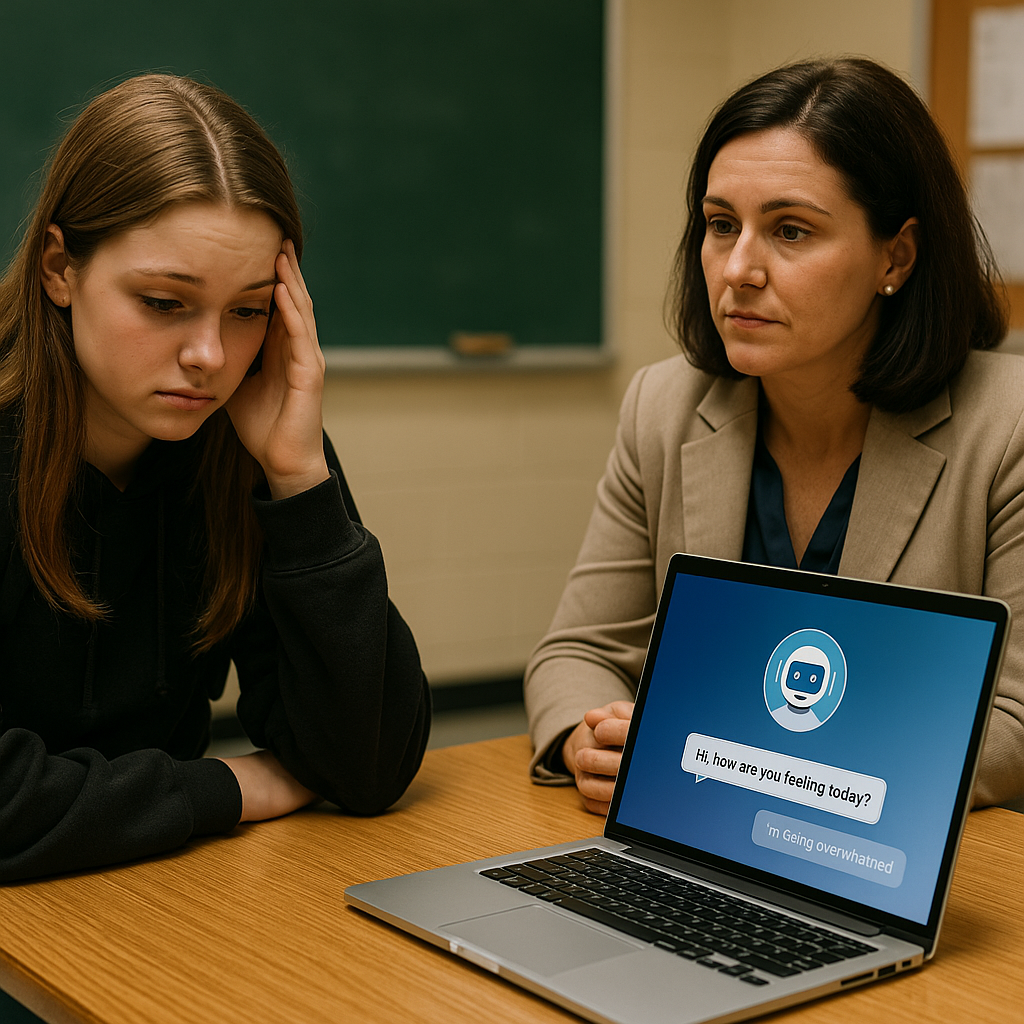
In recent years, hundreds of schools across the United States have adopted AI counseling platforms to track and support students’ mental health. One such tool, Alongside, has gained traction, being utilized by over 200 schools. These platforms are designed to monitor student interactions and flag potential risks based on their conversations.
For instance, a middle school counselor in Putnam County, Florida, received alerts from Alongside regarding a student at risk of self-harm. The counselor was able to intervene promptly, demonstrating the potential of AI to act as an early warning system. This proactive approach can be invaluable in preventing crises and ensuring student safety.
Benefits of AI Counseling Tools
Accessibility and Immediate Support
AI counselors offer round-the-clock availability, allowing students to seek help outside of traditional school hours. This is particularly beneficial for those who may feel uncomfortable discussing their issues with human counselors. The anonymity and convenience of chatting with a bot can encourage students to express their feelings more freely.
Moreover, AI tools can help manage the workload of school counselors. With a growing number of students and limited resources, AI can assist in addressing routine issues, enabling counselors to focus on students in more critical need of intervention. This efficiency can lead to better overall mental health support within schools.
Cost-Effectiveness
The financial aspect of implementing AI counseling tools is another significant advantage. For example, Alongside’s services start at approximately $10 per student per year, making it a feasible option for many schools, especially those in rural areas with limited access to mental health resources. By leveraging AI, schools can provide essential support without incurring substantial costs.
Concerns Surrounding AI Counseling
Emotional Attachment to AI
Despite the benefits, there are valid concerns regarding the emotional connections students may develop with AI counselors. A recent survey indicated that 20% of high school students have interacted with AI in a romantic context, highlighting a trend where students may form attachments to technology.
Experts warn that while AI can provide valuable support, it cannot replace the nuanced understanding and empathy that human counselors offer. The risk of students relying too heavily on AI for emotional support raises questions about the long-term implications for their mental health.
Lack of Human Judgment
Critics of AI counseling emphasize the importance of human judgment in mental health care. While AI can analyze text and identify potential issues, it lacks the ability to perceive non-verbal cues and the subtleties of human interaction. Licensed clinical social worker Sarah Caliboso-Soto points out that AI cannot replicate the discernment that comes from human experience.
This limitation is particularly concerning in situations where a student’s emotional state may not be fully conveyed through text. The ability to read body language, tone of voice, and other non-verbal signals is crucial in understanding a student’s mental health needs.
Implementation Strategies for Schools
Integrating AI with Human Support
To maximize the benefits of AI counseling tools while mitigating risks, schools should consider a hybrid approach. By integrating AI support with human counseling services, schools can provide a comprehensive mental health strategy. AI can serve as the first point of contact, identifying students in need of further assistance and directing them to qualified professionals.
Training staff on how to effectively use AI tools and interpret the data they generate can enhance the support system within schools. Additionally, ensuring that students understand the limitations of AI and the importance of human connection can help prevent over-reliance on technology.
Monitoring and Evaluation
Continuous monitoring and evaluation of AI counseling tools are essential to ensure their effectiveness and safety. Schools should regularly assess the impact of these tools on student mental health outcomes and gather feedback from students, parents, and staff. This data can inform necessary adjustments and improvements to the program.
Furthermore, establishing clear protocols for responding to alerts generated by AI systems is crucial. Schools must ensure that there are trained professionals available to follow up on any concerning alerts and provide appropriate support.
Legal and Ethical Considerations
The use of AI in mental health support raises important legal and ethical questions. Schools must navigate issues related to data privacy, consent, and the potential for bias in AI algorithms. Ensuring that student data is handled securely and ethically is paramount.
Parents and guardians should be informed about the use of AI tools in schools and given the opportunity to consent to their children’s participation. Transparency regarding how data is collected, used, and protected can help build trust among families and the school community.
Future of AI in School Counseling
The future of AI in school counseling is likely to evolve as technology advances and our understanding of mental health deepens. Ongoing research into the effectiveness of AI tools will inform best practices and guide the development of new features that enhance their utility.
As AI continues to play a role in education, it is essential for schools to remain vigilant about the potential risks while embracing the opportunities these technologies present. Balancing innovation with ethical considerations will be key to ensuring that AI serves as a valuable resource in supporting student mental health.
Frequently Asked Questions
AI counselors are digital platforms that use artificial intelligence to monitor and support students’ mental health. They analyze student interactions to identify potential risks and provide resources or alerts to human counselors.
While AI counselors can provide immediate support, concerns exist regarding emotional attachment and the lack of human judgment. A balanced approach that integrates AI with human counseling is recommended for safety.
Schools can implement AI counseling by integrating it with human support, training staff, continuously monitoring outcomes, and ensuring ethical data handling practices.
Call To Action
Explore how your school can leverage AI counseling tools to enhance student mental health support while ensuring safety and ethical considerations are met.
Note: Provide a strategic conclusion reinforcing long-term business impact and keyword relevance.