
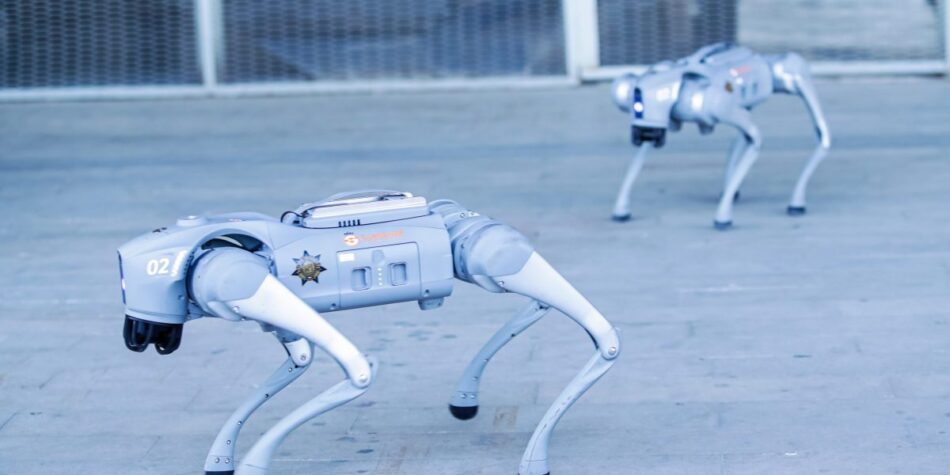
Robot dogs priced at $300,000 a piece are now guarding some of the country’s biggest data centers
- Leverage robotic security systems to enhance perimeter defense and reduce human labor costs.
- Utilize AI-powered quadrupeds for continuous surveillance and hazard detection in expansive facilities.
- Invest in automated industrial inspections to improve operational safety and maintenance efficiency.
- Plan for scalable robotics integration to future-proof security and monitoring infrastructure.
In an era where artificial intelligence and robotics are rapidly transforming industries, data centers—the backbone of digital infrastructure—are adopting innovative security solutions. Among the most striking developments is the deployment of robot dogs priced at up to $300,000 each, guarding vast data center campuses across the United States. These autonomous quadrupeds, equipped with advanced sensors and AI capabilities, offer a new frontier in facility security and operational monitoring.
As data centers grow in scale and complexity, traditional security measures face challenges in coverage, cost, and responsiveness. The integration of robotic guards like Boston Dynamics’ Spot represents a strategic shift toward leveraging intelligent automation to protect critical infrastructure, streamline inspections, and enhance safety protocols. This article explores the technology, benefits, and future implications of deploying robotic quadrupeds in data center environments.
Continue Reading
What Are Robot Dogs and How Are They Used in Data Centers?
Robot dogs are autonomous four-legged robots designed to navigate complex environments with agility and precision. Manufactured by companies like Boston Dynamics, these quadrupeds are equipped with 360-degree perception, AI-driven obstacle avoidance, and real-time video surveillance capabilities. Their ability to patrol large, uneven terrains makes them ideal for expansive data center campuses, which can span multiple football fields or more.
In data centers, these robots perform security patrols by autonomously monitoring perimeters, detecting intrusions, and alerting human operators to potential threats. Beyond security, they also conduct industrial inspections such as identifying water leaks, hazardous puddles, or equipment anomalies that could disrupt operations. This dual functionality enhances both safety and operational efficiency.
Why Are Data Centers Investing in Robot Dogs?
Data centers require robust security due to the sensitive information and critical services they host. Traditional security methods, including human guards and fixed cameras, face limitations in coverage, cost, and continuous monitoring. The rise of AI and cloud computing has driven massive investments in data center infrastructure—estimated at nearly $700 billion—leading to sprawling facilities that are challenging to secure comprehensively.
Robot dogs offer a scalable solution that can patrol continuously without fatigue, cover difficult terrain, and provide detailed visual and sensor data to security teams. Merry Frayne, senior director of product management at Boston Dynamics, notes a significant increase in interest from data centers, reflecting the growing demand for automated security solutions.
Cost and Return on Investment of Robotic Security Systems
Each robot dog ranges in price from $175,000 to $300,000 depending on customization and client needs. While the upfront investment may seem substantial, companies estimate that the cost is offset within two years through savings on human security personnel, reduced incident response times, and prevention of costly operational disruptions.
Additional cost benefits arise from the robots’ ability to perform multiple functions—security patrols, site mapping, and hazard detection—consolidating roles traditionally handled by separate teams. This multifunctionality enhances operational ROI by reducing labor costs and improving facility uptime.
Scalability and Integration Considerations
Integrating robotic quadrupeds into existing security frameworks requires careful planning. Facilities must ensure robust wireless connectivity, data integration with security operations centers, and training for human operators to effectively manage and interpret robot-generated data. However, once integrated, these systems can be scaled across multiple sites, creating a network of autonomous security agents.
Future scalability also involves software updates and AI model improvements, enabling robots to adapt to evolving threats and operational requirements. This adaptability makes them a long-term asset in the robotics ecosystem for data centers.
Capabilities Beyond Security: Inspection and Monitoring
Robot dogs are not limited to security roles. Their advanced sensor arrays allow them to conduct detailed industrial inspections that detect environmental hazards such as water leaks, chemical spills, or structural damage. In data centers, early detection of such issues can prevent costly downtime and equipment damage.
Additionally, robots can assist in construction monitoring during facility expansions or upgrades, providing real-time mapping and progress reports. This reduces human error and enhances project management efficiency.
Examples of Robot Dogs in Other Industries
Beyond data centers, robot dogs have been adopted by law enforcement agencies for reconnaissance and public safety missions. Companies like Ghost Robotics market quadrupeds for construction site inspections and military surveillance, demonstrating their versatility across sectors.
The Future of Robotics in the AI Era
Experts predict that robotics will play a transformative role alongside AI, with robot shipments expected to double by 2030 and revenues reaching $21 billion. By 2050, the robotics market could be worth $5 trillion, driven by advances in humanoid robotics, industrial automation, and intelligent machines.
Zak Kidd, founder of AI company AskHumans, highlights that while AI primarily augments knowledge work, robotics will increasingly replace manual labor roles. The deployment of robot dogs in data centers exemplifies this shift, where physical tasks are being automated to improve efficiency and safety.
Risks and Challenges of Robotic Security Deployment
- High initial costs may deter smaller operators from adoption.
- Technical challenges include ensuring reliable autonomous navigation and cybersecurity of robot systems.
- Human workforce adaptation and acceptance require training and change management.
- Regulatory and ethical considerations around autonomous security robots remain evolving.
How Businesses Can Prepare for Robotics Integration
Organizations interested in deploying robot dogs should start with a comprehensive security and operations audit to identify areas where automation can add value. Collaborating with robotics vendors to customize solutions and pilot deployments helps mitigate risks and tailor capabilities to specific facility needs.
Investing in staff training and establishing protocols for robot-human collaboration ensures smooth integration. Monitoring performance metrics and ROI during early stages allows for iterative improvements and scaling decisions.
Frequently Asked Questions
Call To Action
Explore how integrating robotic security systems can revolutionize your data center operations. Contact our experts to design scalable, AI-driven robotic solutions tailored to your facility’s unique needs.
Note: Provide a strategic conclusion reinforcing long-term business impact and keyword relevance.