Nvidia’s Huang pitches AI tokens on top of salary as agents reshape how humans work
- Introducing AI tokens as a novel compensation model to boost engineer productivity and recruitment.
- Forecasting a future workforce where AI agents vastly outnumber human employees, transforming work dynamics.
- Understanding the dual impact of AI agents on labor displacement and new job creation in the evolving economy.
- Recognizing the challenges and opportunities in integrating AI agents into corporate workflows and software demand.
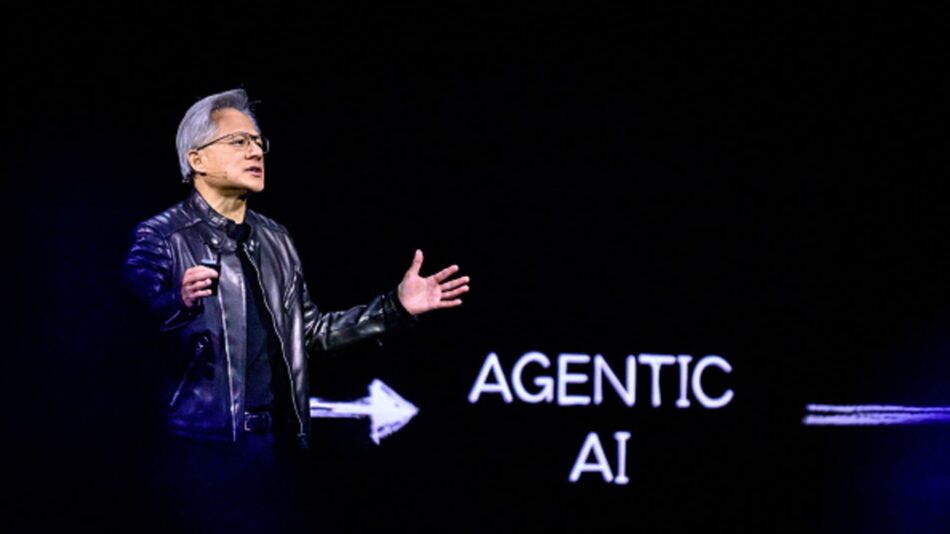
Nvidia CEO Jensen Huang recently unveiled an innovative approach to employee compensation by proposing the addition of AI tokens alongside traditional salaries. This concept aims to empower engineers with a token budget to deploy AI agents that enhance productivity and automate complex tasks. Huang’s vision extends beyond compensation, anticipating a future where digital AI agents significantly outnumber human workers, reshaping the nature of work and organizational structures.
As AI agents gain the capability to autonomously perform multi-step tasks, concerns about white-collar job displacement intensify. However, industry experts also highlight the potential for these technologies to create new roles and boost productivity. This article explores Huang’s AI token proposal, the evolving role of AI agents in the workplace, and the broader implications for labor markets, software demand, and talent management strategies.
Continue Reading
What are AI tokens and how do they enhance engineer compensation?
AI tokens are units of data or computational credits used to operate AI systems and deploy AI agents. Jensen Huang proposed that engineers at Nvidia receive a token budget on top of their base salary, effectively paying them to utilize AI tools that multiply their productivity. This compensation model incentivizes engineers to integrate AI into their workflows, accelerating innovation and efficiency.
By allocating tokens valued at approximately half of an engineer’s base salary, Nvidia aims to create a direct link between AI usage and employee rewards. This approach not only boosts morale but also encourages widespread adoption of AI-driven automation within the company.
How will AI agents reshape the future workforce?
Huang envisions a workforce where hundreds of thousands of AI agents operate alongside Nvidia’s 42,000 human employees, effectively becoming “digital employees.” These agents can autonomously execute complex, multi-step tasks with minimal human input, ranging from software development assistance to data analysis and report generation.
This shift suggests a future where human workers focus on oversight, strategy, and creative problem-solving, while AI agents handle repetitive or data-intensive tasks. The proliferation of AI agents is expected to transform traditional job roles, requiring new skills and workforce adaptability.
Implications for labor displacement and job creation
The rise of AI agents has sparked fears of widespread job displacement, especially in white-collar sectors. Goldman Sachs estimates that AI could automate up to 25% of all U.S. work hours, potentially displacing 6% to 7% of jobs during the adoption phase. However, history shows that technological advances also create new occupations and industries.
Economists highlight a “talent paradox” where companies simultaneously anticipate workforce reductions due to AI while struggling to find skilled talent. Entry-level roles that traditionally serve as training grounds are at particular risk, as AI eliminates routine “stepping-stone” tasks. Yet, new roles requiring AI literacy and oversight are emerging, emphasizing the need for reskilling and workforce transformation.
Why do AI agents drive increased software demand?
Contrary to assumptions that AI might reduce software needs, Huang argues that AI agents actually increase demand for software infrastructure. Each AI agent requires computing resources, programming tools, and software instances to function effectively. As the number of agents grows, so does the consumption of software development tools, compilers, and cloud computing services.
This dynamic creates a positive feedback loop where AI agents fuel software innovation and expansion, benefiting technology providers and developers. The growth in AI agents represents a paradigm shift in how software is developed and utilized, with natural language interfaces allowing engineers to instruct computers in plain English rather than traditional programming languages.
Practical impacts on software engineering and productivity
With AI agents automating complex workflows, tasks that once took months can now be completed in days. This acceleration enhances business agility and reduces time-to-market for new products and services. Engineers are empowered to focus on higher-value activities, supported by AI-driven automation that handles routine coding, testing, and deployment.
What are the risks and challenges of AI integration in the workplace?
Despite the promising benefits, integrating AI agents into corporate workflows is complex. Industry data shows that 80% to 85% of AI projects have failed since 2018, often due to organizational, cultural, or technical barriers rather than technology limitations.
Key challenges include managing workforce transitions, addressing ethical concerns, ensuring data privacy, and aligning AI initiatives with business goals. Companies must invest in change management, employee training, and robust governance frameworks to realize AI’s full potential without unintended negative consequences.
Managing the talent paradox and reskilling needs
Organizations face a “talent paradox” where AI adoption may reduce headcount but simultaneously increase demand for AI-literate workers. Reskilling and redeployment strategies are critical to bridge this gap. According to Mercer Asia, 65% of executives expect significant workforce redeployment or reskilling by 2026 due to AI.
Focusing on continuous learning, upskilling in AI and data science, and creating new career pathways will help companies retain talent and maintain competitive advantage in the AI-driven economy.
How can businesses prepare for the AI-driven transformation?
Adopt innovative compensation models like AI tokens to incentivize AI adoption and productivity.
Invest in AI infrastructure and software tools to support growing AI agent ecosystems.
Develop comprehensive workforce strategies that include reskilling, redeployment, and change management.
Establish ethical guidelines and governance frameworks to ensure responsible AI use.
Monitor AI project performance closely and learn from failures to improve future implementations.
Frequently Asked Questions
Call To Action
Explore how integrating AI agents and innovative compensation models like AI tokens can transform your workforce productivity and future-proof your business.
Note: Provide a strategic conclusion reinforcing long-term business impact and keyword relevance.