Melania Trump’s very robotic White House guest
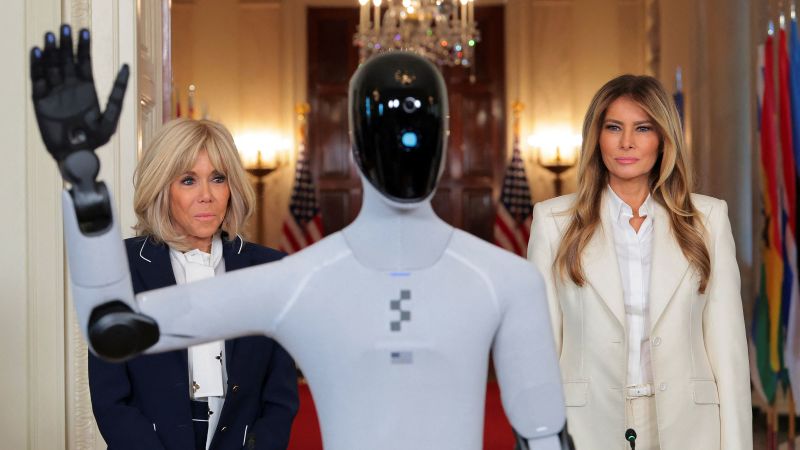
- Melania Trump introduced an AI-powered humanoid robot at the White House summit on AI education and safety.
- The robot, named “Figure 3,” showcased advanced multilingual speech and mobility in a high-profile event.
- The event emphasized the growing role of humanoid robots in education and child development.
- Discussions highlighted the balance between technological innovation and AI safety for children’s well-being.
In a groundbreaking moment at the White House, First Lady Melania Trump unveiled an American-made humanoid robot named “Figure 3” during the “Fostering the Future Together” summit. This event marked a significant milestone in the integration of artificial intelligence technology into educational and social contexts, showcasing how AI robotics are evolving beyond mobile devices to become interactive, physical presences in human environments.
The robot’s appearance underscored the rapid advancements in AI-powered humanoid systems and sparked conversations about their potential to revolutionize classroom learning and child safety. Melania Trump’s vision for these robots as educators and companions highlights a future where AI in education plays a pivotal role in shaping childhood experiences while addressing concerns about technology ethics and responsible implementation.
Continue Reading
What was the significance of the humanoid robot’s White House appearance?
The humanoid robot “Figure 3” made history as the first American-made AI-powered robot to speak and move within the White House, symbolizing a new era where robotics technology intersects with public policy and education. Its presence at the summit served as a tangible example of how AI innovation is transitioning from theoretical concepts to practical applications that can enhance learning environments and child safety protocols.
This event also positioned the United States at the forefront of the global AI robotics race, contrasting with previous international incidents such as the malfunctioning Russian humanoid robot at a Moscow summit. The successful demonstration highlighted the reliability and sophistication of American AI robotics companies, reinforcing the country’s leadership in this transformative technology sector.
How does Melania Trump envision humanoid robots impacting education?
Melania Trump articulated a vision where humanoid robots become integral to classrooms, serving as educators and facilitators of personalized learning. She proposed the idea of a “humanoid educator named Plato” who could teach classical studies, freeing children to engage more deeply in social, physical, and extracurricular activities. This reflects a broader trend in AI education technology aimed at enhancing human learning experiences rather than replacing traditional teaching methods.
By integrating AI-powered humanoid educators, schools could benefit from scalable, adaptive teaching tools that cater to individual student needs, improve engagement, and provide consistent educational support. This approach also suggests potential cost efficiencies and expanded access to quality education, especially in underserved areas.
What are the safety and ethical considerations surrounding AI robots for children?
While the promise of AI in child education is significant, Melania Trump emphasized that AI safety and ethical use remain paramount. The summit underscored the need for robust frameworks that ensure children’s privacy, data security, and protection from unintended consequences of AI interactions. This includes preventing bias in AI algorithms, safeguarding against misuse, and maintaining human oversight.
Public-private partnerships, such as those advocated by Trump involving major tech companies, are critical to developing responsible AI policies. These collaborations aim to create standards and best practices that balance innovation with the well-being of the next generation, ensuring that AI technologies enhance rather than endanger childhood development.
What role do public-private partnerships play in advancing AI for education?
Melania Trump’s initiative highlighted the importance of cooperation between governments, technology firms, and educational institutions. Partnerships with companies like Meta and OpenAI were mentioned as key to advancing AI solutions that prioritize children’s welfare. These alliances facilitate the sharing of expertise, resources, and data, accelerating the development of safe, effective AI educational tools.
Such collaborations also help address challenges related to AI scalability, integration, and continuous improvement. By working together, stakeholders can ensure that AI technologies are accessible, equitable, and aligned with societal values, fostering sustainable growth in AI-powered education and child safety systems.
How does the event reflect broader trends in AI and robotics?
The White House event with “Figure 3” mirrors a global surge in interest and investment in humanoid robotics and artificial intelligence applications. Governments and industries worldwide are exploring how AI can augment human capabilities in diverse fields such as healthcare, manufacturing, and education. The focus on child-centric AI solutions also reflects a growing awareness of the need to tailor technology development to specific demographic needs.
Moreover, the event demonstrated the increasing sophistication of robotic mobility and natural language processing, enabling robots to interact more fluidly with humans. This progress opens new avenues for AI to become a seamless part of daily life, supporting personal growth, learning, and social interaction in ways previously imagined only in science fiction.
Challenges and future outlook for AI-powered humanoid robots in education
Despite the enthusiasm, several challenges remain before humanoid robots become commonplace in classrooms. These include high development and deployment costs, the need for extensive teacher training, and ensuring equitable access across diverse socioeconomic groups. Additionally, ongoing research is required to optimize AI algorithms for educational content delivery and emotional intelligence.
Looking ahead, the integration of AI robotics in education is expected to grow steadily, driven by technological advances and policy support. Continuous evaluation of outcomes and iterative design improvements will be essential to maximize benefits while mitigating risks. The White House summit serves as a catalyst for these efforts, encouraging stakeholders to collaborate and innovate responsibly.
Frequently Asked Questions
Call To Action
Explore how integrating AI-powered humanoid robots can transform your educational programs and enhance child safety. Partner with experts to develop innovative, ethical AI solutions that drive future-ready learning environments.
Note: Provide a strategic conclusion reinforcing long-term business impact and keyword relevance.