
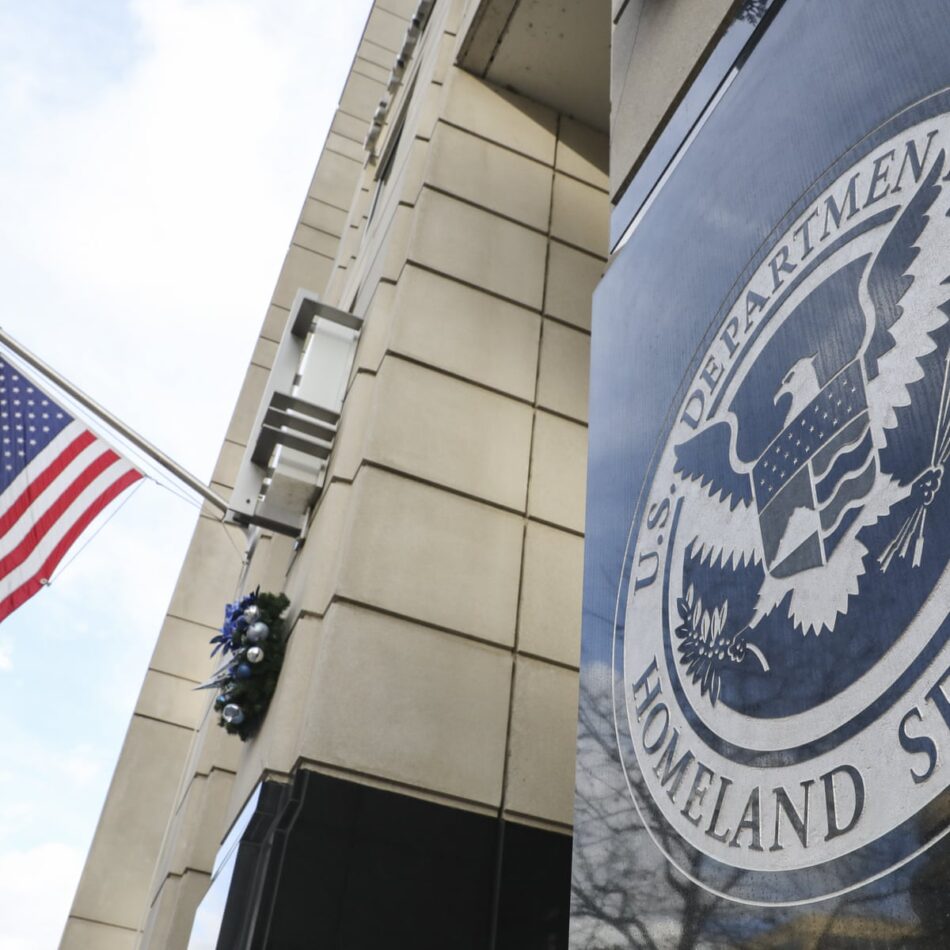
Hacked data shines light on homeland security’s AI surveillance ambitions
- Revealed contracts show extensive AI surveillance technology development within the Department of Homeland Security (DHS).
- Private sector companies are heavily involved in creating biometric scanning tools for law enforcement use.
- Innovations include AI-driven airport surveillance and predictive policing platforms analyzing national emergency call data.
- Leaked data exposes the scale and scope of government investment in facial recognition and geospatial analytics for security purposes.
Hacked data from the Department of Homeland Security’s technology incubator has unveiled a broad range of ambitious projects aimed at expanding the agency’s AI surveillance capabilities. These initiatives include advanced biometric devices compatible with mobile phones, AI systems that analyze airport CCTV footage, and platforms that process nationwide emergency call data to predict crime trends. This leak provides unprecedented insight into the DHS’s strategic investments following a significant funding boost, highlighting the increasing role of artificial intelligence in national security operations.
The data, obtained by a pseudonymous cyber-hacktivist and shared with transparency advocates, reveals contracts awarded to over 1,400 companies over two decades. It exposes the private sector’s appetite for homeland security projects and the evolving technologies shaping government surveillance efforts. This article explores the implications of these developments for privacy, law enforcement, and the future of AI-driven security systems in the United States.
Continue Reading
What does the hacked data reveal about DHS’s AI surveillance ambitions?
The hacked data exposes that the Department of Homeland Security’s Office of Industry Partnership (OIP) has been actively funding and developing a wide array of AI-powered surveillance technologies. These include biometric scanning adapters for mobile phones, AI platforms for analyzing CCTV footage in airports, and predictive policing tools that use geospatial heat maps generated from 911 call data. The data highlights the DHS’s intent to integrate advanced AI solutions to enhance situational awareness and operational efficiency in law enforcement and border security.
How is biometric technology being integrated into DHS operations?
Since 2017, multiple contracts have been awarded to companies developing portable biometric scanning devices that connect directly to smartphones. These devices enable agents to capture fingerprints, iris scans, and facial recognition data in real-time without bulky equipment. Technologies like Idea Mind LLC’s Vibe and Intellisense Systems’ Flow adapter exemplify this trend, offering plug-and-play compatibility with Android and iOS devices. This integration facilitates rapid identity verification and expands the reach of biometric data collection beyond traditional fixed checkpoints.
Practical implications of mobile biometric scanning
- Real-time biometric data capture enhances field agent capabilities.
- Enables faster processing at borders and during law enforcement operations.
- Raises privacy and civil liberties concerns due to expanded data collection scope.
What advancements are seen in airport surveillance AI?
The DHS has invested nearly $700,000 in AI systems designed to analyze existing airport CCTV footage to identify and track passengers automatically. These systems use deep learning algorithms to detect physical characteristics such as clothing, shoe types, and accessories. Intellisense’s Ossca system, for example, can generate alerts based on predefined flags, supporting both security screening and commercial applications like retail analytics. The deployment of such AI tools aims to improve threat detection and streamline passenger flow management.
Benefits and challenges of AI in airport security
- Automated surveillance reduces human error and increases monitoring efficiency.
- Potential for profiling raises ethical questions and regulatory scrutiny.
- Integration with existing infrastructure minimizes additional hardware costs.
How is predictive policing evolving with AI platforms?
One of the most notable projects revealed is an AI platform that ingests all 911 call data nationwide to create geospatial heat maps predicting incident trends. This technology represents a form of predictive policing, aiming to allocate resources proactively based on anticipated crime hotspots. While potentially improving emergency response times, such systems also spark debates about algorithmic bias, transparency, and the risk of reinforcing systemic inequalities.
What is the role of private companies in DHS’s AI projects?
The leaked data exposes over 6,800 companies that have bid on DHS contracts, with more than 1,400 receiving funding. Established contractors like Intellisense Systems and Integrated Biometrics have secured multiple awards, while newer entrants such as Idea Mind LLC are also contributing innovative solutions. This public-private partnership model accelerates technology development but also raises questions about accountability, data security, and the commercialization of surveillance tools.
Key considerations in public-private AI collaborations
- Scalability and rapid deployment of AI technologies.
- Balancing innovation with ethical standards and privacy safeguards.
- Ensuring transparency in contract awards and technology use.
What are the potential risks and ethical concerns?
The expansion of AI surveillance raises significant concerns related to privacy, civil liberties, and potential misuse. Experts warn that these technologies could lead to over-policing, discriminatory profiling, and erosion of public trust. The use of biometric data and facial recognition, especially when deployed without robust oversight, risks infringing on individual rights. Furthermore, predictive policing algorithms may perpetuate biases present in historical data, necessitating careful evaluation and regulation.
How does this align with DHS’s recent funding and policy trends?
Following a historic $165 billion funding increase in the latest federal budget, DHS has accelerated investments in AI and surveillance technologies. This aligns with broader government priorities to modernize security infrastructure and leverage machine learning for threat detection. However, the leaked data reveals a tension between ambitious technological goals and public concerns about surveillance overreach, highlighting the need for balanced policy frameworks.
What does this mean for future AI surveillance development?
The data leak provides a rare glimpse into the strategic direction of homeland security’s AI ambitions. It suggests a future where AI-driven surveillance becomes deeply embedded in everyday security operations, from airports to urban policing. Businesses and policymakers must navigate the complex interplay of innovation, ethics, and public accountability to ensure these technologies serve the public interest without compromising fundamental rights.
Frequently Asked Questions
Call To Action
Explore how your organization can responsibly integrate advanced AI surveillance technologies to enhance security while safeguarding privacy and compliance.
Note: Provide a strategic conclusion reinforcing long-term business impact and keyword relevance.