BBC Verify: Middle East Conflict Sees AI Fakes and Disinformation Spread Online
- AI-generated content is increasingly being used to spread disinformation during the Middle East conflict.
- Verifying the authenticity of images and videos is essential for accurate reporting.
- Shipping traffic in the Strait of Hormuz has drastically decreased due to the ongoing conflict.
- Understanding the implications of disinformation can help businesses navigate the crisis effectively.
The recent escalation of conflict in the Middle East has led to a significant increase in the spread of disinformation and fake content online. As tensions rise, the role of technology, particularly AI-generated images and videos, has become a focal point for both misinformation and accurate reporting.
In an era where information travels faster than ever, the challenge of distinguishing between real and fabricated content has never been more crucial. BBC Verify is at the forefront of this battle, utilizing advanced techniques to sift through the noise and deliver reliable news coverage.
Continue Reading
The Rise of AI-Generated Disinformation
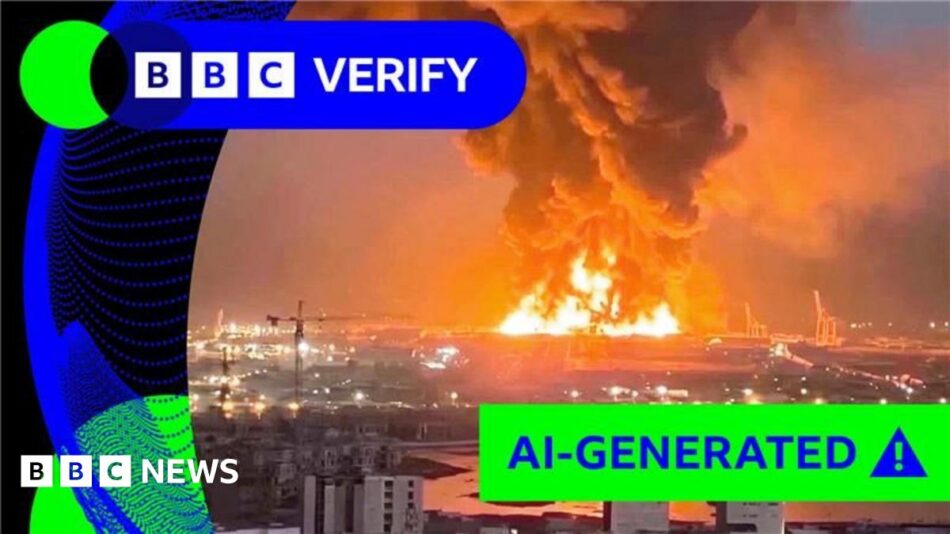
The ongoing conflict between the US, Israel, and Iran has seen a surge in the use of AI fakes. Social media platforms are inundated with manipulated images and videos that misrepresent the realities on the ground. For instance, images claiming to depict explosions at strategic locations have been fabricated using AI technology, leading to widespread confusion and panic among the public.
One notable example involved an image that falsely claimed to show a massive explosion at an Iraqi airport, which was created using AI-modified satellite images. Such instances highlight the potential for AI to be misused, complicating the already intricate landscape of international conflict.
Verifying Authenticity: The Role of BBC Verify
BBC Verify employs a combination of open-source intelligence, satellite imagery, and rigorous fact-checking methods to assess the authenticity of content related to the Middle East conflict. By analyzing various data sources, the team aims to provide clarity amidst the chaos.
For example, they recently verified footage showing US fighter jets that were reportedly shot down in an incident of friendly fire, as well as footage of a fire at an oil refinery in Saudi Arabia following a drone attack. These verification efforts are crucial for maintaining journalistic integrity and providing the public with accurate information.
Techniques for Verification
- Open-Source Intelligence: Utilizing publicly available data to corroborate claims.
- Satellite Imagery: Analyzing real-time images to assess damage and activity in conflict zones.
- Fact-Checking: Cross-referencing information from multiple reliable sources to confirm authenticity.
Impact on Global Shipping
The conflict has also had significant repercussions for global shipping, particularly in the Strait of Hormuz, a critical transit route for oil. Reports indicate that shipping traffic through this vital corridor has fallen dramatically, with tanker transits dropping by over 80% compared to pre-escalation levels.
Ioannis Papadimitriou, a lead freight analyst at Vortexa, noted that the situation remains fluid and uncertain. Major maritime insurers are reconsidering their coverage due to the heightened risks associated with the ongoing conflict. This shift could have long-term implications for global oil supply and pricing.
Shipping Traffic Trends
- Normal traffic: Approximately 20 million barrels of oil pass through the Strait daily.
- Current situation: A marked reduction in tanker activity has been observed.
- Future implications: Increased insurance costs may lead to higher oil prices.
Satellite Imagery and Damage Assessment
Recent satellite images have revealed damage at several key military installations in the region. For instance, the Ali al-Salem air base in Kuwait and a naval base in Bahrain have both sustained damage from Iranian attacks. These findings underscore the importance of satellite technology in providing real-time insights into the conflict.
At the Ali al-Salem air base, two aircraft shelters were destroyed, and additional damage was noted near the runway. Similarly, images from the naval base in Bahrain showed significant destruction to radar structures and warehouses.
Importance of Satellite Technology
- Real-time monitoring: Satellite imagery allows for immediate assessment of conflict impacts.
- Damage verification: Helps in understanding the extent of military engagements.
- Strategic insights: Provides critical data for military and humanitarian responses.
Fake Accounts and Misinformation
As the conflict escalates, so does the creation of fake social media accounts designed to spread misinformation. Following the death of Iran’s Supreme Leader Ayatollah Ali Khamenei, multiple accounts claiming to represent key figures emerged, sharing unverified and AI-generated content.
These accounts often feature blue verification ticks, which can mislead users into believing they are legitimate. This tactic not only spreads false information but also complicates the landscape for genuine news sources trying to provide accurate updates.
Detecting AI-Generated Content
Detecting AI-generated images and videos is becoming increasingly challenging as technology advances. BBC Verify has developed methods to identify manipulated content effectively. These methods include analyzing metadata, reverse image searches, and employing machine learning algorithms to detect inconsistencies.
By staying ahead of these technological advancements, news organizations can better equip themselves to combat misinformation and uphold journalistic standards.
Strategies for Detection
- Metadata Analysis: Examining file information for signs of manipulation.
- Reverse Image Searches: Checking the origins of images to confirm authenticity.
- Machine Learning Algorithms: Using AI to identify patterns indicative of fake content.
Conclusion
The interplay between AI technology and disinformation during the Middle East conflict presents significant challenges for media organizations and the public alike. As AI-generated content becomes more sophisticated, the need for rigorous verification processes is paramount. BBC Verify’s commitment to delivering accurate information amidst the chaos is a vital resource in navigating this complex landscape.
Note: Provide a strategic conclusion reinforcing long-term business impact and keyword relevance.
Frequently Asked Questions
AI is used to create fake images and videos that misrepresent events, complicating the public’s understanding of the conflict.
BBC Verify uses open-source intelligence, satellite imagery, and fact-checking techniques to assess the credibility of content.
The conflict has led to a significant drop in shipping traffic through the Strait of Hormuz, affecting global oil supply and pricing.
Call To Action
Stay informed and protect your business from the impacts of disinformation by leveraging reliable news sources and verification tools.