An AI Elementary School, With No Teachers, To Open in Chicago This Fall
- Alpha Schools introduces a unique AI-driven education model replacing traditional teachers with AI-guided learning.
- The school offers a condensed core curriculum completed in two hours daily, allowing time for project-based learning and life skills development.
- With a tuition of $55,000, Alpha Schools targets affluent families seeking innovative private school alternatives in Chicago.
- Despite national attention, the effectiveness and scalability of AI-led instruction remain subjects of debate among educators and researchers.
In the fall of 2026, Chicago will welcome Alpha Schools, a pioneering elementary institution that operates without traditional teachers. Instead, it leverages advanced artificial intelligence to deliver core academic lessons, supported by adult guides who motivate rather than instruct. This innovative approach aims to transform how children engage with learning, emphasizing efficiency and personalized education.
Alpha Schools’ model condenses essential subjects into a two-hour daily session, freeing students to pursue creative workshops and practical skills in the afternoon. While the school promises a fresh take on education, questions about the impact of AI in classrooms and the long-term benefits of this approach continue to fuel discussion among education experts and families alike.
Continue Reading
What Is Alpha Schools and How Does It Work?
Alpha Schools is a private educational institution launching in Chicago’s Lakeshore East neighborhood, housed in the former GEMS Academy building at 350 East South Water Street. Serving kindergarten through eighth grade, it plans to enroll 100 students initially, with ambitions to expand. The school’s tuition is set at $55,000 annually, positioning it among Chicago’s most expensive private schools.
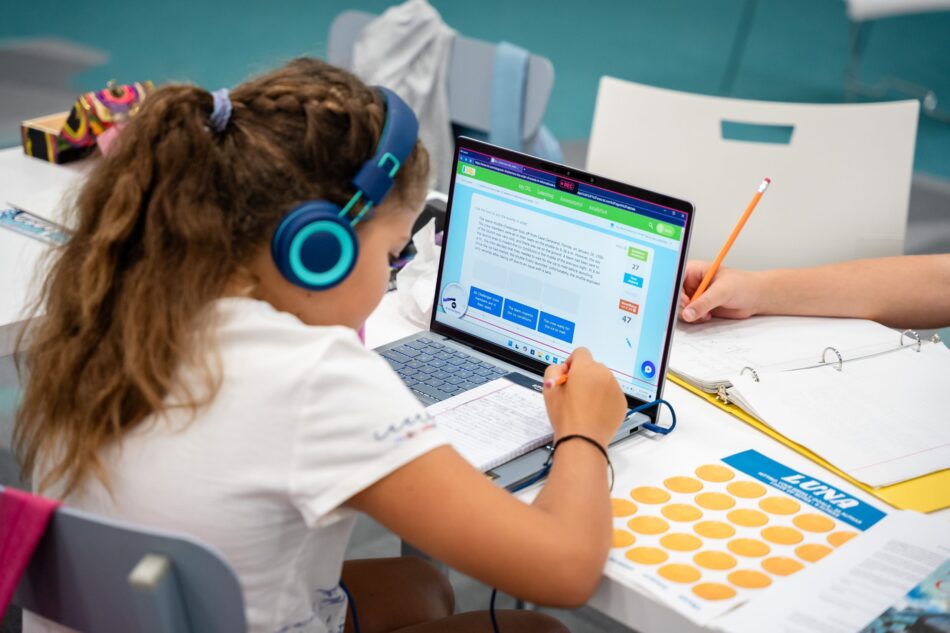
The core innovation at Alpha Schools is its AI-powered curriculum. Instead of traditional classroom instruction led by certified teachers, students engage with lessons entirely through software platforms on computers. The school combines proprietary AI learning tools with licensed third-party educational applications such as Khan Academy, Membean, Mentava, and MobyMax. This blended approach aims to tailor learning paths to each student’s pace and style.
Each day begins with group activities designed to build community and social skills, followed by two focused hours of AI-guided academic learning. The afternoon is reserved for workshops, projects, and life skill development, emphasizing a holistic educational experience beyond conventional academics.
How Does AI Replace Teachers in This Model?
At Alpha Schools, adults in the classroom are designated as “guides” rather than traditional teachers. Their role is to encourage, motivate, and support students as they navigate their AI-driven lessons. The AI system delivers personalized instruction, adapts to student performance in real-time, and provides instant feedback, which proponents argue can enhance learning efficiency.
This model relies heavily on adaptive learning technology that analyzes student responses and adjusts difficulty levels accordingly. The AI also identifies knowledge gaps, allowing students to revisit concepts until mastery is achieved. By automating core instruction, Alpha Schools seeks to reduce time spent on rote learning and increase engagement through interactive digital content.
What Are the Benefits of AI-Driven Education?
- Personalized learning: AI tailors lessons to individual student needs, potentially improving comprehension and retention.
- Efficiency: Condensing core academics into two hours daily allows more time for creative and practical pursuits.
- Data-driven insights: Continuous assessment provides detailed analytics on student progress, enabling targeted interventions.
- Engagement: Interactive software can make learning more appealing to digital-native students.
Alpha Schools reports high levels of student satisfaction, with a 2024-2025 survey indicating 94% of students “love school” and 60% preferring school over vacation. These results suggest the model may foster positive attitudes toward learning, a critical factor in educational success.
What Are the Challenges and Criticisms?
Despite its promise, the AI-driven school model faces skepticism. Researchers caution that there is limited empirical evidence supporting the long-term effectiveness of replacing teachers with AI. Critics highlight concerns including:
- Lack of human interaction: Emotional and social development may suffer without traditional teacher-student relationships.
- Equity issues: High tuition restricts access, potentially widening educational disparities.
- Overreliance on technology: Technical glitches or software limitations could disrupt learning.
- Scalability concerns: It remains unclear whether this model can be effectively expanded to diverse populations and larger student bodies.
Moreover, some educators argue that AI cannot fully replicate the nuanced guidance and mentorship that experienced teachers provide, especially for younger children who require social-emotional learning support.
How Does Alpha Schools Fit Into the Broader AI in Education Landscape?
Alpha Schools is part of a growing trend toward integrating artificial intelligence in education. Governments and private entities worldwide are exploring AI tools to personalize learning, automate grading, and support teachers. The Trump administration previously praised AI schools for innovation, but the debate over effectiveness continues.
Alpha’s approach—eliminating traditional teachers and relying solely on AI for core instruction—is more radical than most hybrid models that combine AI with human educators. Its success or failure could influence future educational policies and investments in AI technology.
What Is the Financial and Growth Outlook for AI Schools Like Alpha?
With a tuition of $55,000 per year, Alpha Schools targets affluent families willing to invest heavily in cutting-edge education. This pricing strategy supports high-quality technology infrastructure and small class sizes but limits accessibility.
From a business perspective, the model offers potential for high margins if the AI platform can be scaled and licensed to other schools. However, initial costs for software development, maintenance, and staff training are substantial. The school’s ability to demonstrate measurable academic outcomes will be crucial to attract investors and justify expansion.
What Should Parents and Educators Consider?
Parents interested in AI schools should weigh the benefits of personalized, efficient learning against the potential drawbacks related to social development and technology dependence. Visiting the school, understanding the AI curriculum, and assessing student support systems are important steps.
Educators and policymakers should monitor research on AI-driven instruction outcomes and advocate for equitable access to technology-enhanced education. Collaboration between AI developers and experienced teachers can help create balanced models that leverage technology without sacrificing human connection.
Looking Ahead: The Future of AI in Elementary Education
Alpha Schools represents a bold experiment in the future of education, blending machine learning with innovative pedagogy. As AI capabilities evolve, schools may increasingly adopt hybrid models that combine the best of human and artificial intelligence to foster student success.
The coming years will be critical in evaluating whether AI schools can deliver on their promises of improved learning outcomes, cost-efficiency, and student engagement, or if traditional teaching methods will remain indispensable.
Frequently Asked Questions
Call To Action
Explore how AI-driven education models like Alpha Schools can transform learning experiences in your community—connect with experts to assess opportunities for innovation and investment in future-ready schooling.
Note: Provide a strategic conclusion reinforcing long-term business impact and keyword relevance.