Zendaya: ‘Many people fooled’ by AI wedding pics
- AI-generated images can convincingly mimic real-life events, leading to widespread misinformation.
- Even celebrities and close acquaintances can be misled by realistic AI wedding pics.
- Social media platforms face challenges in moderating and labeling AI-created content effectively.
- The rise of deepfake technology demands increased public awareness and media literacy.
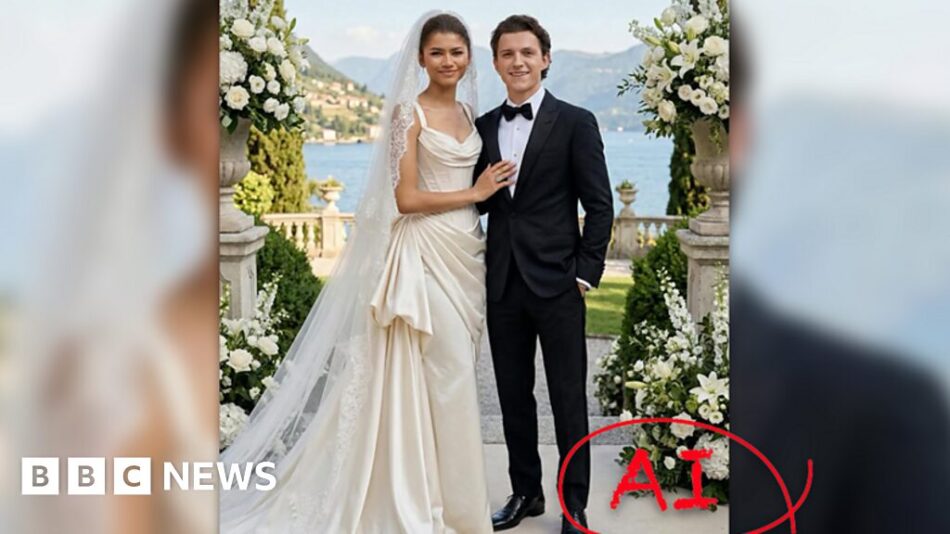
The recent surge of AI-generated wedding photos featuring actress Zendaya and her co-star Tom Holland has sparked widespread discussion about the power and pitfalls of artificial intelligence image generation. These images, shared extensively across social media, have fooled many fans and even some within Zendaya’s personal circle, highlighting how sophisticated AI-generated content has become.
Zendaya herself addressed the phenomenon with a mix of amusement and bemusement during an appearance on a popular American talk show. She clarified that the widely circulated photos were not real but products of AI, underscoring the growing challenges celebrities face in managing their public image in the digital age. This incident serves as a case study in the broader implications of AI in entertainment and the need for critical evaluation of visual content online.
Continue Reading
How Did the AI Wedding Photos of Zendaya and Tom Holland Come About?
The AI-generated wedding photos of Zendaya and Tom Holland originated from creative users leveraging advanced image synthesis tools. One notable creator, known as AK on the social media platform X, posted a series of images that depicted the couple exchanging vows in a picturesque setting resembling Lake Como, Italy. These images were so realistic that they quickly went viral, sparking rumors and speculation about a secret wedding.
Further posts by other users, such as Juan Regueira Rodriguez on Instagram, contributed to the buzz by sharing collections of these AI-generated photos, including one where Holland is seen holding a Spider-Man mask. Although some posts included disclaimers about the images being artistic recreations created with AI, many viewers overlooked these notices, leading to widespread confusion.
Why Were So Many People Fooled by These AI Images?
The convincing nature of the AI-generated wedding photos is a testament to the rapid advancements in deepfake technology and AI photo manipulation. These technologies use machine learning algorithms to create highly realistic images by blending and synthesizing features from existing photos.
Factors contributing to the widespread belief in the authenticity of these images include:
- Realistic visual quality that closely mimics professional photography.
- Familiarity with the couple’s relationship, which has been public since 2017, making the wedding scenario plausible.
- Social media virality, where rapid sharing often outpaces fact-checking.
- Limited public awareness about the capabilities and prevalence of AI-generated media.
Zendaya’s Reaction and the Impact on Celebrity Privacy
During an interview on Jimmy Kimmel’s show, Zendaya expressed her surprise at how many people, including friends and family, believed the AI wedding photos were real. She humorously recounted how people approached her praising the photos, only for her to clarify, “Babe, they’re AI. They’re not real.”
This incident highlights the challenges celebrities face in maintaining control over their image and personal narratives in an era where AI-generated content can fabricate convincing but false stories. The blurring line between reality and AI fabrication raises concerns about privacy, misinformation, and the emotional impact on public figures.
What Does This Mean for Social Media and Content Moderation?
The viral spread of the AI wedding photos underscores the difficulties social media platforms encounter in managing AI-manipulated images. Platforms must balance the promotion of creative expression with the responsibility to prevent misinformation and protect users from deception.
Current strategies include:
- Implementing AI detection tools to flag synthetic media.
- Requiring clear disclaimers on AI-generated content.
- Educating users about the potential for AI to create fake images and videos.
However, the rapid evolution of generative AI means that detection and moderation efforts must continuously adapt to new techniques and increasing sophistication.
Broader Implications for AI in Entertainment and Media
The Zendaya AI wedding photo phenomenon is part of a larger trend where artificial intelligence in entertainment is reshaping how content is created and consumed. From AI-assisted video editing to virtual influencers, the entertainment industry is embracing AI tools for creativity and marketing.
Yet, this also raises important questions about authenticity, consent, and ethical use. For instance, the use of AI to generate images of celebrities without their permission can lead to reputational risks and legal challenges. It also calls for updated policies and frameworks to govern AI-generated media responsibly.
How Can Audiences Protect Themselves from Being Fooled by AI-Generated Content?
As AI-generated media becomes more prevalent, audiences must develop critical media literacy skills to discern real from fake. Key tips include:
- Checking for official sources or statements from the individuals depicted.
- Looking for disclaimers or metadata indicating AI generation.
- Being cautious of viral content that seems sensational or unexpected.
- Using tools and browser extensions designed to detect deepfakes and manipulated images.
Increased public education about deepfake detection and digital content verification will be essential in mitigating the risks posed by synthetic media.
The Future of AI and Celebrity Culture
Looking ahead, the intersection of AI and celebrity culture will likely become more complex. Celebrities may choose to harness AI creatively to engage fans, but they will also need to defend against unauthorized use of their likenesses. Legal frameworks, technological safeguards, and public awareness will all play critical roles in shaping this evolving landscape.
Zendaya and Tom Holland’s case serves as a cautionary tale and a learning opportunity for the entertainment industry, social media platforms, and audiences alike.
Summary of the Zendaya AI Wedding Photos Incident
To recap, the AI wedding photos of Zendaya and Tom Holland:
- Were created using advanced AI image generation tools and shared widely online.
- Fooled many fans and acquaintances due to their realistic appearance.
- Prompted Zendaya to publicly clarify that the photos were not real.
- Highlighted challenges related to AI-generated content, misinformation, and celebrity privacy.
- Emphasized the need for improved content moderation and public education on AI media.
Frequently Asked Questions
Call To Action
Stay ahead in the evolving digital landscape by integrating responsible AI content strategies that protect your brand and engage your audience authentically.
Note: Provide a strategic conclusion reinforcing long-term business impact and keyword relevance.