
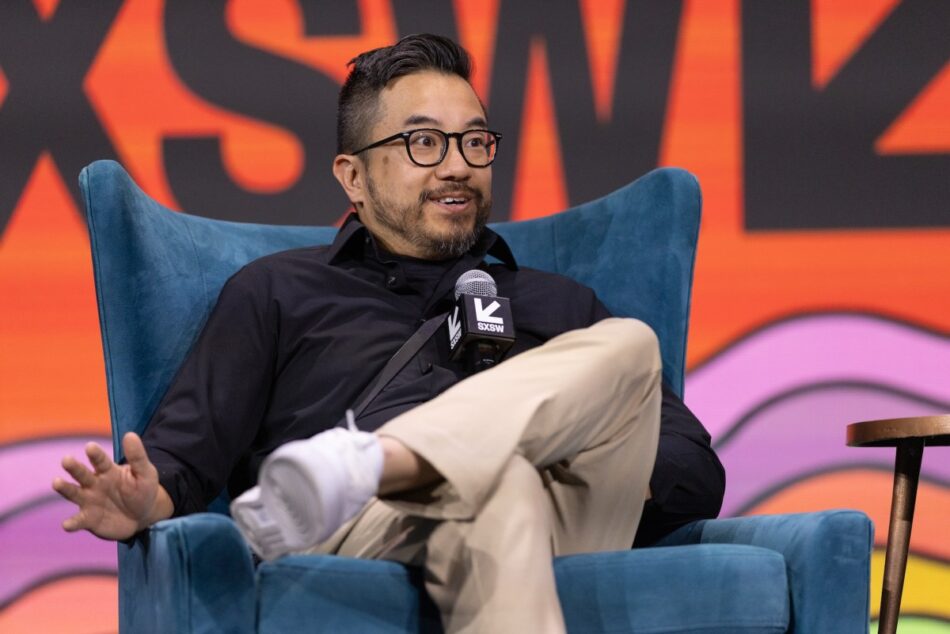
Why Garry Tan’s Claude Code setup has gotten so much love, and hate
- Garry Tan’s open-source Claude Code setup, known as gstack, revolutionizes AI-assisted software development by simulating an engineering org structure.
- The setup combines multiple specialized AI “skills” to handle startup ideation, coding, code review, design, and documentation, enhancing productivity and code quality.
- Despite viral popularity and widespread adoption, gstack has faced criticism over its perceived hype and concerns about security implications.
- Experts agree gstack represents a sophisticated prompt workflow that prioritizes correctness and collaboration over simple automation.
Y Combinator CEO Garry Tan has ignited both enthusiasm and controversy with his Claude Code setup, dubbed gstack, which he openly shared on GitHub in March 2026. This innovative AI-driven system leverages reusable prompt-based skills that guide the AI to perform distinct roles such as CEO, engineer, and code reviewer, effectively simulating a startup’s engineering organization. The setup has rapidly gained traction among developers and startups eager to harness AI for software creation, accumulating thousands of stars and forks on GitHub.
However, the same openness that fueled gstack’s viral success also attracted skepticism and criticism from some corners of the tech community. Critics question the novelty of the approach, pointing out that similar prompt workflows already exist, while others raise concerns about the security risks AI-generated code might introduce. This dual reception highlights the broader debate on the role of AI in software development, balancing innovation with caution. This article explores the reasons behind the polarized views on gstack, its practical applications, and what it means for the future of AI-assisted coding.
Continue Reading
What is Garry Tan’s Claude Code setup (gstack)?
Garry Tan’s Claude Code setup, gstack, is an open-source framework that uses AI agents powered by Claude Code to streamline the software development process. It consists of multiple “skills,” which are reusable prompt templates stored in skill.md files. Each skill instructs the AI to take on a specific role or task, such as evaluating startup ideas, writing code, reviewing for bugs, or generating documentation. This modular approach allows developers to orchestrate AI agents in a collaborative workflow that mimics a real engineering team.
Why has gstack received so much love?
The enthusiasm for gstack stems from its ability to transform how startups and developers approach coding with AI:
AI-assisted software development becomes more structured, reducing the trial-and-error typical of prompt engineering.
By simulating roles like CEO, engineer, and code reviewer, gstack enhances code quality and security review, catching subtle issues such as cross-site scripting vulnerabilities early.
Its open-source nature under an MIT license encourages community collaboration, enabling rapid iteration and expansion of skills.
Developers appreciate the productivity boost from having AI handle multiple facets of product development, from ideation to documentation.
Gstack’s viral spread on platforms like GitHub, X (formerly Twitter), and Product Hunt—with nearly 20,000 stars and over 2,200 forks—demonstrates its impact on the AI coding tools ecosystem.
What criticisms and concerns surround gstack?
Despite its popularity, gstack has faced notable backlash and skepticism:
Some critics argue that gstack is “just a bunch of prompts” and not fundamentally different from existing prompt workflows many developers already use.
Concerns about AI security risks emerged after reports that gstack’s code reviewer skill identified vulnerabilities unknown to some engineering teams, raising questions about reliance on AI for critical security audits.
There is debate over whether the hype around gstack is amplified by Garry Tan’s status as Y Combinator CEO, with some suggesting the project would not have gained as much attention otherwise.
Some voices caution against overestimating AI’s current capabilities, warning that AI tools should complement, not replace, human expertise in software development.
How does gstack work in practical terms?
Gstack operates by chaining together multiple AI agent skills to simulate a startup’s engineering workflow:
Startup idea validation: Claude acts as a CEO to evaluate the viability of new product ideas or features.
Code generation: Claude switches to an engineer role to write the actual feature code based on the validated idea.
Code review and security analysis: Claude reviews its own code to identify bugs, security flaws, and optimization opportunities.
Design and documentation: Additional skills help generate design assets and thorough documentation to support the codebase.
This multi-step process ensures that AI output is not only generated but also critically assessed and improved, mimicking real-world software development cycles.
What do AI experts say about gstack?
Opinions from AI models themselves provide valuable insight into gstack’s significance:
ChatGPT describes gstack as “reasonably sophisticated prompt workflows” that highlight the importance of simulating an engineering org structure rather than simple feature requests.
Gemini calls the setup “sophisticated” and a “Pro configuration” focused more on correctness than ease of coding.
Claude praises gstack as a “mature, opinionated system” created by a heavy user, recognizing it as one of the better examples of Claude Code skill design.
These assessments underscore that gstack’s value lies in its thoughtful design and real-world usability rather than any single revolutionary breakthrough.
What is the business impact and scalability of gstack?
Gstack offers startups and development teams a scalable approach to integrating AI into their workflows:
Its open-source model allows teams to customize and extend skills to fit unique business needs, fostering innovation.
By automating repetitive and error-prone tasks, gstack can reduce development time and costs, increasing ROI on engineering resources.
The modular nature of skills supports incremental adoption, enabling organizations to scale AI integration without disrupting existing processes.
However, teams must balance automation with human oversight to manage risks related to AI-generated code quality and security.
How to implement gstack in your AI development workflow?
To adopt gstack effectively, consider the following steps:
Install the gstack setup locally and in your repository using the provided one-paste commands from the GitHub repository.
Familiarize your team with the concept of AI skills and how to create or customize them for your product’s unique requirements.
Integrate gstack’s multi-role workflow into your development cycle, using AI for ideation, coding, review, and documentation.
Maintain rigorous human review processes, especially for security-critical code, to mitigate AI limitations.
Contribute improvements and new skills back to the open-source community to help evolve the framework.
What are the risks and future outlook for AI coding frameworks like gstack?
While gstack exemplifies the potential of AI in software engineering, it also highlights challenges:
AI reliability remains a concern, as AI-generated code may contain subtle bugs or security flaws that require expert human review.
There is a risk of overdependence on AI tools, potentially leading to skill degradation among developers if not balanced properly.
Ethical and legal considerations around AI-generated intellectual property and liability are still evolving.
Nonetheless, frameworks like gstack signal a shift toward more collaborative human-AI workflows that could redefine software development productivity and innovation.
Frequently Asked Questions
Call To Action
Explore how integrating Garry Tan’s gstack setup can transform your development team’s productivity and code quality by adopting structured AI workflows today.
Note: Provide a strategic conclusion reinforcing long-term business impact and keyword relevance.