Who’s Laughing Now? China’s Humanoid Robots Go from Viral Stumbles to Kung Fu Flips in One Year
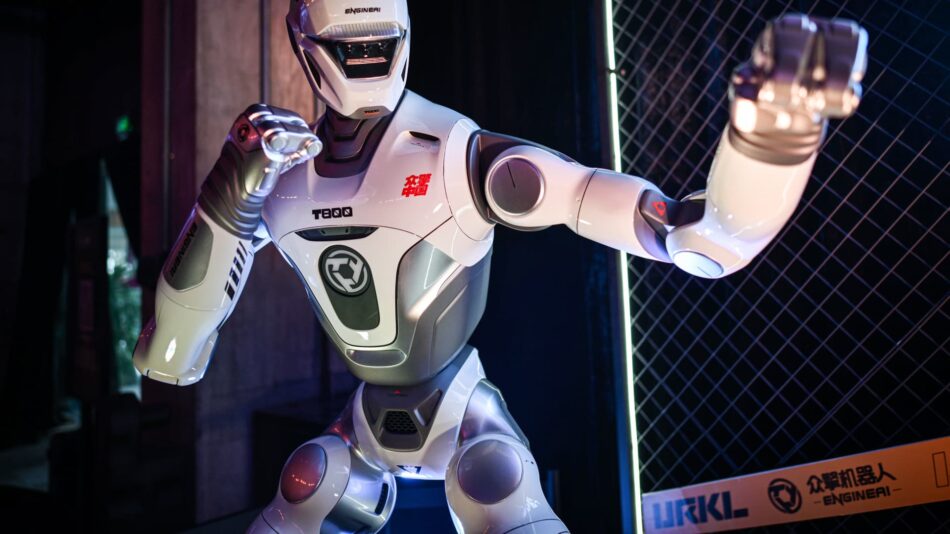
In just one year, China’s humanoid robots have made a remarkable transformation, showcasing their advanced capabilities during the Spring Festival Gala. This event, renowned as one of the most-watched television programs globally, featured robots performing impressive feats that have captivated audiences and shifted public perception.
Gone are the days of wobbly dances and viral stumbles; today’s robots are executing kung fu moves and complex gymnastics, signaling a significant leap in technology and potential economic impact. However, experts caution that while these advancements are noteworthy, the true measure of success will depend on their reliability and functionality in real-world applications.
Continue Reading
The Evolution of Humanoid Robots in China
China has witnessed a rapid evolution in humanoid robotics, particularly highlighted by the performances at the recent Spring Festival Gala. This event not only showcased the technological prowess of Chinese robotics companies but also highlighted a shift in public sentiment towards these machines.
From Skepticism to Admiration
Just a year prior, humanoid robots were often the subject of mockery, with public demonstrations revealing their limitations. For instance, a robot marathon in April 2025 made headlines for its stumbles and breakdowns, leading many to question the viability of humanoid robots in practical applications. However, the recent gala has changed the narrative, as viewers expressed admiration for the advancements made.
Key Performances at the Spring Festival Gala
- Robots performed choreographed dances.
- They executed kung fu moves with precision.
- Advanced gymnastics displays showcased their agility.
These performances were a stark contrast to the previous year’s gala, where robots were seen struggling to perform simple tasks. The leap in capabilities has not only impressed audiences but has also garnered attention from industry analysts.
China’s Leading Position in Humanoid Robotics
According to data from Barclays, China has established a commanding lead in the manufacturing and deployment of humanoid robots. As of 2025, China accounted for over 85% of the approximately 15,000 humanoid robot installations globally, while the United States lagged behind with only 13%.
The Advantages of China’s Robotics Industry
Several factors contribute to China’s dominance in this sector:
- Vertically Integrated Supply Chain: China has a comprehensive supply chain that encompasses everything from rare earth materials to high-performance components.
- Government Support: The Chinese government has heavily invested in robotics, providing funding and resources to accelerate development.
- Cost Efficiency: Chinese manufacturers can produce humanoid robots at significantly lower prices compared to their international counterparts.
Prominent Players in the Market
Leading companies like Unitree have emerged as frontrunners in the humanoid robotics market. Unitree’s robots were prominently featured at the Spring Festival Gala, and the company anticipates shipping between 10,000 and 20,000 units in 2026. Their robots’ enhanced dexterity, demonstrated through complex movements, indicates a strong potential for application in various industries.
Challenges and Future Prospects
Despite the impressive advancements, analysts caution that humanoid robots still face significant challenges. The technology must overcome technical hurdles, particularly in artificial intelligence and mechanical engineering, to ensure reliability in real-world applications.
The Importance of AI in Robotics
The future of humanoid robots will largely depend on the sophistication of their AI systems. Analysts emphasize that while physical capabilities are crucial, the ability to perform complex tasks in unstructured environments will define their success. Key areas of focus include:
- Improving reasoning capabilities.
- Enhancing task duration reliability.
- Developing the ability to chain multiple tasks together.
Potential Economic Impact
As humanoid robots become more capable, their potential economic impact grows. They could excel in physically demanding tasks that require precision, such as:
- Healthcare assistance.
- Manufacturing processes.
- Household chores.
However, achieving this potential will require significant advancements in AI and robotics technology.
The Global Robotics Landscape
While China currently leads the humanoid robotics market, other countries are also ramping up their efforts. The U.S. and other nations are expected to increase production, but they face challenges in matching China’s established supply chains and production scale.
Competitive Landscape
As the competition heats up, companies like Tesla are also making strides in humanoid robotics. Tesla’s Optimus robot, for instance, is anticipated to reach production costs below $20,000 if output scales to one million units annually. However, this pricing is contingent on market demand and competition.
Frequently Asked Questions
Humanoid robots are robots designed to resemble and mimic human actions, often equipped with advanced technologies to perform tasks traditionally done by humans.
In the past year, China’s humanoid robots have progressed significantly, showcasing improved agility, dexterity, and the ability to perform complex movements during public demonstrations.
Humanoid robots face challenges related to AI development, mechanical reliability, and the ability to function effectively in unstructured environments.
Call To Action
As the field of humanoid robotics continues to evolve, staying informed about technological advancements and market trends is crucial for businesses looking to leverage these innovations. Engage with experts and explore opportunities in this dynamic sector.
Note: The rapid advancements in humanoid robotics present both opportunities and challenges, making it imperative for stakeholders to navigate this evolving landscape thoughtfully.