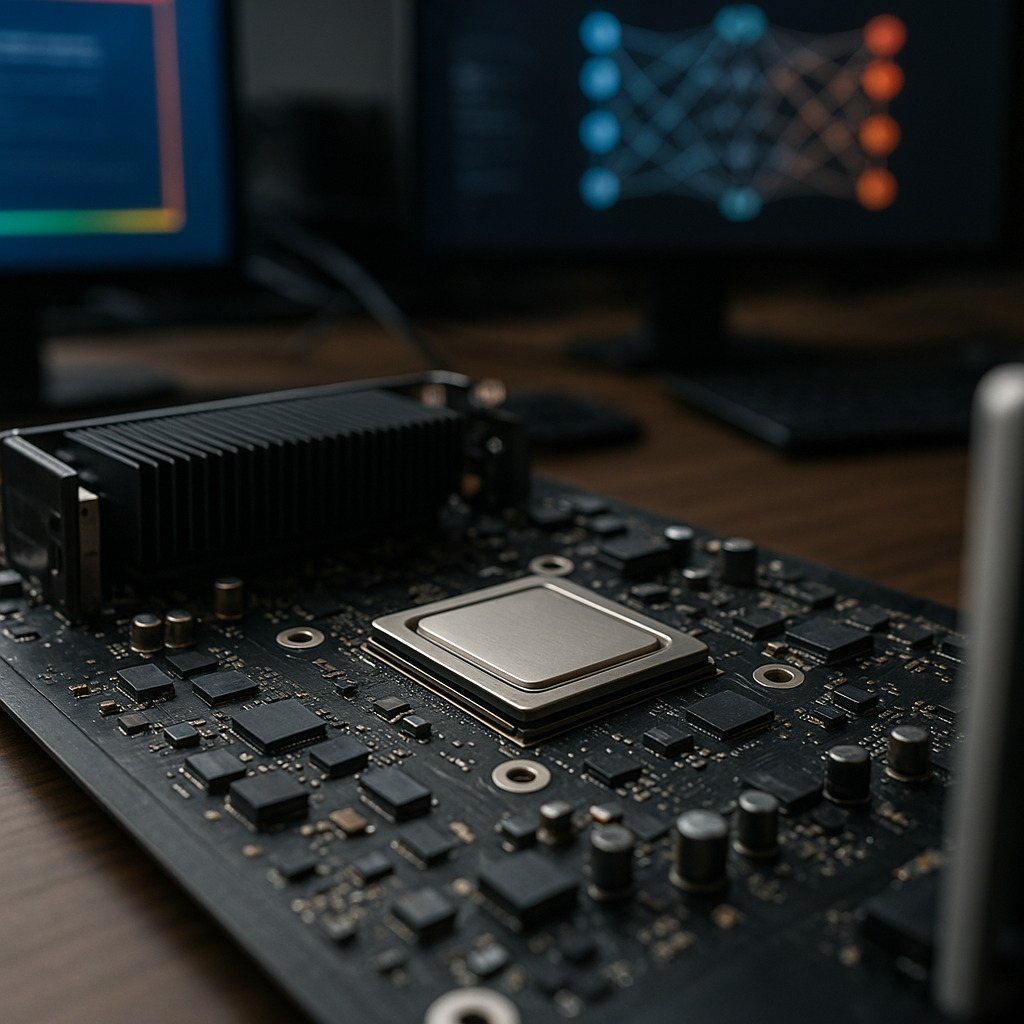
What Is Inference? Explaining the Massive New Shift in AI Computing
- Understand the critical role of AI inference in modern machine learning applications.
- Explore how inference computing differs from training and why it drives new hardware demands.
- Discover the business impact of the inference revolution on AI scalability and deployment costs.
- Learn about emerging inference optimization techniques that enhance performance and reduce latency.
The term inference has become a cornerstone in the evolving landscape of artificial intelligence, marking a significant shift from the traditional focus on model training. Inference refers to the process where a trained AI model applies its learned knowledge to new data, enabling real-time decision-making, predictions, and automation across industries. This shift is transforming AI computing demands, emphasizing the need for specialized hardware and software optimizations tailored for inference workloads.
As enterprises increasingly deploy AI-powered applications in production environments, understanding the nuances of inference computing is critical. It impacts everything from cloud infrastructure costs to edge device capabilities, shaping the future of AI scalability and accessibility. This article unpacks the concept of inference, its technological implications, and why it represents a massive new frontier in AI computing.
Continue Reading
What Is Inference in Artificial Intelligence?
Inference in AI is the process by which a trained machine learning model makes predictions or decisions based on new, unseen data. Unlike the training phase, where the model learns patterns from large datasets, inference applies this knowledge to perform tasks such as image recognition, natural language understanding, or recommendation generation in real-time or near-real-time scenarios.
In practical terms, inference is the operational phase of AI systems where the value of the model is realized. For example, when a smartphone’s voice assistant interprets a user’s command or an online retailer suggests products based on browsing history, inference is at work.
How Does Inference Differ from Training?
Training and inference are two distinct stages of the AI lifecycle with different computational characteristics:
- Training involves feeding massive datasets into models to adjust parameters and improve accuracy. It is resource-intensive, often requiring powerful GPUs or TPUs and significant time.
- Inference uses the trained model to process new inputs and generate outputs quickly and efficiently. It demands low latency and high throughput, especially in real-time applications.
While training is usually done once or periodically, inference happens continuously as the AI system interacts with users or processes data streams. This fundamental difference drives distinct hardware and software requirements.
Why Is Inference Driving a Massive Shift in AI Computing?
The surge in AI adoption across industries has led to an explosion in inference workloads. Unlike training, which is centralized and episodic, inference is distributed and constant, often occurring at the edge or in cloud services.
This shift has several implications:
- Inference computing demands specialized chips optimized for low power consumption and high-speed processing, such as inference accelerators and AI-specific ASICs.
- Cloud providers and enterprises must invest in scalable infrastructure to handle billions of inference requests daily, balancing cost and performance.
- Latency-sensitive applications like autonomous vehicles, healthcare diagnostics, and financial fraud detection require inference to be as fast and reliable as possible.
Consequently, the AI industry is witnessing a pivot toward optimizing inference workloads, creating new markets for hardware, software frameworks, and AI model architectures designed specifically for inference efficiency.
Key Technologies Powering Inference
Several technologies and approaches are central to advancing inference performance:
- Inference Accelerators: Dedicated hardware such as GPUs, FPGAs, and AI ASICs designed to execute inference tasks faster and with less energy than general-purpose CPUs.
- Model Compression and Quantization: Techniques that reduce the size and complexity of AI models, enabling faster inference and lower memory usage without significant loss of accuracy.
- Edge Computing: Deploying inference capabilities on devices closer to data sources (e.g., smartphones, IoT devices) to reduce latency and bandwidth usage.
- Software Frameworks: Optimized libraries and runtimes like TensorRT, ONNX Runtime, and OpenVINO that accelerate inference across diverse hardware platforms.
Business Impact of the Inference Revolution
The rise of inference-centric computing is reshaping how businesses approach AI deployment:
- Inference scalability enables companies to serve millions of users simultaneously with AI-powered features, enhancing customer experience and operational efficiency.
- Cost structures are evolving as inference workloads often dominate cloud spending due to their continuous nature, prompting businesses to seek cost-effective hardware and cloud pricing models.
- Faster inference translates to real-time insights and automation, unlocking new revenue streams and competitive advantages in sectors like retail, finance, and healthcare.
- Security and privacy considerations drive inference to the edge, reducing data transfer risks and complying with regulations.
Challenges in Scaling Inference
Despite its benefits, scaling inference presents challenges:
- Inference latency must be minimized to meet user expectations, requiring sophisticated optimization and hardware selection.
- Managing diverse deployment environments—from cloud to edge devices—demands flexible and portable AI models.
- Balancing inference accuracy with computational efficiency requires ongoing research in model design and compression.
- Infrastructure must handle unpredictable spikes in inference demand without degradation.
Strategies for Effective Inference Deployment
To harness the power of inference, organizations should consider the following strategies:
- Invest in inference optimization techniques such as pruning and quantization to improve speed and reduce costs.
- Leverage hybrid architectures combining cloud and edge inference to balance latency, privacy, and scalability.
- Adopt AI frameworks that support hardware acceleration and model interoperability.
- Continuously monitor and tune inference workloads to adapt to changing usage patterns and maintain performance.
The Future of AI Inference
Looking ahead, inference will remain a critical focus as AI permeates more aspects of business and daily life. Innovations in hardware, including neuromorphic chips and energy-efficient accelerators, promise to further enhance inference capabilities.
Moreover, emerging AI models tailored for efficient inference will enable more sophisticated applications on constrained devices, expanding AI’s reach globally. The ongoing inference revolution is set to redefine AI computing paradigms, emphasizing speed, scalability, and cost-effectiveness as key success factors.
Frequently Asked Questions
Call To Action
Unlock the full potential of your AI initiatives by optimizing your inference workflows with cutting-edge hardware and software solutions tailored for scalable, efficient AI deployment.
Note: Provide a strategic conclusion reinforcing long-term business impact and keyword relevance.