Pragmata’s Newly Revealed New York Stage Was Painstakingly Made by Human Developers to Look “AI Generated,” According to Director
- Human developers meticulously crafted the New York-like stage to evoke an AI-generated aesthetic.
- Intentional surreal distortions create a cityscape that is both familiar and uncanny.
- Balancing visual uniqueness with gameplay clarity was a key design challenge.
- The game blends cultural elements from various cities to create a distinctive urban environment.
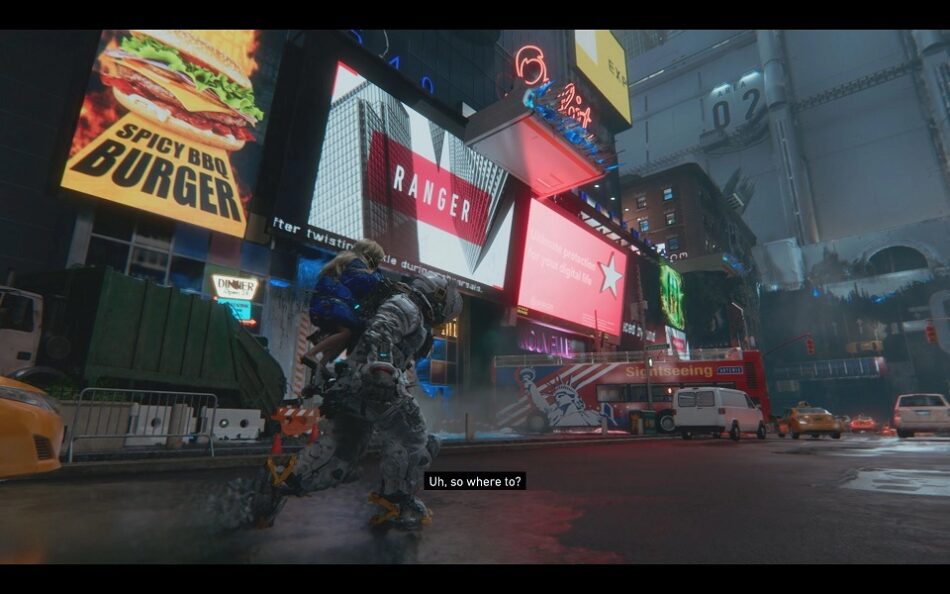
Pragmata’s upcoming release has sparked intrigue with its innovative depiction of a New York-inspired cityscape. Unlike typical urban recreations, the stage was designed to appear as if generated by artificial intelligence, but in reality, it was painstakingly crafted by human developers. This creative choice aims to immerse players in a world that feels both recognizable and subtly distorted, enhancing the game’s sci-fi atmosphere.
The developers employed deliberate visual distortions—such as inverted streets and taxis that appear truncated—to evoke a sense of uncanny familiarity. This approach not only reinforces the game’s narrative premise of a “fake New York generated by AI” but also challenges traditional game environment design by blending realism with surreal elements. The result is a visually compelling stage that invites players to explore while maintaining clarity and navigability.
Continue Reading
What Inspired the AI-Generated Look of Pragmata’s New York Stage?
The director of Pragmata, Cho Yonghee, revealed that the design concept for the New York stage was rooted in the idea of creating a “fake New York generated by AI.” This premise guided the development team to blend familiar urban landmarks with subtle distortions that would make the environment feel both authentic and otherworldly. The goal was to evoke the sensation of exploring a city that is almost real but distinctly artificial, reflecting the sci-fi themes of the game.
By incorporating elements that players instantly recognize, such as typical city streets and vehicles, the team ensured an immediate connection with the environment. However, to emphasize the artificial nature of this cityscape, they introduced surreal visual glitches—like taxis sinking into the ground or buses emerging from walls—that simulate the kind of errors an AI might produce when generating a virtual city.
How Did Human Developers Achieve an AI-Generated Aesthetic?
Contrary to what one might expect, the AI-generated look was not the result of automated processes or generative algorithms. Instead, human developers painstakingly crafted every detail to simulate the imperfections and uncanny features associated with AI creations. Producer Naoto Oyama explained that the team deliberately implemented “mechanisms that express this AI-like uncanny feel” by designing visual anomalies and spatial inconsistencies that challenge players’ expectations.
This approach required a deep understanding of both urban design and the subtle cues that signal artificiality to human perception. The developers balanced these distortions carefully to avoid confusion or frustration, ensuring that while the environment felt surreal, it remained navigable and engaging.
What Are Some Examples of the Surreal Distortions in the Game’s Cityscape?
Inverted streets that defy conventional urban layouts, creating a disorienting but intriguing atmosphere.
Taxis and buses that appear to be cut off or partially embedded into walls and floors, simulating AI errors.
Architectural elements that are subtly warped or misplaced to evoke a dreamlike quality.
Visual glitches that suggest the city is a digital construct rather than a physical reality.
Why Was Balancing Distortion and Clarity Important in Pragmata’s Design?
Cho Yonghee emphasized that while unique distortions add to the game’s visual identity, they had to be carefully balanced so as not to confuse players or imply unintended gameplay mechanics. Excessive or overly complex anomalies might have led players to believe these distortions were puzzles or hidden clues, detracting from the immersive experience.
By maintaining this balance, the developers ensured that the surreal elements functioned as atmospheric background rather than interactive obstacles. Producer Oyama noted that this careful calibration has resulted in positive player feedback, with no reports of difficulty navigating the city’s paths.
How Does Pragmata’s New York Stage Reflect Broader Game Worldbuilding?
While the New York stage is a central showcase, Pragmata will also feature other cities that are “somewhere else on Earth,” according to Cho. These locations will not be fully urbanized but will instead offer diverse environments that expand the game’s narrative scope. The New York-inspired city itself is described as a cultural amalgamation, blending elements from cities like Madrid and Seoul, rather than a direct replication of New York.
This multicultural approach enhances the game’s futuristic and speculative fiction themes, presenting a world that is both familiar and novel. It also reflects a broader trend in game design where hybridized urban environments create richer storytelling opportunities and player engagement.
What Platforms Will Pragmata Be Available On and When?
Pragmata is scheduled for release on April 17, 2026, for PlayStation 5, Xbox Series X/S, and PC via Steam. Additionally, a version for the upcoming Nintendo Switch 2 will launch a week later, on April 24, 2026. This multi-platform rollout aims to maximize accessibility and reach across diverse gaming audiences.
How Does Pragmata’s Design Philosophy Reflect Trends in Artificial Intelligence and Game Development?
Pragmata’s intentional simulation of AI-generated environments by human developers exemplifies a growing intersection between artificial intelligence concepts and creative game design. Instead of relying solely on AI to generate content, the game uses human creativity to mimic AI aesthetics, exploring themes of reality, perception, and technology.
This approach highlights the nuanced role AI plays in modern game development—not just as a tool for automation but as an inspiration for artistic expression. It also raises interesting questions about the future of procedural generation, human-AI collaboration, and the boundaries between authentic and artificial experiences in digital worlds.
What Are the Implications for Future Game Environments Inspired by AI?
Pragmata’s New York stage sets a precedent for how games can leverage the concept of AI-generated content without fully automating the process. By carefully designing environments that feel “AI-like,” developers can create unique atmospheres that challenge player expectations and enrich narrative immersion.
This method may inspire other studios to experiment with blending human craftsmanship and AI aesthetics, potentially leading to new genres or styles of game environments that are both visually compelling and thematically resonant. Moreover, it underscores the importance of balancing innovation with player usability in game world design.
How Does Pragmata Integrate AI Themes Beyond Visual Design?
Beyond its visual style, Pragmata incorporates AI-driven gameplay mechanics, allowing players to complete the game through hacking, gunplay, or a combination of both, depending on their build. This flexibility aligns with the game’s futuristic setting and reinforces the narrative of technology’s pervasive role in its world.
The involvement of renowned sci-fi creator Shoji Kawamori in supervising the worldbuilding further ensures a cohesive blend of accessibility and genre depth, balancing Capcom’s approach with visionary storytelling.
Summary of Pragmata’s Innovative Approach to AI and Game Design
Human developers simulate AI-generated errors to create a surreal yet familiar urban environment.
The New York stage blends cultural influences to craft a unique, hybrid cityscape.
Visual distortions are balanced to enhance immersion without confusing gameplay.
The game’s narrative and mechanics integrate AI themes beyond aesthetics, enriching player choice.
Pragmata’s release across multiple platforms positions it for broad audience engagement.
Frequently Asked Questions
Call To Action
Discover how innovative AI-inspired design can transform your game development projects—connect with experts to explore tailored solutions that blend human creativity and artificial intelligence.
Note: Provide a strategic conclusion reinforcing long-term business impact and keyword relevance.