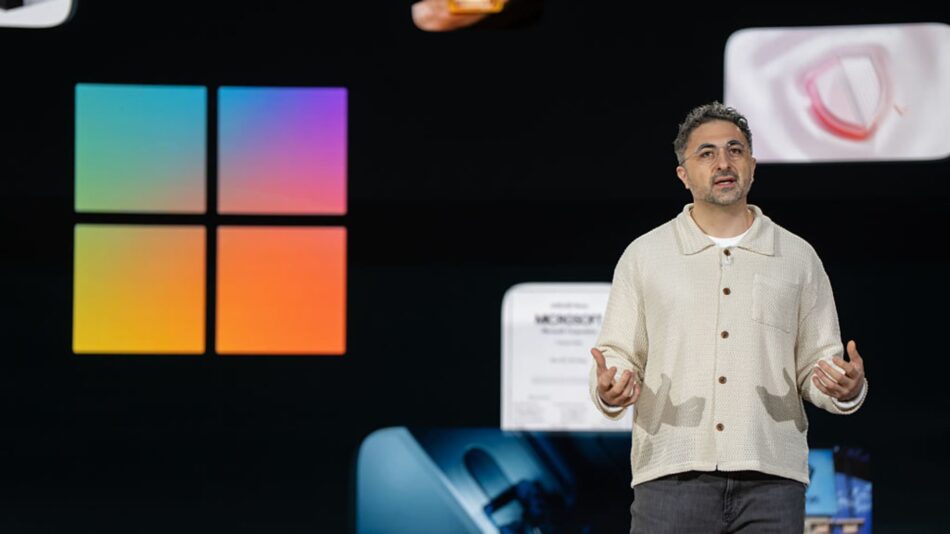
Microsoft shakes up Copilot AI leadership team, freeing up Suleyman
- Microsoft consolidates its Copilot AI leadership to enhance product integration and user experience.
- Jacob Andreou, former Snap executive, appointed to lead Copilot AI assistant experience for both commercial and consumer sectors.
- Mustafa Suleyman refocuses on developing advanced generative AI models, emphasizing the model as the core product.
- Microsoft aims to accelerate innovation in AI with a strategic organizational restructure amid competitive market pressures.
Microsoft recently announced a significant reorganization of its Copilot AI leadership team, marking a strategic shift in its approach to artificial intelligence development. This move involves consolidating engineering groups for both commercial and consumer Copilot assistants under new leadership, aiming to improve adoption and streamline product development.
The company appointed Jacob Andreou, a former Snap executive now within Microsoft’s AI unit, as the executive vice president responsible for the Copilot AI assistant experience. Meanwhile, Mustafa Suleyman, head of Microsoft’s AI group and co-founder of DeepMind, will concentrate on building next-generation generative AI models, underscoring the importance of the model itself as the product. This restructuring reflects Microsoft’s commitment to advancing AI innovation and maintaining competitiveness in a rapidly evolving market.
Continue Reading
What prompted Microsoft’s Copilot AI leadership shake-up?
Microsoft’s decision to reorganize the Copilot AI leadership stems from the need to unify efforts across its commercial and consumer AI assistant products. Despite Copilot’s innovative capabilities, adoption rates have lagged behind competitors like OpenAI’s ChatGPT and Google’s Gemini. By consolidating leadership under Jacob Andreou, Microsoft aims to create a more cohesive user experience and accelerate feature development, addressing market demands more effectively.
Who is Jacob Andreou and what role will he play?
Jacob Andreou brings extensive experience from his tenure at Snap and his current role within Microsoft’s AI division. As executive vice president, he will oversee the entire Copilot AI assistant experience, spanning both consumer and commercial applications. Reporting directly to CEO Satya Nadella, Andreou’s leadership is expected to drive innovation, enhance product usability, and expand Copilot’s market reach.
How will Mustafa Suleyman’s role change with this reorganization?
Mustafa Suleyman, previously managing broad AI initiatives including Copilot, will now focus exclusively on developing generative AI models. His new mandate centers on creating enterprise-tuned, cost-efficient AI models that serve as foundational technology across Microsoft’s product ecosystem. Suleyman emphasizes that “the model is the product,” highlighting a strategic pivot towards building proprietary AI architectures optimized for performance and scalability over the next five years.
What is the current market position of Microsoft’s Copilot AI?
As of early 2026, Microsoft’s Copilot app had approximately 6 million daily active users, trailing behind OpenAI’s ChatGPT at 440 million and Google’s Gemini at 82 million. Despite this, Microsoft continues to integrate advanced AI technologies from OpenAI and Anthropic, aiming to enhance its offerings. Only about 3% of Office 365 commercial users currently have access to the Microsoft 365 Copilot add-on, signaling significant growth potential if adoption barriers are addressed.
How does this leadership change align with Microsoft’s AI strategy?
The leadership restructuring aligns with Microsoft’s broader AI vision to build “superintelligence” models that deliver tangible product impact and cost efficiencies. CEO Satya Nadella’s memo underscores the company’s commitment to advancing frontier AI research while meeting enterprise needs through innovative, scalable solutions. This strategic focus on model development and product integration aims to secure Microsoft’s competitive edge in the fast-evolving AI technology landscape.
Strategic Implications for Microsoft’s AI Ecosystem
Microsoft’s move to free up Suleyman for model innovation reflects a recognition that future value in AI will reside primarily in the quality and efficiency of underlying models rather than solely in application features. By investing in enterprise-specific AI lineages and optimizing cost of goods sold (COGS), Microsoft expects to enhance product differentiation and long-term profitability.
Challenges and Opportunities Ahead
- AI adoption challenges: Copilot’s current user base lags behind rivals, indicating a need for improved user engagement and awareness.
- Competitive pressure: Microsoft faces stiff competition from OpenAI, Google, and Anthropic, requiring rapid innovation and strategic partnerships.
- Scalability and integration: The consolidation of Copilot leadership aims to streamline development and enhance integration across Microsoft 365 and other platforms.
- Investment in superintelligence: Focusing on advanced model development positions Microsoft to lead in next-generation AI capabilities.
What does this mean for businesses using Microsoft AI products?
Businesses leveraging Microsoft AI products can expect accelerated improvements in AI-driven productivity tools and more tailored AI solutions. The enhanced focus on generative models will enable more sophisticated automation, better reasoning capabilities, and cost-effective AI integration within enterprise workflows. This shift also signals Microsoft’s commitment to long-term AI innovation, ensuring sustained value for corporate customers.
How will Microsoft’s AI partnerships evolve?
Microsoft continues to collaborate with AI pioneers like OpenAI and Anthropic, incorporating their models into its ecosystem. The company holds intellectual property rights for OpenAI models through 2032, ensuring access to cutting-edge technology. The leadership changes may facilitate deeper integration of diverse AI models, expanding Microsoft’s AI “basket” and offering customers a broader array of AI-powered tools.
What is the outlook for Copilot and Microsoft’s AI initiatives?
With new leadership focused on user experience and model innovation, Microsoft is poised to accelerate Copilot’s adoption and enhance its AI portfolio. The company’s investment in superintelligence and enterprise-specific models aims to deliver breakthrough research and practical solutions. While competitive pressures remain, Microsoft’s strategic realignment reflects a proactive approach to securing its position as a leading AI innovator in both consumer and business markets.
Frequently Asked Questions
Call To Action
Discover how Microsoft’s evolving AI leadership and advanced generative models can transform your business productivity and innovation. Connect with our experts to explore tailored AI solutions that drive measurable growth.
Note: Provide a strategic conclusion reinforcing long-term business impact and keyword relevance.