Market Segmentation, Major Trends, and Competitive Analysis of the Web Conferencing Market
- Understand the key market segmentation driving the web conferencing industry growth.
- Learn about the major trends shaping the future of virtual communication technologies.
- Identify leading companies and their strategic moves influencing the competitive landscape.
- Discover how AI integration and innovation are transforming web conferencing solutions.
The web conferencing market is undergoing rapid expansion, fueled by evolving workplace dynamics and technological advancements. As organizations worldwide adopt virtual communication tools, understanding the market segmentation and emerging trends becomes essential for businesses aiming to capitalize on this growth. This article provides a comprehensive overview of the market size projections, key players, and the innovative technologies driving this sector forward.
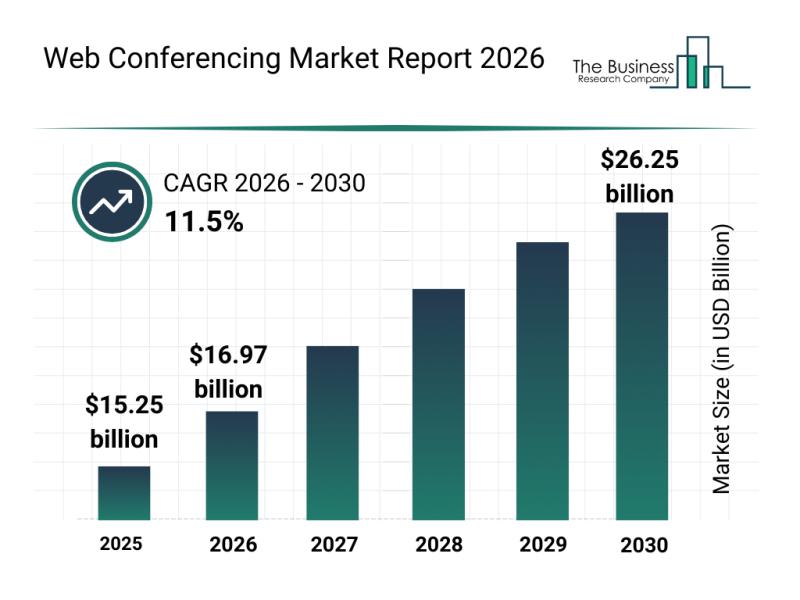
With a projected market value of $26.25 billion by 2030 and a robust compound annual growth rate (CAGR) of 11.5%, the web conferencing industry is positioned for significant transformation. From cloud-based solutions to AI-powered meeting assistants, the landscape is evolving to meet the demands of hybrid work environments and enhanced collaboration needs.
Continue Reading
What Is Driving the Growth of the Web Conferencing Market?
The web conferencing market growth is primarily driven by technological innovation, increased remote work adoption, and the need for efficient virtual collaboration. Businesses are shifting towards cloud-based and SaaS platforms that offer scalability and flexibility. Additionally, the integration of artificial intelligence and immersive technologies like augmented reality (AR) and virtual reality (VR) is enhancing user experience and meeting evolving enterprise requirements.
Key Factors Influencing Market Expansion
- AI-powered meeting assistants that automate transcription, moderation, and analytics.
- Growing use of AR and VR technologies for immersive conferencing experiences.
- Proliferation of SaaS-based web conferencing platforms enabling easy deployment and updates.
- Enhanced integration with enterprise collaboration tools to streamline workflows.
- Rising demand for hybrid and flexible work models requiring robust virtual communication.
Detailed Market Segmentation
Understanding the market segmentation of the web conferencing industry is crucial for identifying growth opportunities and tailoring solutions to specific customer needs. The market can be segmented based on components, organization size, deployment type, application, and end-user sectors.
Component Segmentation
- Solutions: Cloud-Based, On-Premises, Hybrid
- Services: Managed Services, Professional Services, Support & Maintenance, Consulting
Organization Size
- Large Enterprises
- Small and Medium Enterprises (SMEs)
Deployment Type
- Hosted
- On-Premises
- Managed
- Software-as-a-Service (SaaS)
Application Areas
- Virtual Meetings
- Webinars
- Online Training and E-Learning
- Virtual Events and Conferences
- Collaboration and Team Communication
End Users
- Education
- Government
- Healthcare
- Information Technology and Telecommunication
- Banking and Financial Services
- Manufacturing
- Media and Entertainment
- Other sectors
Major Trends Shaping the Web Conferencing Market
The web conferencing industry is witnessing several transformative trends that are redefining how virtual communication is conducted. These trends not only improve user engagement but also offer enterprises new ways to optimize collaboration and productivity.
Cloud-Based Conferencing Solutions
Cloud adoption is accelerating due to its scalability, cost-effectiveness, and ease of access. Cloud-based platforms allow organizations to deploy conferencing solutions quickly without heavy infrastructure investments, supporting remote and hybrid workforces efficiently.
Real-Time Collaboration Tools
There is a growing demand for tools that enable real-time interaction, such as instant file sharing, live annotations, and integrated chat features. These capabilities enhance teamwork and decision-making during virtual meetings.
Advanced Meeting Recording and Playback
Enhanced recording features with AI-driven transcription and searchable archives allow users to revisit meeting content easily, improving knowledge retention and compliance.
Managed and Professional Conferencing Services
Outsourcing conferencing management to specialized providers helps enterprises focus on core activities while ensuring high-quality and secure virtual events.
Security and Compliance
With increasing cyber threats, robust security protocols and regulatory compliance in virtual meetings are becoming top priorities for organizations handling sensitive data.
Competitive Landscape and Leading Companies
The web conferencing market is highly competitive, with several global players driving innovation and market expansion. Key companies include Google LLC, Microsoft Corporation, Amazon Web Services Inc, Cisco Systems Inc, Adobe Inc, Zoom Video Communications Inc, Zoho Corporation, RingCentral Inc, and others.
Strategic Acquisitions and Expansions
In August 2023, RingCentral, Inc. expanded its capabilities by acquiring assets from Hopin, a UK-based virtual events specialist. This acquisition enhanced RingCentral’s portfolio to include hybrid event management and interactive engagement features, broadening its reach beyond traditional conferencing.
Innovation Through AI Integration
Leading companies are investing heavily in AI to improve conferencing quality and functionality. For example, Zoom Video Communications introduced Realtime Media Streams in July 2025, enabling developers to build AI-powered applications such as live transcription, intelligent moderation, and advanced analytics directly into meetings.
How to Leverage Web Conferencing for Business Growth
Businesses aiming to harness the benefits of web conferencing should focus on selecting scalable, secure, and user-friendly platforms that align with their operational needs. Incorporating AI-driven features can enhance meeting productivity and engagement, while cloud-based solutions offer flexibility and cost savings.
Key Considerations for Implementation
- Assess organizational size and specific use cases to choose appropriate deployment types.
- Prioritize platforms with strong security and compliance certifications.
- Invest in training employees to maximize tool utilization and collaboration efficiency.
- Explore managed services to reduce IT overhead and ensure seamless conferencing experiences.
- Continuously monitor emerging trends to stay competitive and innovative.
Future Outlook and Market Opportunities
The web conferencing market is poised for continued growth, driven by ongoing digital transformation and evolving workplace models. Emerging technologies such as AI, AR, and VR will further enhance virtual communication, offering immersive and interactive experiences. Enterprises that adopt these innovations early will gain a competitive advantage through improved collaboration, reduced travel costs, and increased operational agility.
Frequently Asked Questions
Call To Action
Unlock the full potential of your virtual communication by partnering with experts who understand the evolving dynamics of the web conferencing market. Contact us today to explore tailored solutions that drive collaboration and business growth.
Note: Provide a strategic conclusion reinforcing long-term business impact and keyword relevance.