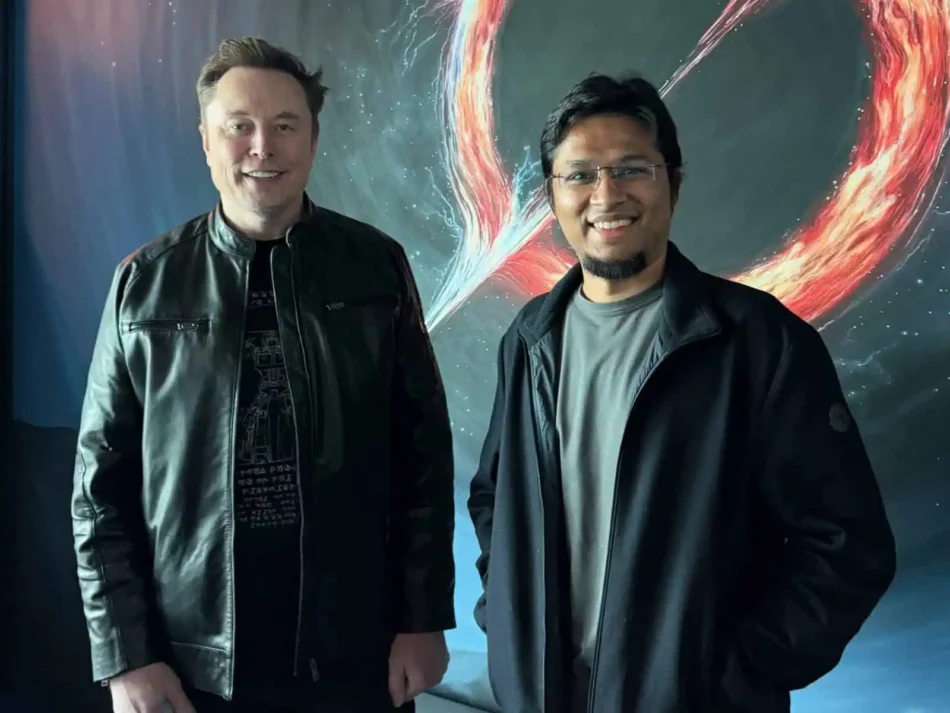
India’s Young Talent Behind Elon Musk’s Super Intelligence
- Discover how Indian-origin engineer Devendra Singh Chaplot is contributing to cutting-edge AI at Elon Musk’s SpaceX and xAI projects.
- Understand the fusion of physical hardware and digital super intelligence shaping the future of technology.
- Explore the challenges India faces in retaining top talent amid global opportunities in artificial intelligence innovation.
- Learn about the academic and professional journey that positioned Devendra Singh as a key player in the super intelligence division.
Elon Musk, the world’s richest man and visionary entrepreneur, is spearheading revolutionary projects in the realm of advanced artificial intelligence. Among these, SpaceX and xAI stand out as ambitious ventures aiming to redefine how intelligence integrates with technology. Central to this progress is the involvement of talented individuals like Devendra Singh Chaplot, an Indian-origin engineer who has joined Musk’s super intelligence team to push the boundaries of AI development.
Devendra Singh’s journey from an NTSE scholar and IIT Mumbai alumnus to a leading engineer at SpaceX exemplifies the global demand for AI expertise. His work focuses on merging physical hardware intelligence with digital AI, creating a hybrid model that promises to revolutionize not only technology but also the way humans interact with machines. This article delves into his background, the significance of his role, and the broader implications for India’s talent landscape in the artificial intelligence sector.
Continue Reading
Who is Devendra Singh Chaplot and What Is His Role in Elon Musk’s AI Vision?
Devendra Singh Chaplot is an accomplished Indian-origin engineer recognized for his exceptional academic and technical prowess. An NTSE scholar, he ranked 25th in the IITJEE examination, one of India’s most competitive engineering entrance tests, and completed his Computer Science and Automation (CSA) degree at IIT Mumbai. These credentials highlight his strong foundation in computer science and machine learning, essential for his current role.
Currently, Devendra is employed within the super intelligence division of Elon Musk’s AI team, working closely with Musk himself. His primary responsibility involves integrating physical hardware intelligence—such as robotics and aerospace systems—with advanced digital AI algorithms developed by xAI. This fusion aims to create a new class of super intelligence that transcends traditional AI capabilities by enabling machines to interact with and adapt to the physical world more effectively.
What Makes the Fusion of Physical Hardware and Digital AI Revolutionary?
The collaboration between physical hardware and digital intelligence represents a paradigm shift in artificial intelligence development. Traditional AI systems largely operate within software environments, processing data and making decisions based on virtual inputs. However, the integration of physical hardware—such as spacecraft components, autonomous vehicles, and robotic systems—with AI allows for real-time sensory feedback, enhanced decision-making, and autonomous operation in complex environments.
Elon Musk’s projects, particularly SpaceX and xAI, leverage this fusion to enable machines that can perform tasks ranging from space exploration to intelligent automation. Devendra Singh’s expertise in both hardware and AI software development is crucial in creating these hybrid systems. This approach is expected to accelerate innovation in fields like robotics, aerospace, and autonomous systems, ultimately shaping the future of technology and human-machine interaction.
India’s Role in the Global AI Talent Landscape
Devendra Singh’s success story highlights a broader trend of Indian-origin talent contributing significantly to global AI advancements. India produces a large pool of skilled engineers and scientists, many of whom excel in AI research and technology innovation. However, the country faces challenges in retaining this talent due to limited opportunities, infrastructure, and funding compared to global tech hubs.
While it is a point of pride to see Indian engineers like Devendra working on world-class projects, it also underscores the brain drain issue where top talent migrates abroad for better career prospects. Strengthening India’s AI ecosystem through investment in research, startups, and education is essential to harness this potential domestically and foster long-term technological leadership.
Educational and Professional Pathways to Join Elite AI Teams
Devendra Singh’s journey offers valuable insights for aspiring engineers aiming to work in elite AI teams. Key factors contributing to his success include:
- Strong academic foundation: Excelling in competitive exams like IITJEE and securing scholarships such as NTSE.
- Specialized education: Pursuing advanced degrees in computer science and automation, focusing on AI and robotics.
- Hands-on experience: Gaining practical skills in both hardware and software integration.
- Networking and collaboration: Engaging with global AI communities and innovative companies.
These elements combined prepare individuals to contribute effectively to cutting-edge projects like those led by Elon Musk.
What Are the Strategic Implications of Super Intelligence Development?
The development of super intelligence that merges physical and digital domains carries significant strategic importance. It promises to:
- Enhance automation in critical industries such as aerospace, manufacturing, and defense.
- Drive innovation in autonomous systems capable of complex decision-making in unpredictable environments.
- Create new economic opportunities by enabling advanced robotics and AI-driven services.
- Raise ethical and regulatory challenges related to AI autonomy and control.
Elon Musk’s vision, supported by talents like Devendra Singh, aims to balance these opportunities and risks to ensure AI benefits humanity while mitigating potential downsides.
How Can India Leverage Its Talent for AI Leadership?
To transform the current talent outflow into a sustainable advantage, India needs to:
- Invest heavily in AI research infrastructure and innovation hubs.
- Encourage public-private partnerships to foster startup ecosystems focused on AI and robotics.
- Enhance educational curricula to include emerging AI technologies and interdisciplinary skills.
- Provide incentives and career pathways to retain top-tier talent within the country.
These strategic initiatives can position India as a global leader in artificial intelligence development and innovation.
What Are the Risks and Challenges in Developing Super Intelligence?
While the prospects are exciting, developing super intelligence also involves risks such as:
- Potential loss of human control over autonomous systems.
- Security vulnerabilities in AI-driven hardware integration.
- Ethical dilemmas regarding AI decision-making in critical scenarios.
- High costs and resource demands for research and deployment.
Addressing these challenges requires rigorous testing, transparent governance, and international cooperation.
The Future Outlook: Growth and Scalability of AI-Hardware Fusion
The fusion of AI with physical hardware is expected to scale rapidly as industries adopt more autonomous and intelligent systems. This growth will be driven by:
- Advances in sensor technologies and real-time data processing.
- Improved AI algorithms capable of learning from dynamic environments.
- Cross-sector collaboration between AI developers and hardware manufacturers.
- Increasing demand for automation in space exploration, transportation, and manufacturing.
Engineers like Devendra Singh are at the forefront of this evolution, shaping scalable solutions that integrate seamlessly into everyday applications.
Practical Insights for Businesses and Innovators
Organizations looking to leverage super intelligence technologies should consider:
- Investing in cross-disciplinary teams that combine AI expertise with hardware engineering.
- Fostering innovation cultures that encourage experimentation with AI-hardware integration.
- Building partnerships with leading AI research institutions and startups.
- Implementing robust risk management frameworks to handle AI-related uncertainties.
These strategies will maximize ROI and position businesses at the cutting edge of technological transformation.
Conclusion
Devendra Singh Chaplot’s role in Elon Musk’s super intelligence division exemplifies the critical intersection of talent, technology, and vision driving the future of AI. His journey underscores the importance of nurturing skilled professionals and creating ecosystems that encourage innovation. As India continues to produce world-class engineers, strategic investments and policies will be key to retaining this talent and establishing the country as a global AI powerhouse.
Frequently Asked Questions
Call To Action
Unlock the potential of super intelligence by partnering with experts and investing in innovative AI-hardware integration strategies to future-proof your business.
Note: Provide a strategic conclusion reinforcing long-term business impact and keyword relevance.