Glamming up ‘dirty war’: Teens in Mexico glorify 1970s secret police on TikTok
- Young Mexican TikTok users are using AI to recreate the image of the 1970s Federal Security Directorate (DFS), a notorious secret police force.
- The trend raises concerns about the glorification of corruption and state violence among youth through social media.
- Experts link this phenomenon to broader cultural shifts, including the rise of far-right ideologies and opposition to feminist movements in Mexico.
- The DFS’s history of torture, disappearances, and drug trafficking complicates the nostalgic portrayal seen on TikTok.
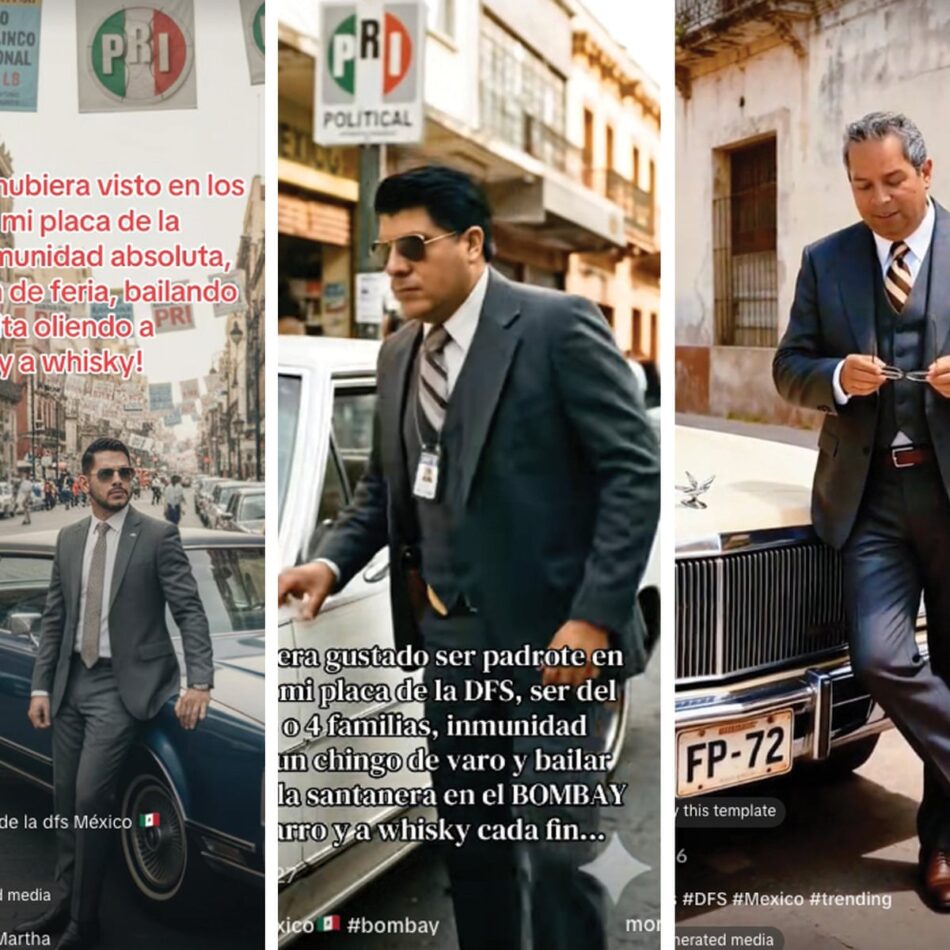
The recent TikTok trend in Mexico where teenagers use AI to transform themselves into agents of the 1970s DFS secret police has sparked widespread debate. These videos, often featuring young men in vintage suits standing beside classic cars, romanticize a dark chapter in Mexican history known as the “dirty war.” This period was marked by severe human rights abuses, including torture, forced disappearances, and corruption. The trend highlights how digital culture and social media platforms can influence historical memory and youth identity in complex ways.
While some users criticize the trend for trivializing the suffering caused by the DFS, others see it as a reflection of deeper societal issues such as the rise of far-right sentiments and backlash against feminist activism. The phenomenon also underscores the role of artificial intelligence in shaping modern narratives and the challenges of confronting historical trauma in the digital age.
Continue Reading
What was the Federal Security Directorate (DFS) and why is it controversial?
The Federal Security Directorate (DFS), founded in 1947 under Mexico’s Institutional Revolutionary Party (PRI), was the country’s secret police agency responsible for intelligence and internal security. It functioned similarly to the FBI but became infamous for its brutal tactics during Mexico’s “dirty war” in the late 1960s and 1970s. The DFS was involved in spying on political opponents, suppressing dissent, and violently targeting student protesters and guerrilla groups through kidnapping, torture, and forced disappearances.
Its involvement in “death flights,” where victims were thrown from planes into the Pacific Ocean, and its later complicity with drug trafficking organizations, cemented its legacy as a symbol of corruption and impunity. The agency was officially dissolved in 1985 after investigations linked it to multiple human rights abuses and high-profile murders, including that of DEA agent Enrique “Kiki” Camarena.
How are Mexican teens using AI and TikTok to glorify the DFS?
On TikTok, young Mexicans are using AI-powered video filters and editing tools to digitally transform themselves into DFS agents. These videos often feature the creators dressed in gray or brown suits, standing beside vintage 1970s Cadillacs or Rolls-Royces, accompanied by upbeat Mexican music. The captions typically express admiration for the “total impunity” and wealth associated with the DFS, romanticizing the era’s corruption and violence.
This trend is part of a broader wave of AI-generated content that allows users to adopt historical or fictional personas, blending nostalgia with modern aesthetics. The videos’ popularity reflects how digital media can reshape perceptions of history, sometimes glossing over the darker realities of past regimes.
What are the social and cultural implications of this trend?
Experts warn that the TikTok DFS trend signals troubling shifts in youth culture and political attitudes in Mexico. Historian Sergio Aguayo describes it as emblematic of “the rise of the culture of violence and the discrediting of the work ethic,” where the focus is on quick wealth and power without regard for moral consequences. Feminist scholar Irene Soria links the trend to the growing influence of the Mexican far right and its opposition to feminist movements, which have gained significant momentum in recent years through mass protests against gender-based violence.
Some female TikTok users also participate by portraying wives of DFS agents or high-ranking PRI officials, echoing the “tradwife” phenomenon seen in other countries, where young women reject feminist ideals in favor of traditional gender roles and dependency on wealthy men. This dynamic highlights the complex interplay between nostalgia, political ideology, and gender identity in digital spaces.
What criticisms and backlash has the trend faced?
The DFS TikTok videos have sparked significant backlash from users who condemn the romanticization of an institution responsible for grave human rights violations. Commenters emphasize that Mexico was not “better off” during the DFS’s reign of terror and urge others to stop glamorizing a force that inflicted immense suffering on thousands of people. This backlash reflects ongoing struggles over collective memory in Mexico and the role of social media in shaping public understanding of history.
Critics also raise concerns about how AI and social media can distort historical narratives, potentially normalizing or trivializing violence and corruption. The debate underscores the need for digital literacy and critical engagement with online content, especially when it involves sensitive historical topics.
How does this phenomenon relate to broader trends in AI and social media?
The DFS trend exemplifies how artificial intelligence technologies, particularly those enabling deepfakes and persona transformations, are increasingly used by young people to explore identity and history. While these tools offer creative opportunities, they also pose risks by enabling the spread of misleading or harmful content. Social media platforms like TikTok amplify these effects by providing viral reach and engagement.
This raises important questions about the ethical use of AI in digital media, the responsibilities of platforms in moderating content, and the impact on cultural memory and political discourse. Understanding these dynamics is crucial for policymakers, educators, and technology developers aiming to foster responsible AI use and preserve truthful historical narratives.
What lessons can be drawn for businesses and digital strategists?
- Recognize the power of AI-driven content creation to influence youth culture and shape narratives, both positively and negatively.
- Develop strategies to monitor and respond to emerging trends that may affect brand reputation or social responsibility commitments.
- Leverage AI ethically to create engaging content that respects historical accuracy and cultural sensitivities.
- Invest in digital literacy initiatives to help audiences critically assess AI-generated media and avoid misinformation.
- Consider the broader social context when engaging with culturally or politically sensitive topics on social media platforms.
Conclusion: Navigating AI, history, and youth culture in Mexico
The TikTok trend glamorizing Mexico’s 1970s DFS secret police reveals the complex intersections of artificial intelligence, social media, historical memory, and youth identity. While it offers a creative outlet for young people to engage with the past, it also risks trivializing a violent and corrupt era marked by profound human suffering. The phenomenon highlights the challenges of preserving truthful historical narratives in the digital age and the importance of critical media literacy.
For businesses, digital strategists, and policymakers, this case underscores the need to understand how AI technologies shape cultural perceptions and to promote ethical, responsible use of these powerful tools. Balancing innovation with respect for history and social values is essential to fostering a more informed and conscientious digital society.
Frequently Asked Questions
Call To Action
Stay ahead in the evolving digital landscape by integrating ethical AI strategies into your social media marketing to engage audiences responsibly and protect your brand reputation.
Note: Provide a strategic conclusion reinforcing long-term business impact and keyword relevance.