Gamers react with overwhelming disgust to DLSS 5’s generative AI glow-ups
- DLSS 5 introduces generative AI for lighting and texture enhancements beyond traditional upscaling.
- The new technology has sparked significant backlash due to its uncanny and overly smoothed visual effects.
- Game developers emphasize artistic control to maintain original aesthetics despite AI-driven changes.
- DLSS 5’s reception highlights challenges in balancing AI enhancements with preserving creative intent.
Since its inception with Nvidia’s RTX 2080 series, DLSS technology has been praised for improving gaming performance by smartly upscaling resolution and boosting frame rates. However, the announcement of DLSS 5 marks a controversial shift from simple upscaling to a more complex application of generative AI that modifies lighting, textures, and overall scene rendering in real-time. This new approach aims to deliver Hollywood-level photorealism but has instead triggered widespread criticism from the gaming community.
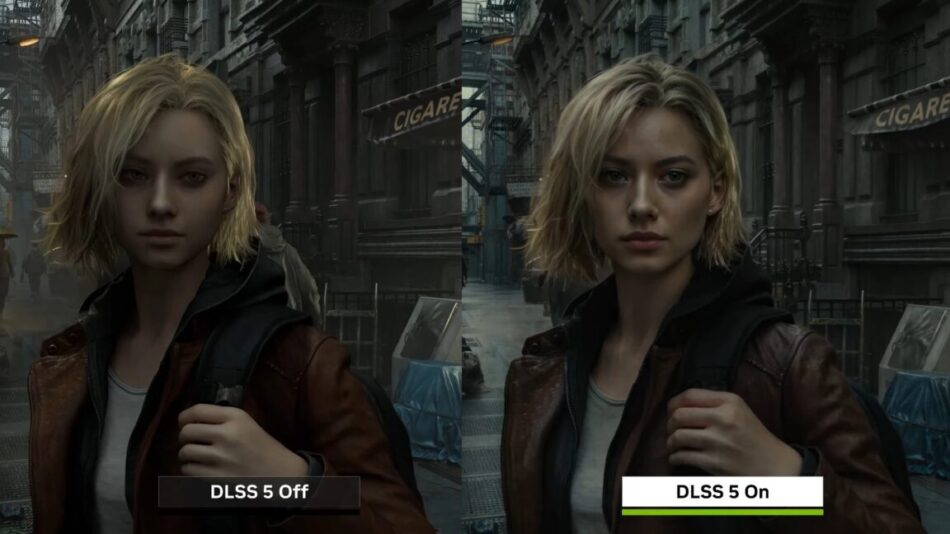
Many gamers and industry professionals have expressed disgust at the unnatural and overly polished appearance DLSS 5 imparts on in-game visuals. The technology’s reinterpretation of character models and environments often results in a loss of original artistic style, leading to concerns about the future of game graphics enhancement and player experience. Despite Nvidia’s assurances that developers retain full control over the AI’s effects, the initial public reaction underscores the delicate balance between innovation and preserving creative vision in AI-powered graphics rendering.
Continue Reading
What is DLSS 5 and how does it differ from previous versions?
DLSS 5 represents a fundamental evolution of Nvidia’s deep-learning super-sampling technology. Unlike earlier iterations that primarily focused on upscaling lower-resolution frames to higher resolutions for smoother gameplay, DLSS 5 integrates generative AI to perform real-time neural rendering. This means the system not only increases resolution but also reimagines lighting, materials, and textures to create a more photorealistic visual output.
Nvidia describes DLSS 5 as a “real-time neural rendering model” capable of delivering visual fidelity comparable to Hollywood visual effects. It uses in-game data such as color and motion vectors, along with complex scene semantics — including character details like hair and skin translucency — to generate enhanced frames that maintain consistency across gameplay. This approach is intended to provide a dramatic leap in realism while allowing artists to retain creative control.
Why are gamers reacting negatively to DLSS 5’s generative AI glow-ups?
The core of the backlash lies in the visual results produced by DLSS 5, which many players find unsettling. Instead of subtle improvements, the technology often creates an uncanny valley effect, where characters and environments appear unnaturally smooth, overly detailed, or “yassified,” as some gamers describe it. Faces lose their original charm and expression, and shadows are diminished, resulting in a flattened and homogenized look that clashes with the intended art direction.
Critics argue that DLSS 5’s AI enhancements strip away the unique styles that make games visually distinct. Comments liken the effect to “airbrushed pornography” or “mangled beyond recognition,” highlighting how the AI’s glow-ups can feel intrusive rather than enhancing. This sentiment is echoed by game developers who emphasize that the technology sometimes sacrifices artistic intent for the sake of adding detail, which ironically diminishes the overall character and atmosphere of the game.
How do game developers respond to concerns about artistic control?
In response to the widespread criticism, Nvidia and partner studios have stressed that DLSS 5 is not an automatic filter but a tool that developers can customize extensively. Game creators have the ability to adjust the intensity, color grading, and masking of the AI effects to ensure the game’s original aesthetic is preserved. This flexibility aims to prevent unwanted visual changes and maintain player choice, including the option to disable DLSS 5’s enhancements in certain scenarios.
Major publishers like Bethesda have acknowledged that the showcased footage represents an early implementation of DLSS 5 and that final versions will undergo further refinement by art teams. They assure players that the technology will be optional and artistically guided to fit each game’s unique style. Despite these assurances, the initial public perception has already shaped DLSS 5’s reputation as a controversial and polarizing advancement in AI-driven gaming graphics.
What are the technical requirements and performance implications of DLSS 5?
DLSS 5’s advanced neural rendering demands significant computational power. Demonstrations have utilized dual Nvidia RTX 5090 GPUs, with one dedicated solely to running DLSS 5’s AI processes. This indicates that the technology is currently tailored for high-end gaming rigs, limiting accessibility for average users. The performance impact includes increased GPU load but promises higher visual fidelity without sacrificing frame rates, assuming sufficient hardware resources.
Scalability remains a concern as developers and Nvidia work to optimize DLSS 5 for broader hardware compatibility. The technology’s reliance on detailed scene data and real-time AI inference means that less powerful systems may struggle to deliver the intended experience. Balancing performance and quality will be critical for DLSS 5’s adoption across diverse gaming setups.
What does DLSS 5 mean for the future of AI in gaming graphics?
DLSS 5’s introduction marks a significant milestone in the integration of generative AI into real-time game rendering. It showcases the potential for AI to not only upscale images but also reinterpret and enhance visual elements dynamically. However, the backlash highlights the challenges of merging AI advancements with established artistic standards and player expectations.
The controversy underscores the importance of maintaining creative control and respecting the original design philosophy of games. It also raises questions about the ethical and aesthetic implications of AI-driven modifications. As AI technologies continue to evolve, developers and hardware manufacturers must carefully navigate how these tools are implemented to enhance rather than detract from the gaming experience.
How can players and developers balance AI enhancements with artistic integrity?
Achieving harmony between AI-powered improvements and artistic vision requires transparent collaboration and customization options. Developers should leverage DLSS 5’s adjustable parameters to fine-tune effects, ensuring that enhancements complement rather than override the game’s style. Providing players the choice to enable, disable, or modify AI effects empowers them to tailor visuals to their preferences.
Ongoing feedback from the gaming community will be essential in refining AI-driven graphics technologies. Open dialogue between developers, hardware makers, and players can guide the evolution of tools like DLSS 5 to better serve both performance goals and creative expression. This approach will help mitigate risks associated with over-automation and preserve the diversity of visual experiences in gaming.
Summary of key impacts and considerations
- Generative AI glow-ups in DLSS 5 represent a leap beyond traditional upscaling but risk alienating users with unnatural visuals.
- Artistic control remains a top priority to prevent loss of original game aesthetics and maintain player trust.
- High hardware requirements limit immediate accessibility, posing challenges for widespread adoption.
- The technology prompts industry-wide discussions on the role and limits of AI in creative media.
- Future success depends on balancing innovation with respect for artistic intent and user preferences.
Frequently Asked Questions
Call To Action
Explore how integrating advanced AI technologies like DLSS 5 can transform your game development pipeline while maintaining artistic integrity and player satisfaction. Contact us to learn how to implement scalable AI-powered graphics solutions tailored to your projects.
Note: Provide a strategic conclusion reinforcing long-term business impact and keyword relevance.