
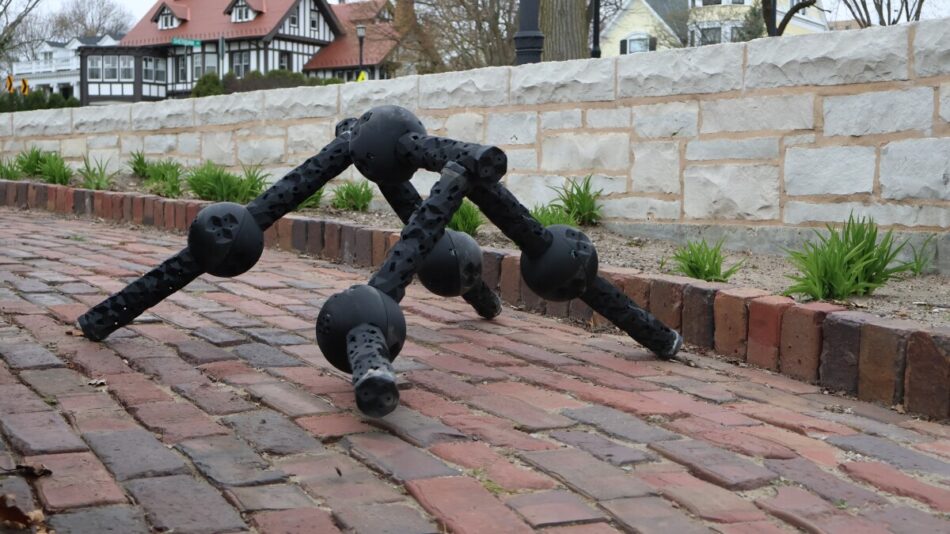
AI-evolved adaptable robot is almost impossible to destroy
- Leverage AI-driven evolutionary design to create robots that adapt dynamically to unpredictable environments.
- Utilize modular robotic components to ensure operational continuity despite physical damage or loss of parts.
- Deploy robots capable of multi-terrain navigation including grass, gravel, and mud without preprogrammed locomotion patterns.
- Accelerate robotic innovation cycles by simulating natural selection processes in virtual environments before physical assembly.
Traditional robots are often limited by their design for specific environments, struggling to adapt when conditions change unexpectedly. However, recent breakthroughs in AI-evolved robotics have introduced machines that can reconfigure themselves and maintain functionality even when damaged. This new breed of robot leverages artificial intelligence to evolve its structure and movement strategies rapidly, mimicking natural selection to optimize performance across diverse terrains.
Northwestern University researchers have pioneered a modular, legged metamachine robot that demonstrates unprecedented adaptability and resilience. Comprised of multiple interconnected modules, each functioning independently yet capable of collective operation, this robot can traverse challenging environments and continue operating even after losing limbs. This article explores the technology behind this innovation, its practical applications, and the future of adaptive robotic systems.
Continue Reading
What is an AI-evolved adaptable robot?
An AI-evolved adaptable robot is a machine designed using artificial intelligence algorithms that simulate natural evolutionary processes to optimize its form and movement. Instead of human engineers predefining every mechanical detail, the AI generates and tests thousands of configurations in virtual environments, selecting the most effective designs for real-world assembly. This approach produces robots capable of dynamic adaptation, self-reconfiguration, and resilience to damage, making them highly versatile in unpredictable settings.
How does the legged metamachine work?
The legged metamachine is a modular robot composed of multiple identical units, each containing a battery, motor, and onboard computer. These modules can connect in various configurations, enabling the robot to perform a wide range of movements such as crawling, jumping, rolling, and undulating. When assembled, the modules communicate internally to coordinate movement, allowing the robot to navigate complex terrain and adapt its locomotion strategy based on the environment.
Individually, a single module can roll, hop, or twist, but when combined, the robot exhibits emergent behaviors that are difficult to predict yet highly effective. This modularity also contributes to its near indestructibility: if one or more modules are damaged or detached, the remaining parts continue functioning as autonomous agents, ensuring mission continuity.
Why is AI-driven evolution critical for robot design?
Traditional robot design often relies on mimicking biological locomotion or established mechanical principles, which can limit innovation and adaptability. AI-driven evolution allows robots to explore unconventional forms and movement patterns that humans might not envision. By simulating natural selection in realistic virtual environments, AI iteratively refines robot designs to maximize efficiency, stability, and versatility.
This process accelerates innovation by enabling rapid prototyping and testing of thousands of designs without physical manufacturing costs. The AI evaluates performance metrics such as distance traveled, obstacle navigation, and energy efficiency, selecting the best candidates for further evolution. This approach results in robots that are optimized for real-world challenges rather than theoretical or idealized conditions.
What are the practical applications of adaptable, indestructible robots?
Adaptable robots like the legged metamachine have significant potential across multiple industries:
- Disaster response robotics: Their resilience and ability to traverse rubble and uneven terrain make them ideal for search and rescue missions in hazardous environments.
- Military and defense: Indestructible modular robots can perform reconnaissance and logistics tasks in unpredictable combat zones, maintaining operation despite damage.
- Agriculture and environmental monitoring: Their adaptability enables efficient navigation of diverse outdoor terrains for crop monitoring, soil analysis, and wildlife tracking.
- Space exploration: Modular robots can self-repair and reconfigure to handle the extreme and variable conditions of extraterrestrial surfaces.
How does the AI evolutionary process work in robot development?
The AI evolutionary process begins with a set of building blocks—in this case, the modular robot units—and a defined goal such as maximizing locomotion efficiency. The AI generates thousands of robot configurations and simulates their performance in virtual environments that include obstacles, uneven terrain, and other challenges.
Each design is evaluated based on criteria like speed, stability, and adaptability. The top-performing designs are retained and combined or mutated to create new generations of robots. Over many iterations, this simulated natural selection produces highly optimized and often unconventional robot forms. The final designs are then physically constructed and tested in real-world conditions.
What makes the legged metamachine nearly indestructible?
The robot’s modular design ensures that damage to one part does not incapacitate the entire machine. Each module is a fully functional robot capable of independent movement. If the robot loses a limb or is cut in half, the remaining modules continue to operate autonomously or reassemble into new configurations to maintain mobility.
This redundancy and flexibility mean the robot can survive severe physical trauma that would disable conventional robots. The AI-driven control system dynamically adapts movement strategies to compensate for lost modules, ensuring the robot’s primary mission continues uninterrupted.
How does the robot perform in real-world terrain?
In outdoor tests, the legged metamachine successfully navigated a variety of challenging surfaces including grass, gravel, and mud. Unlike traditional robots designed for specific terrains, this robot dynamically adjusts its gait and configuration to overcome obstacles and maintain balance.
The robot’s ability to traverse diverse terrain without preprogrammed locomotion patterns highlights the effectiveness of AI-evolved adaptability. Its performance demonstrates a significant leap forward in robotic mobility and operational flexibility.
What are the challenges and risks of AI-evolved robots?
While AI-evolved robots offer remarkable adaptability, several challenges remain:
- Complexity in control algorithms: Coordinating multiple autonomous modules requires sophisticated AI to prevent erratic or inefficient movements.
- Manufacturing and maintenance costs: Modular designs may increase production complexity and require specialized repair protocols.
- Unpredictable emergent behaviors: Evolutionary design can produce unexpected movement patterns that need thorough testing to ensure safety and reliability.
- Ethical considerations: Autonomous adaptability raises questions about control, decision-making, and accountability in critical applications.
What is the future outlook for AI-evolved adaptable robots?
The promising results from the legged metamachine project indicate a future where robots are not limited by rigid designs but evolve continuously to meet complex challenges. Advances in machine learning, materials science, and modular robotics will further enhance these capabilities.
Potential developments include swarms of modular robots collaborating for large-scale tasks, self-healing materials integrated into modules, and real-time evolutionary adaptation in response to changing environments. These innovations will revolutionize industries from manufacturing to exploration, enabling robots that are truly resilient and versatile.
How can businesses leverage AI-evolved robotics?
Companies can harness AI-evolved adaptable robots to improve operational efficiency, reduce downtime, and expand capabilities in challenging environments. By integrating these robots into logistics, inspection, or maintenance workflows, businesses can achieve higher resilience and flexibility.
Investing in AI-driven robotic solutions also provides a competitive edge by accelerating innovation cycles and enabling rapid response to market or environmental changes. Collaborations with research institutions or robotics startups specializing in evolutionary robotics can facilitate access to cutting-edge technology and expertise.
Summary of key benefits
- Enhanced adaptability to diverse and unpredictable environments.
- Robustness and fault tolerance through modular redundancy.
- Accelerated innovation via AI-driven evolutionary design.
- Expanded application potential across industries such as defense, agriculture, and space exploration.
Frequently Asked Questions
Call To Action
Explore how AI-evolved adaptable robots can transform your business operations by providing resilient, flexible, and efficient solutions tailored to dynamic environments. Contact us today to discover customized robotic innovations that drive competitive advantage.
Note: Provide a strategic conclusion reinforcing long-term business impact and keyword relevance.