
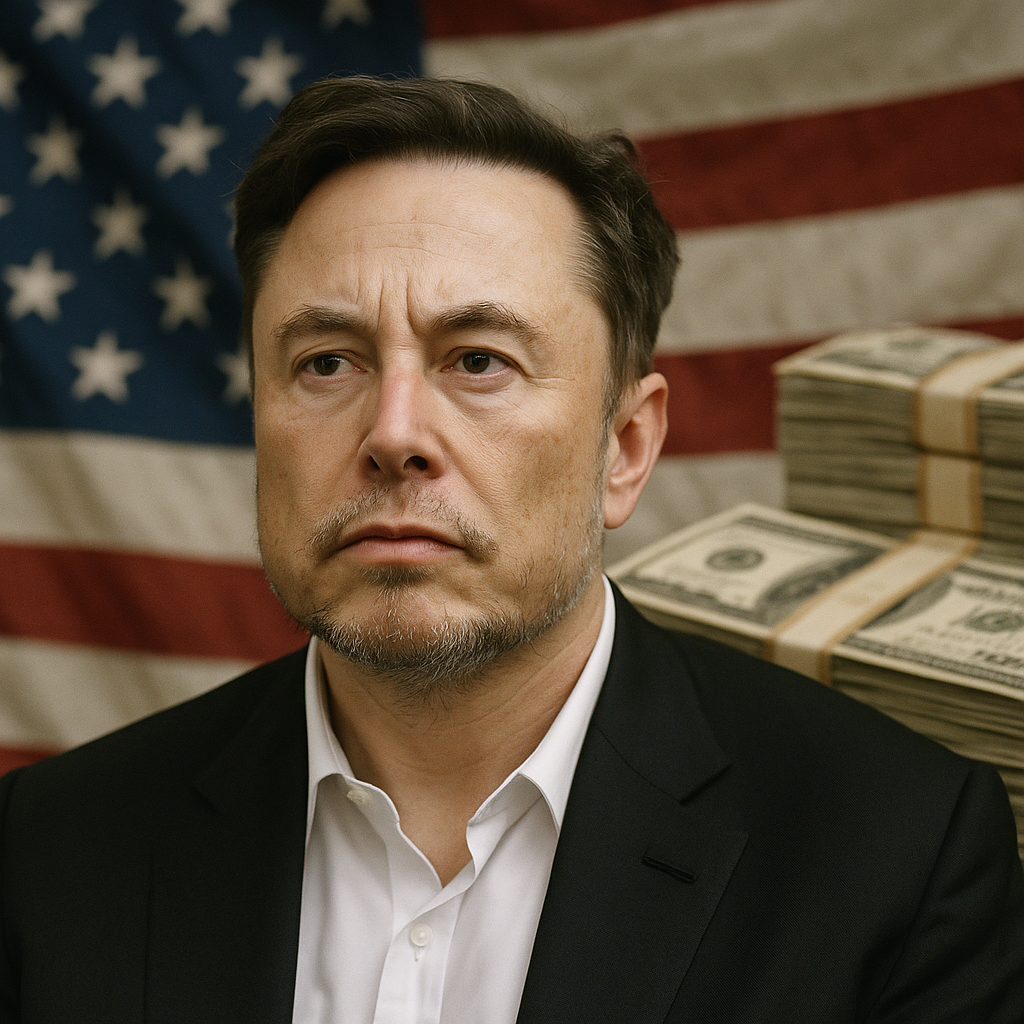
Elon Musk says the US could be ‘toast’ if AI doesn’t fix America’s $39T nightmare — how to protect your money
- Understanding the risks of America’s escalating national debt and its economic impact.
- How artificial intelligence and robotics could drive a productivity revolution to address fiscal challenges.
- Practical strategies to safeguard your finances amid economic uncertainty and technological disruption.
- The role of space-based AI and Musk’s vision for scalable, energy-efficient data centers beyond Earth.
Elon Musk recently issued a stark warning about the United States’ mounting $39 trillion national debt, emphasizing that without the transformative power of artificial intelligence, the country could face severe economic collapse. Musk’s experience leading the Department of Government Efficiency (DOGE) highlighted the entrenched inefficiencies and ballooning costs within federal spending. With interest payments on the debt already surpassing major budget items like defense, the urgency for innovative solutions has never been greater.
In this context, Musk’s ambitious vision for integrating AI and robotics into the economy is not just about technological advancement—it’s a potential lifeline to prevent financial disaster. From investing in AI ventures to proposing space-based data centers, Musk believes that only a massive AI-driven productivity surge can counterbalance the growing debt burden. For individuals, understanding these macroeconomic shifts and adopting smart financial strategies is crucial to protect wealth in an uncertain future.
Continue Reading
Why is America’s $39 trillion debt considered a ‘nightmare’?
The United States’ national debt has soared to nearly $39 trillion, creating a fiscal situation that many experts describe as unsustainable. The national debt crisis is driven by persistent budget deficits, rising interest costs, and expansive government spending. Currently, the annual interest payments on this debt exceed the entire budget allocated to the Department of Defense, underscoring the severity of the financial strain. This growing debt burden limits the government’s flexibility to invest in critical areas and increases the risk of a “debt death spiral,” where borrowing costs rise, making it even harder to manage the debt effectively.
Elon Musk has been vocal about the gravity of this issue, stating that without a significant boost in productivity—primarily driven by AI and automation—the U.S. economy could face bankruptcy. The challenge is not just the size of the debt but the accelerating cost of servicing it, which threatens to crowd out other essential government expenditures and social programs.
How can AI and robotics help solve America’s economic challenges?
AI and robotics promise to revolutionize productivity by automating tasks, optimizing processes, and creating new economic value. Musk argues that a massive productivity boom enabled by machine learning and robotics is the only viable path to offsetting the ballooning national debt. Increased output of goods and services through automation could lower costs and prices, potentially leading to deflationary pressures.
This productivity surge could also reduce the need for large government spending by improving efficiencies across sectors such as manufacturing, healthcare, and logistics. However, Musk warns that the transition must be managed carefully to mitigate job displacement risks and ensure that the benefits of AI-driven growth are broadly shared.
The concept of space-based AI data centers
One of Musk’s most innovative ideas is to build AI data centers in space. Traditional AI infrastructure relies on massive terrestrial data centers that consume enormous amounts of electricity and require extensive cooling systems. Musk highlights that global electricity demand for AI cannot be met sustainably with current land-based solutions.
By leveraging space-based platforms, powered by solar energy and cooled naturally by the vacuum of space, AI systems could scale more efficiently and sustainably. This approach could unlock unprecedented computational power, enabling more advanced AI applications to support economic growth and government efficiency.
What are the risks and opportunities of AI-driven economic transformation?
The integration of AI into the economy presents both significant opportunities and risks. On the positive side, AI can drive innovation, reduce costs, and create new industries, potentially revitalizing economic growth and helping to manage national debt. However, the widespread adoption of AI and automation also threatens millions of jobs, particularly in white-collar sectors, leading to potential declines in tax revenue and consumer spending.
Businesses and policymakers must balance these factors by investing in workforce retraining, social safety nets, and policies that encourage inclusive growth. Failure to address these challenges could exacerbate economic inequality and social unrest.
How to protect your money amid AI and economic uncertainty
Given the economic uncertainties linked to national debt and AI-driven disruption, individuals should adopt diversified financial strategies to protect their wealth. Key recommendations include:
- Diversifying investments across asset classes such as stocks, bonds, precious metals, and real estate to mitigate risk.
- Considering inflation-resistant assets like physical gold or inflation-protected securities.
- Staying informed about technological trends and their impact on industries to identify growth opportunities.
- Maintaining an emergency fund to navigate potential economic downturns.
- Exploring tax-advantaged accounts and retirement plans to maximize long-term savings.
How is Elon Musk’s AI vision shaping the future economy?
Musk’s acquisition of xAI and integration with SpaceX’s Starlink satellites and social platform X reflects a strategic move to consolidate AI capabilities across multiple domains. This combined entity, valued at approximately $1.75 trillion, aims to harness AI for both commercial and governmental applications.
The long-term vision includes leveraging AI to enhance government efficiency, reduce waste, and create new economic value streams. Musk’s focus on space-based AI infrastructure also positions his ventures at the forefront of next-generation technology development, potentially influencing global economic dynamics for decades.
Implications for government and private sector collaboration
The scale of America’s debt and economic challenges suggests that public-private partnerships will be crucial. AI-driven government initiatives like Musk’s DOGE program demonstrate how technology can identify inefficiencies and generate savings. Expanding such collaborations could accelerate the adoption of AI solutions in public administration, defense, healthcare, and infrastructure.
However, transparency, ethical AI deployment, and regulatory oversight will be essential to ensure these technologies serve the public interest and avoid unintended consequences.
What does the future hold for AI and America’s economy?
The trajectory of AI development and its integration into the economy will likely determine whether the U.S. can navigate its fiscal challenges successfully. If AI and robotics can deliver the productivity gains Musk envisions, the national debt crisis could be mitigated, preserving economic stability and growth.
Conversely, failure to harness AI’s potential or manage its societal impacts could accelerate financial strain, leading to economic decline. Businesses, investors, and policymakers must therefore prioritize AI innovation, workforce adaptation, and prudent financial management to secure a prosperous future.
Frequently Asked Questions
Call To Action
Stay ahead of economic uncertainty by embracing AI-driven insights and diversifying your financial portfolio today. Connect with experts to develop a personalized strategy that protects and grows your wealth in the age of artificial intelligence.
[np_contact_btn]
Note: Provide a strategic conclusion reinforcing long-term business impact and keyword relevance.